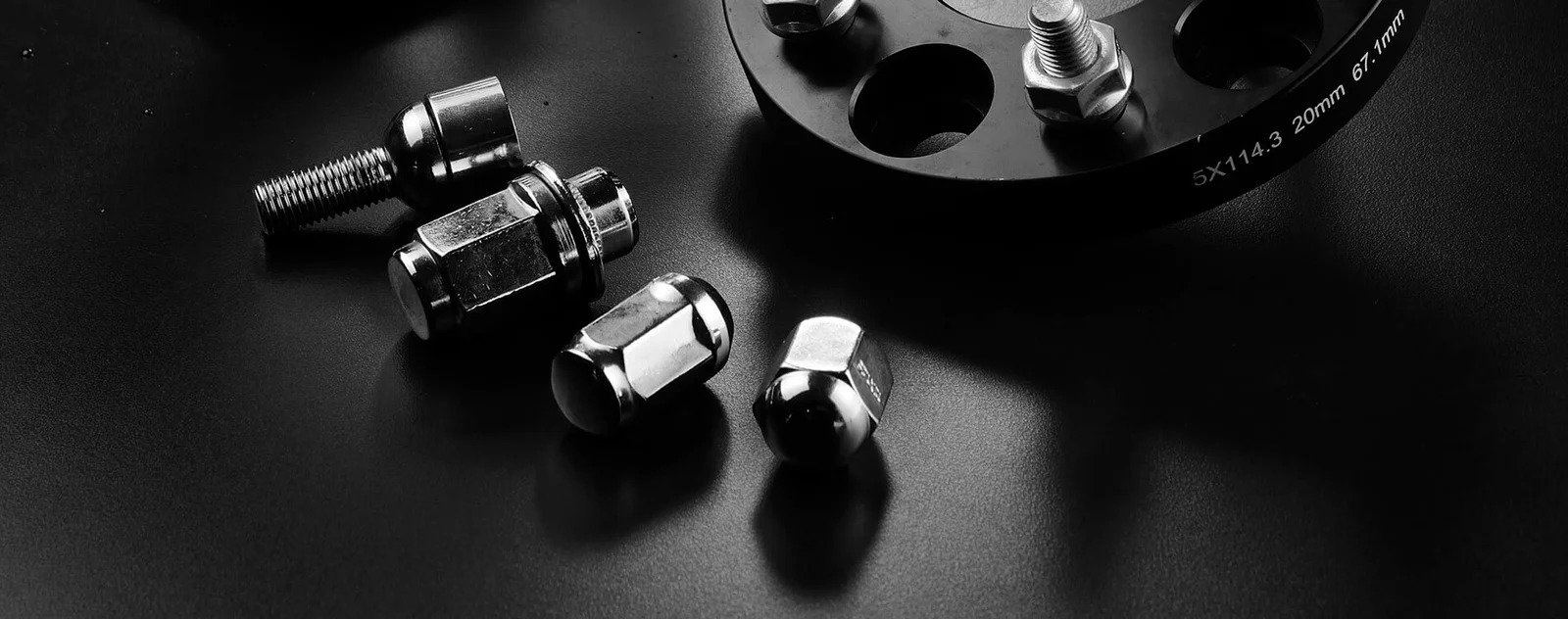
The stock wheel nuts on most cars do their work without anyone noticing them — until the day a wheel wobbles, a stud snaps, or a finish gets scratched during a tire swap. Aftermarket lug nuts solve the cosmetic problem but introduce a technical one: every wheel and stud combination requires an exact match on four specs, and a single mismatch can produce a wheel that works loose at speed. This guide covers the four specs that must match, the three lug nut types and two sub-styles that cover the vast majority of fitments, and the three installation practices that separate a safe wheel from one waiting to fail.
Why Lug Nut Specs Matter
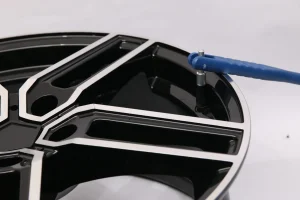
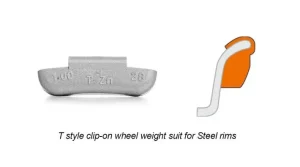
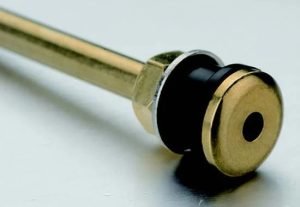
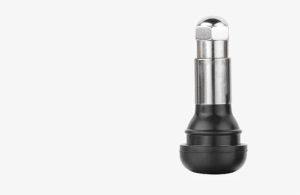
Lug nuts are not the only wheel component where specification matters. TPMS valves and wheel weights follow the same rule: a mismatch leads to vibration, leaks, or worse.
What Lug Nuts Actually Do
Lug nuts do three jobs that most drivers never see. They clamp the wheel to the hub with the correct axial preload, so that wheel loads transfer through the wheel bearings rather than through the studs in shear. They center the wheel on the hub through the lug seat — for conical-seat wheels, the taper registers against the wheel’s lug hole and sets the lateral position. They resist loosening under vibration, torque cycling, and thermal expansion. Each job requires a different design choice in the lug nut — and a mismatch on any one spec compromises all three.
The Cost of Getting It Wrong
Four failure modes trace back to wrong-spec lug nuts. Wrong seat type — a ball-seat nut on a conical-seat wheel does not center the wheel and wobbles at speed, wearing the lug hole into an oval within a few thousand miles. Wrong thread size — an M12×1.25 nut on an M12×1.5 stud cross-threads on the first install and typically destroys both the nut and the stud. Insufficient thread engagement — a spacer that reduces engagement below the stud diameter shears the stud under braking load. Each of these failures shares two properties: they happen at speed, and they are 100% preventable with the right spec sheet. The same applies to tire valves: a slow leak from a wrong-spec valve is just as preventable.
The Four Specs That Must Match
Seat Type — Conical, Ball, or Flat
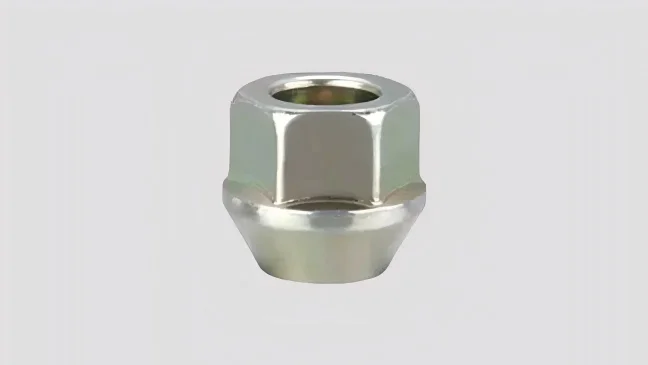
The lug seat is the part of the nut that touches the wheel. Three types cover almost every passenger car and light truck wheel on the market. Conical (tapered) seats at 60° or 45° are the most common on aftermarket and OEM alloy wheels — the taper centers the wheel as the nut is torqued. Ball seats (also called spherical) use a rounded contact surface and are typical on many European OEM steel and alloy wheels. Flat seats sit perpendicular to the stud and are standard on most steel wheels and a handful of European applications. The seat type is stamped on the wheel’s lug hole or listed in the wheel’s spec sheet — never mix types on the same wheel.
Thread Size and Pitch
Thread size has two components: the stud diameter and the thread pitch (in metric: M12×1.25; in SAE: 1/2″-20). The two most common driver-side passenger car fitments are M12×1.25 and M12×1.5, with M14×1.5 standard on many heavy-duty light trucks and 1/2″-20 common on domestic vehicles. Mixing pitch is the single most common cross-threading failure: a 1.5 mm pitch nut on a 1.25 mm pitch stud feels like it is threading on for the first 2–3 turns, then binds and damages both. Confirm thread size by measuring an existing lug nut with a thread gauge, or by checking the vehicle’s service manual — never by visual approximation.
Thread Engagement Minimum
The mechanical rule for wheel studs is that thread engagement must equal or exceed the stud diameter. For an M12 stud, that means at least 12 mm of thread inside the lug nut. With a stock stud and stock wheel, this is satisfied by the factory nut geometry. The rule becomes relevant when spacers or wheel adapters are added — a 10 mm spacer leaves only 2 mm of stud above the wheel hub face, far below the 12 mm minimum. In spacer-equipped setups, extended wheel studs replace the originals to restore engagement depth. Skipping this rule produces studs that shear under braking — typically the front inner studs first, since front brakes generate the highest clamping load.
Torque Specifications
Torque spec for most passenger car alloy wheels runs 80–100 ft-lbs (110–135 Nm); light-truck and performance applications range from 90–120 ft-lbs (122–163 Nm). The spec must be applied with a calibrated torque wrench — never an impact gun for the final pass. Threads must be clean and dry during torquing: oil, anti-seize, dirt, or thread-locking fluid alters the friction coefficient and shifts the actual clamp load away from the torque reading. A torque wrench reading of 89 ft-lbs on lubricated threads can produce 130–185 ft-lbs of real clamp load — well into the stud’s yield range.
Lug Nut Types
Closed-End Lug Nuts
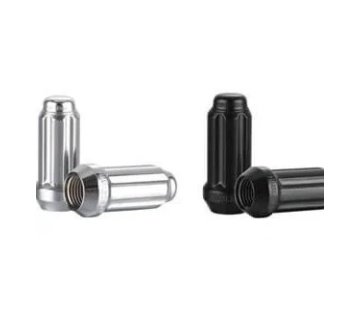
Closed-end lug nuts — also called acorn nuts — completely cover the wheel stud end, leaving no exposed thread above the nut. They are the most common aftermarket style and the default choice for stock replacement and cosmetic upgrades. Closed-end nuts work with any standard-length stud and are available in every seat type, every thread size, and a wide range of finishes (chrome, black, anodized, raw). The main limitation: closed-end nuts cannot be used with extended wheel studs, where the protruding stud thread would prevent the nut from seating fully.
Open-End Lug Nuts for Extended Studs
Open-end lug nuts have a recessed bore at the top that allows the stud to protrude through the nut. They are specified whenever extended wheel studs are in use — typically with wheel spacers, body-lifted trucks, or aftermarket big-brake kits that require extra stud length. Open-end nuts always pair with a closed-end locking nut on the spare wheel, since the exposed stud threads invite corrosion. Available finishes are more limited than closed-end, but the range covers most aftermarket applications.
Locking Lug Nuts
Locking lug nuts replace one standard nut per wheel with a nut that requires a unique socket (included with the set) to remove. Theft-deterrent value is real: a wheel secured by four locking nuts and one standard nut cannot be removed without the matching keyed socket. Locking nuts are strongly recommended for any aftermarket wheel set, particularly larger-diameter or low-profile designs that have higher replacement cost. The trade-off is roadside risk: if the keyed socket is lost, the wheel must be drilled off at a shop. Keep the key in the glove box and a spare in the house.
Two-Piece Variants
Two-piece lug nuts separate the cosmetic outer shell from the load-bearing inner nut. The rotating-base style has a tapered seat on the inner piece that spins independently of the outer shell — so the wheel’s lug hole is not scratched as the nut is tightened. The shell-type design has an outer cosmetic cap that unscrews after the inner nut is torqued, leaving the visible portion of the nut pristine even after multiple tire swaps. Both styles are popular on premium aftermarket wheels where the lug nut finish is part of the wheel’s appearance, and both add $3–$8 per nut over single-piece equivalents.
Lug Nut Installation Best Practices
The Star Pattern Torquing Method
Wheel torque must be applied in a star pattern (also called a criss-cross) — alternating between opposite-side nuts in two or three passes. The pattern distributes clamp load evenly around the hub and centers the wheel on the studs before any single nut reaches final torque. A circular pattern (going around the wheel like a clock) pulls the wheel against the first torqued nut, mis-centering it. Two-pass minimum: first pass at 50% of final torque, second pass at full torque. Three-pass is preferred for larger-diameter wheels.
Why Anti-Seize Is a Bad Idea
Anti-seize on lug nut threads is one of the most common installation errors. The reasoning sounds logical — “less friction means easier install.” The reality: torque wrench readings assume a specific friction coefficient at the threads, and reducing that friction with anti-seize shifts the actual clamp load dramatically above the wrench reading. A nut torqued to 89 ft-lbs with anti-seize on the threads can deliver 130–160 ft-lbs of real clamp load — past the yield point for most wheel studs. The result is stretched studs, warped brake rotors, and the occasional stud snap. Threads should be clean and dry, period.
Clean Threads and Proper Torque
Three final checks before the wheel goes on. First, clean the stud threads with a wire brush or thread chaser — corrosion, paint overspray, or road grime on the stud throws off torque readings the same way anti-seize does. Second, hand-thread each nut for the first 2–3 turns before using a wrench; cross-threading feels like resistance within the first turn and is easy to catch by hand. Third, re-torque the lug nuts after 50–100 km of driving — initial settling of the wheel against the hub face can reduce clamp load by 5–10%, and the re-torque restores it.
FAQ
What Happens If I Use the Wrong Lug Nut Spec?
Four failure modes, ranked by frequency. Wheel wobble from seat-type mismatch — the most common, often noticed as a vibration above 60 km/h. Cross-threaded studs from thread size mismatch — typically happens on first install and damages both nut and stud. Stud shear from insufficient thread engagement — happens under hard braking, almost always on the front axle. Brake rotor warp from chronic over-torque — usually shows up as pedal pulsation under braking after several thousand km.
Are Locking Lug Nuts Worth It?
Yes, for any aftermarket wheel — particularly larger-diameter, low-profile, or forged designs where the replacement cost is high. A four-wheel set of locking lug nuts retails for $25–$60; the wheel set they protect retails for $800–$3,000+. For OEM steel wheels on commuter cars, the cost-benefit is less clear, and the roadside-tool requirement is a real consideration if the keyed socket is misplaced.
How Often Should Lug Nuts Be Re-Torqued?
After any wheel installation, re-torque at 50–100 km to settle the wheel against the hub face. After that, re-torque is not part of normal maintenance — but should be performed if the wheel has been removed for brake service, tire rotation, or collision repair. For fleet or commercial vehicles that see heavy braking cycles, an annual re-torque check is recommended regardless of wheel removal.