





Home - TPMS valves - rubber tpms valve

Rubber TPMS Valve Manufacturer

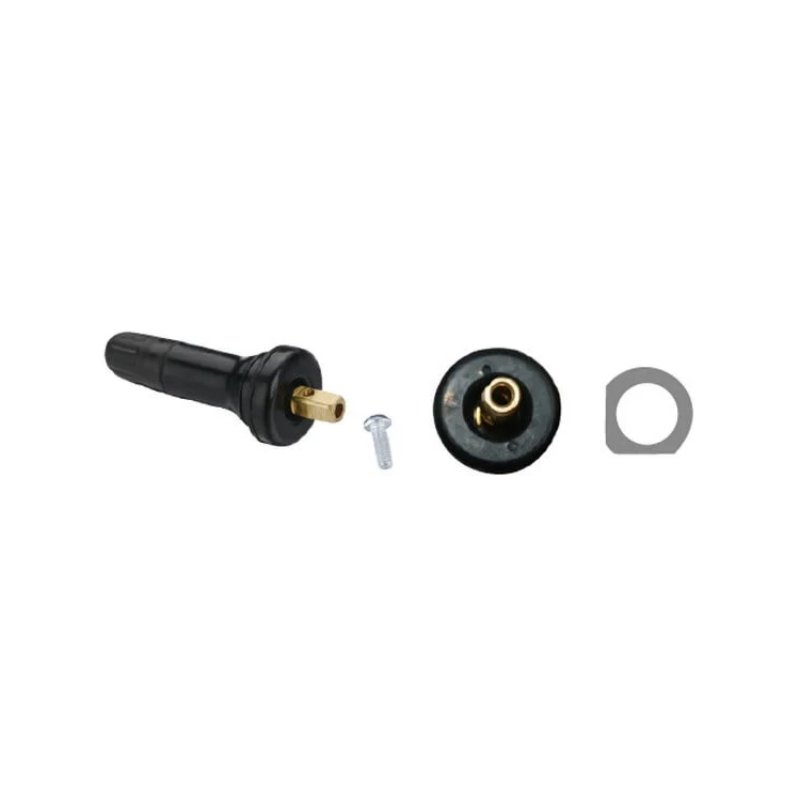
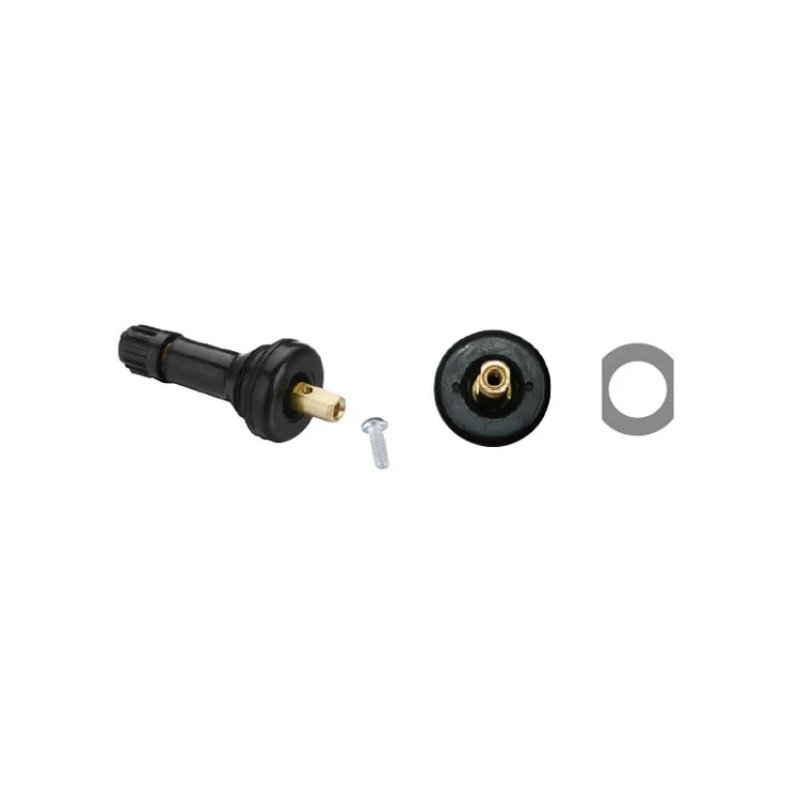
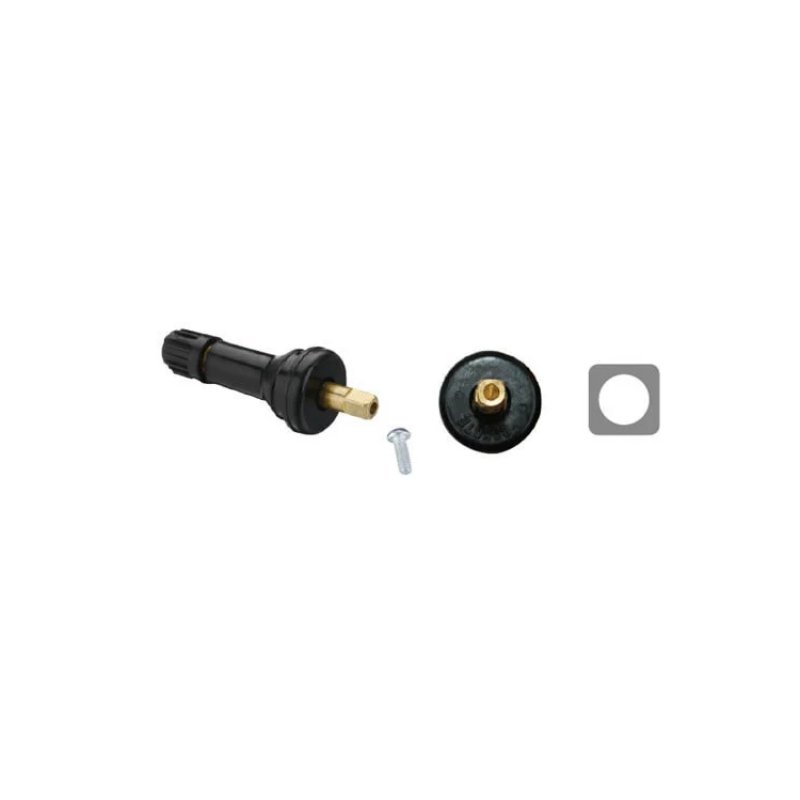
At Fortune, we manufacture rubber snap-in TPMS valve stems for compatible passenger-car and light-truck sensor applications. The rubber body is not a decorative cover. It is the part that passes through the rim hole, compresses against the wheel and helps maintain the seal while the valve provides the inflation path and sensor mounting interface.

what Is rubberTPMS Valve?

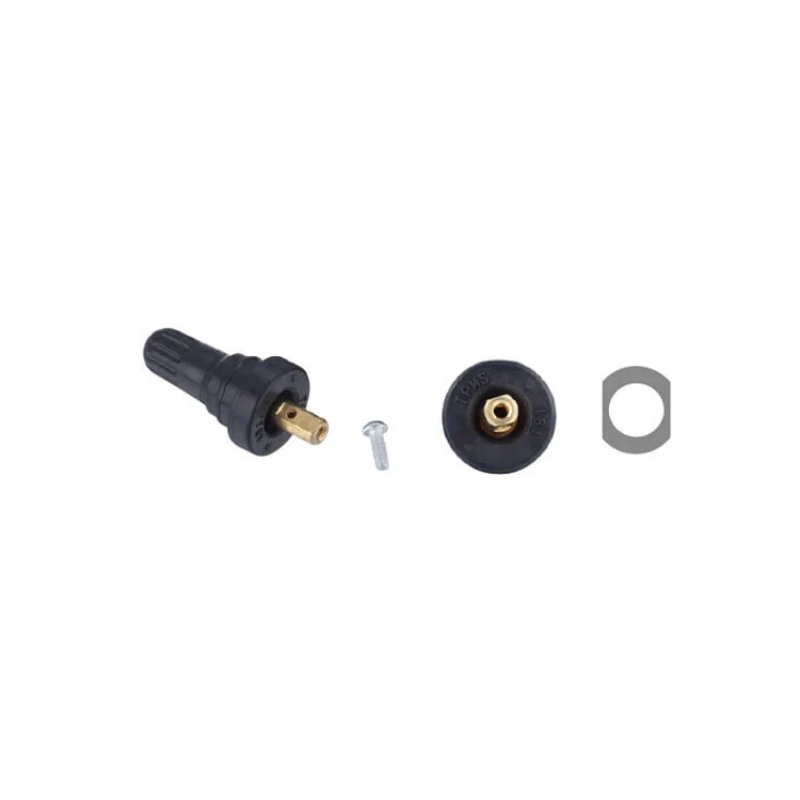
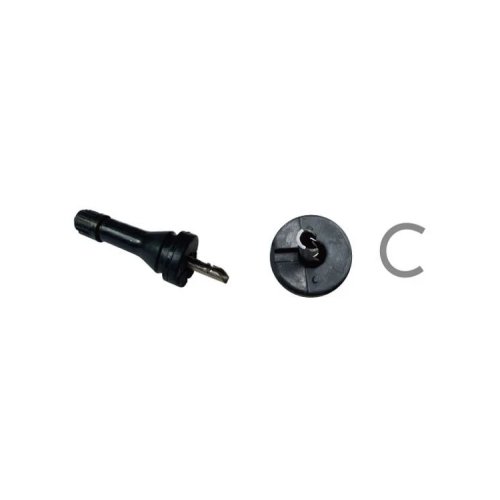
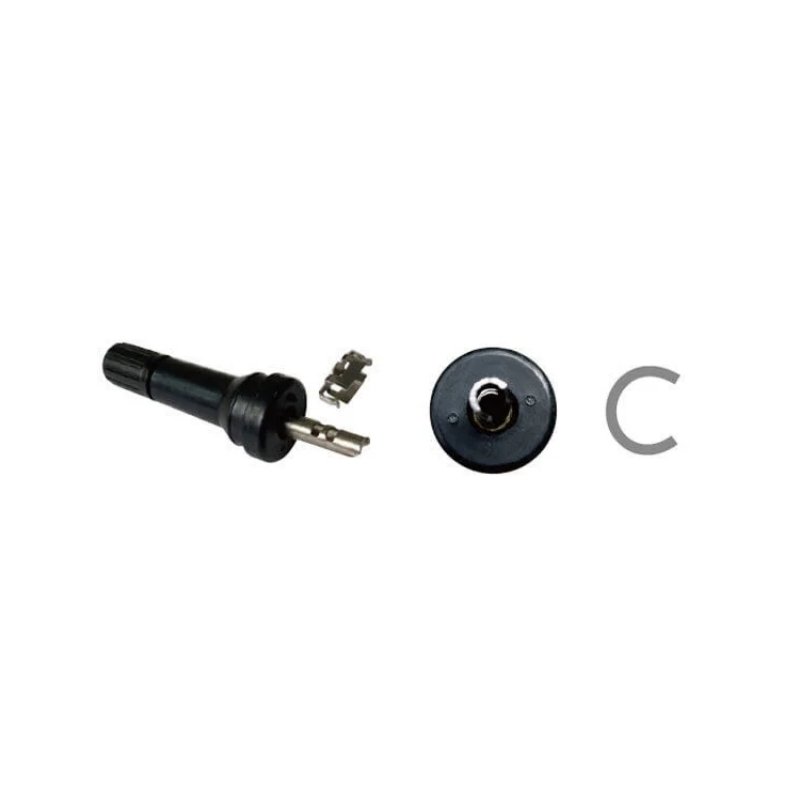
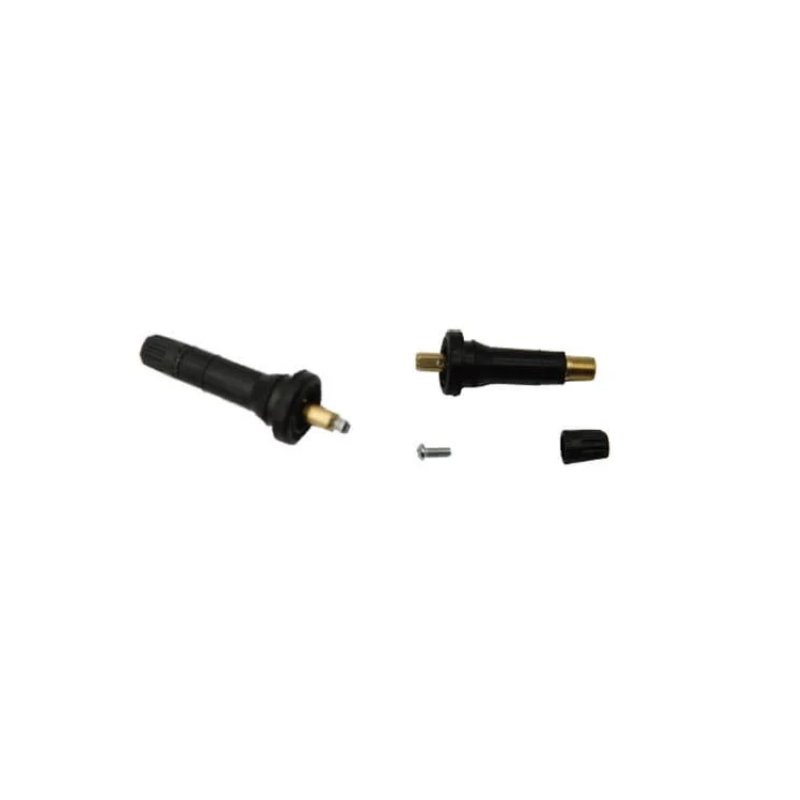
A rubber TPMS valve — you will also see it written as a rubber TPMS valve stem — is a snap-in tire valve with one extra job. A standard valve gives you an inflation path and nothing else. A TPMS valve also carries an approved mounting interface, so a direct TPMS sensor can be fixed to the wheel through the valve itself.The rubber body is not a decorative cover: it passes through the rim hole, compresses against the wheel and holds the seal. Inside it, a metal insert carries the valve core thread and receives the sensor screw. 

Rubber vs Metal

Point of comparison Rubber TPMS valve Metal TPMS valve
How it holds the rim Base pulls through the rim hole and seals by compression Stem clamps to the rim with a nut
What carries the sensor A metal insert moulded into the rubber body A machined metal stem
Installation Pull-through with a standard tool; no clamp nut to torque Clamp nut torqued to the rim, with a grommet and washer
Parts to keep on the shelf Valve core, cap, sensor screw Stem, grommet, washer, nut, core, cap

Advantages of Fortune Rubber TPMS Valve Stems

Every rubber tire valve we manufacture can be engineered down to the precise millimeter and chemical compound to match your exact OEM specifications. Backed by an experienced R&D team of over thirty engineers, we move beyond generic supply to offer comprehensive ODM capabilities.

premium EPDM rubber base

Our rubber tire valves utilize high-quality EPDM instead of inferior natural rubber. Natural rubber easily ages in the air and frequently breaks during rim installation. We engineer our rubber base with 100% premium EPDM to provide superior resistance against ozone exposure, extreme weather, and chemical degradation. This material upgrade physically prevents the valve base from hardening, cracking, and leaking air over extended use.

CNC-machined copper rods

Inside our rubber valve stems, we fully replace zinc alloy and inferior metals with high-purity copper. Low-cost alternatives use zinc alloy main rods with poor sealability and unstable material properties, causing premature cracking, aging, and high failure risk under mounting stress. We produce our internal stems exclusively on advanced CNC machinery for high precision and smooth surfaces—guaranteeing exact dimensional tolerances and a secure rubber-to-metal bonding interface that withstands installation forces and high-speed loads without structural shear.

secure rubber-to-metal bonding

The rubber body and the metal insert have to stay together through every heat cycle of the wheel's life, and the bond is where a failure starts: the rubber separates, air tracks along the interface, and the leak reads as a slow pressure loss, not a blowout. We inspect the insert dimension, the 8V1-1 core thread, the metal surface, the rubber coverage and the bonding against the drawing. It is a wearing part, not a lifetime one.

Excellent sealability

A snap-in valve is held by compression alone, and that is what makes the seal forgiving: the rubber takes the shape of the rim it is given, absorbing small differences in hole size and rim thickness. What that compression depends on is the base diameter against the actual rim hole, the shoulder shape against the rim profile, and the rubber hardness in the approved compound. Too small and it will not seal reliably; too large and it distorts.

Fortune Rubber TPMS Valve Stems for different applications

A reliable rubber TPMS valve is an application decision before it is a part number. Ozone and weathering resistance, effective length and sensor clearance, pack quantity for shelf planning, and a reference mapped to a sensor range — each of those is set by where the valve is going, not by the catalogue. We confirm each application from data rather than from a vehicle list.

Passenger-car tire replacement

This is the highest-volume rubber TPMS valve application, and the check is straightforward: confirm the sensor, confirm the rim hole, inspect the old base for cracking and bottom leakage, and fit the matched model. Do not replace a TPMS valve with a standard rubber tire valve because the hole size matches.

SUV and light-truck service

Wheels here are often deeper and the valve position less accessible. Stem length and sensor clearance become real constraints rather than theoretical ones — a longer stem can improve inflation access and still reduce clearance to the sensor body. Send us the wheel and the sensor and we will check the configuration instead of you guessing from a photo.

Tire shop consumable stock

Workshops and distributors can organise stock by sensor family, reference kit, rim hole and pack quantity. Our published rubber range ships at 100 pieces per bag and 10 bags per case, which suits a shop that services a consistent sensor mix. Confirm the current pack, labels and assortment before you place a wholesale order.

Aftermarket sensor brand kits

If you distribute aftermarket sensors, we can build the valve matrix around your sensor range so that each sensor reference maps to a confirmed valve and screw. This is a service-kit and catalogue exercise, not a truck-fleet exercise — for commercial vehicle wheel positions and dual-tire configurations, use our Truck TPMS Valve range.

Rubber TPMS Valve Installation and Maintenance

A clean installation is not luck; it is designed in. We size the rubber base so it pulls through without a fight, and machine the copper insert so the sensor screw reaches its rated torque without stripping. Both decisions are made at the drawing stage, long before a technician touches the wheel. We apply the same discipline across every wheel category we build for: passenger car, SUV and light truck, and commercial vehicle.

How to Fit and Replace

Prepare

Release tire pressure and protect the sensor before the tire is removed.

Remove the old valve

Inspect the rim hole for corrosion, burrs, dirt or damage. A damaged rim hole will damage the new base.

Clean and lubricate correctly

Clean the sealing area and use the approved installation tool and lubricant procedure for the compound.

Install the new snap-in valve

Pull the base through without cutting, twisting or over-stretching the rubber.

Attach the sensor

Use the model-specific screw and torque. The T-10 screw torque of 12.5 in-lb (1.4 Nm) published for TPMS-1, 2, 3, 4 and 8 is a model-specific figure, not a range-wide one. TPMS-3 additionally publishes a nut torque of 11.5 in-lb (2 Nm) and a core torque of 2–5 in-lb (0.23–0.56 Nm). Do not reuse a damaged screw, and do not assume every model shares a value.

Verify

Confirm sensor direction and clearance, inflate, perform a leak check, then complete the TPMS activation or relearn procedure.

When to inspect

Before installation

Check the base for cuts, flash, distortion or a visible gap at the bonding line. Confirm the model number against the sensor you are fitting, not against the valve you removed.

In service, during routine work

Look for surface cracking, hardening, swelling, a shiny or chalky surface, and any rubber separating from the metal insert. Check for air leaking at the base where the valve meets the rim — bottom leakage is the classic rubber-valve failure and it is easy to miss because the tire still looks correct.

At tire removal

This is the best inspection opportunity you will get, because the assembly is already apart. Check the base lip, the sealing face and the bonding line, and check the rim hole for corrosion, burrs or contamination that would damage a new base on installation.

Fortune Rubber TPMS Valve OEM and ODM Support

We support OEM and ODM projects based on an application, sample, OE number or drawing. 

Application and Parameter Review

Share the vehicle, wheel, sensor, operating environment, estimated quantity and destination market. We offer designs for 8.3 mm, 11.5 mm (.453 in) and 16 mm (.625 in) rim holes. Our metal drawings define the angle, rim thickness, grommet, washer, nut and sensor interface before production.

01

Drawing, Sample and Product Confirmation

We confirm the rubber base geometry, the effective length, the compound direction, the metal insert, the sensor screw, the core and the cap, and the contents of the service kit. Selected rubber stem features can be developed to a drawing-specific target tolerance of up to ±0.02 mm — a target agreed on a drawing and verified by our project team, not a blanket tolerance across the range.

02

Production and Delivery Planning

Our engineering workflow prepares functional prototypes for fitment testing within 48 to 72 hours after digital and machining validation. Permanent custom tooling is planned at approximately 15 to 25 days after approval. MOQ and final lead time are confirmed in the quotation.

03

Why Choose Fortune rubber TPMS Valves manufacturing?

Fortune started making wheel weights and tire valves in Ningbo, Zhejiang in 1996. A second factory followed in 2008, and we set up warehouses and offices in Canada in 2014 and a warehouse in the United States in 2023.

30 years experience & global export

With exactly 30 years of deep industry accumulation, we produce high-volume tire valves for top-tier aftermarket brands. Our products are widely exported to over 50 countries, spanning major markets across North America, Europe, and Asia.

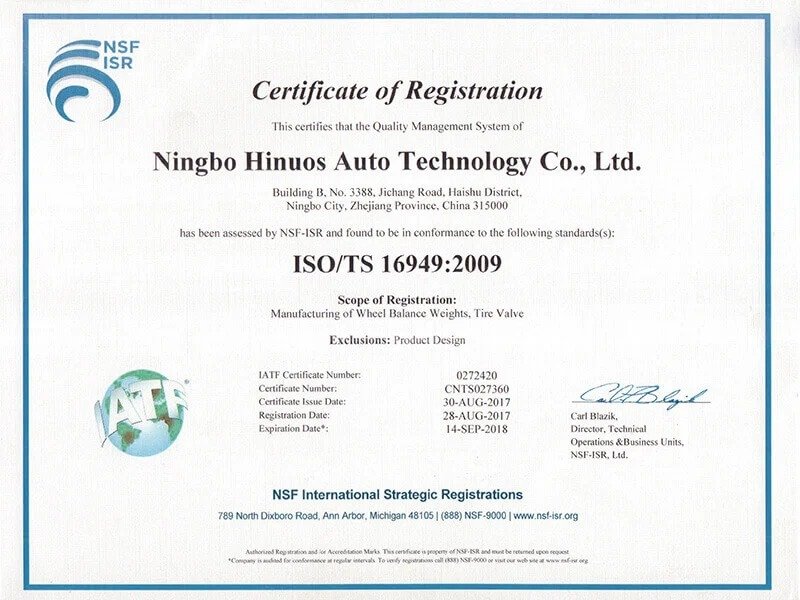
TÜV SÜD ISO/TS 16949 certification

We operate under the strictest international automotive quality management systems. Fully certified by TÜV SÜD ISO/TS 16949, we guarantee 100% traceability and zero-defect quality control throughout the entire manufacturing process.

30+ engineers R&D & product development

Backed by an in-house R&D team of over 30 engineers, we independently handle everything from raw material compounding to mold processing. This allows us to rapidly develop and customize any standard or specialized tire valve products.

direct OEM service & localized support

We eliminate middlemen to provide highly efficient, factory-direct OEM/ODM services. Supported by our dedicated North American branches and warehouses since 2014, we deliver rapid localized logistics, flexible inventory, and 24/7 technical support.

Fortune Latest News

wheel-lug-nuts

How to Properly Torque Lug Nuts

Lug nuts with incorrect torque can cause a wheel to come loose at highway speed — one of the most dangerous failures a driver can experience. Too loose, and the wheel works free over the first 100 km; too tight, and the studs stretch or snap under load. The fix
Read More >

Lug Nuts – Everything You Need to Know

The stock wheel nuts on most cars do their work without anyone noticing them — until the day a wheel wobbles, a stud snaps, or a finish gets scratched during a tire swap. Aftermarket lug nuts solve the cosmetic problem but introduce a technical one: every wheel and stud combination
Read More >

FAQs about Fortune rubber TPMS valve

What is the difference between a rubber TPMS valve and a standard rubber tire valve?

A rubber TPMS valve adds an approved mounting interface for a direct TPMS sensor on top of the inflation path. It has to match the sensor body, the sensor screw, the installation direction, the rim hole and the rim thickness. A standard rubber tire valve provides the inflation path only. It may fit the same rim hole and still be the wrong part for your sensor.

No, and we will not say they are. We cover two rim-hole designs — 11.5 mm (.453 in) and 16 mm (.625 in) — and fitment also depends on rim thickness, rim profile and clearance around the sensor. The rim-hole sections above explain how to check yours.

Tell us the vehicle application, the normal and maximum operating pressure, the temperature range and the exposure — heat, cold, ozone, moisture, road salt. We then provide the approved data for the selected model. We do not apply one pressure or temperature figure across the range. For reference, our published 15 kgf/cm² (about 212 psi) figure is a pneumatic leak-detection condition, not a working-pressure rating.

Inspect it every time the assembly is apart. If you find cracking, hardening, swelling, a damaged base or leakage where the valve meets the rim, replace it. If the condition of a sealing part is unknown and the valve is already out, that is the moment to decide.

Yes ,that is most of what we do. Send the sensor brand and model, or a photo of the label, and we will come back with the candidate models. If you distribute a fixed sensor range, we can also build the valve matrix around it so that each reference maps to a confirmed valve and screw.

contact Fortune