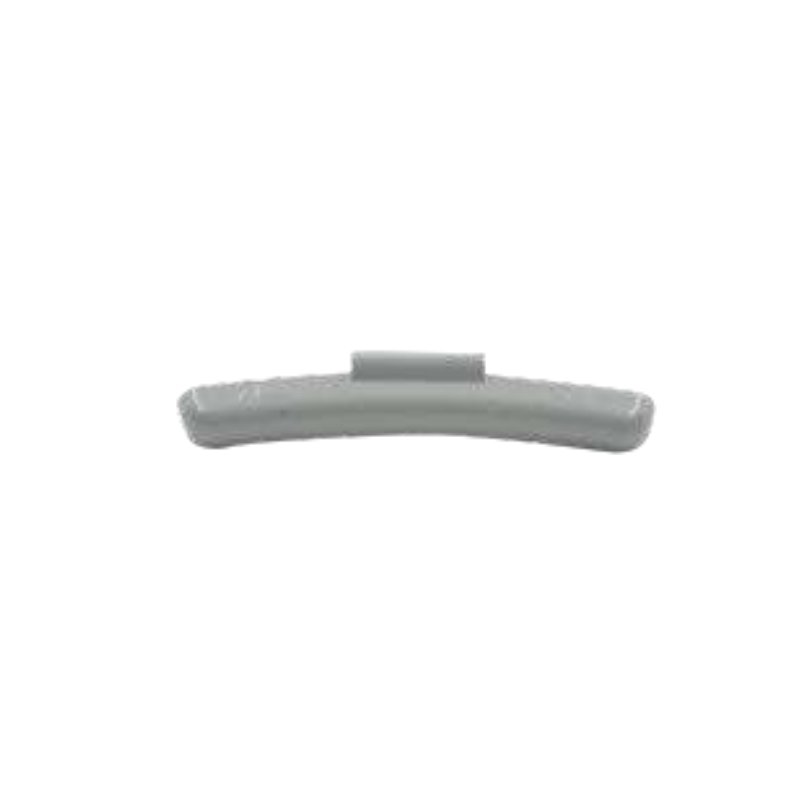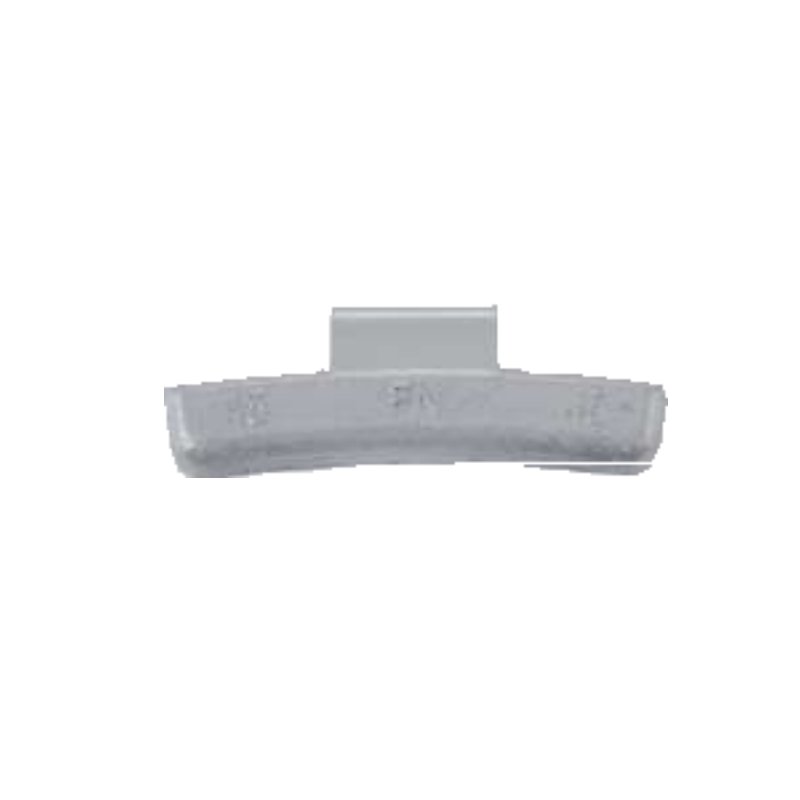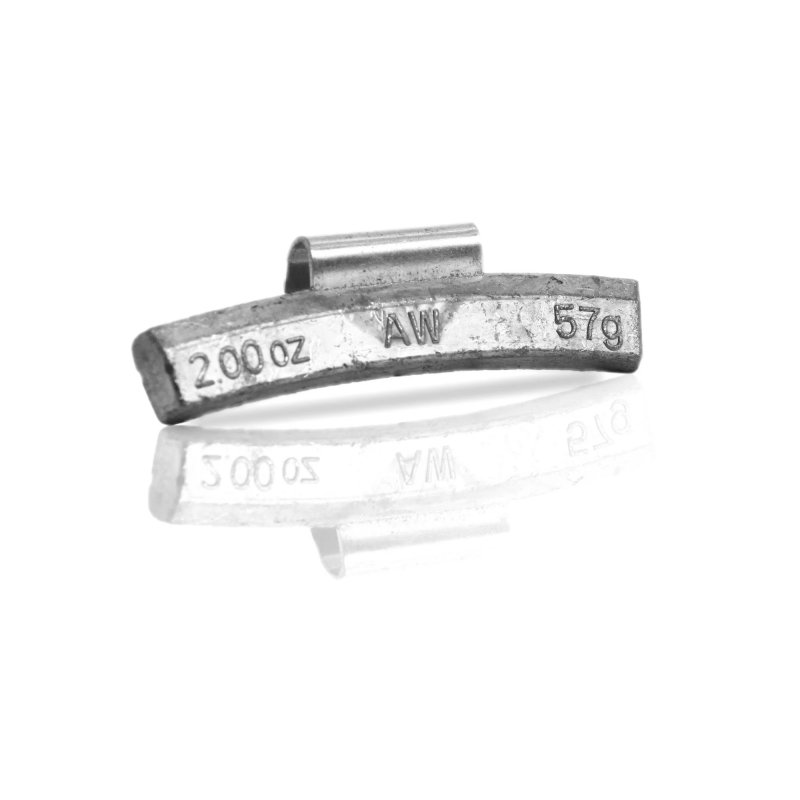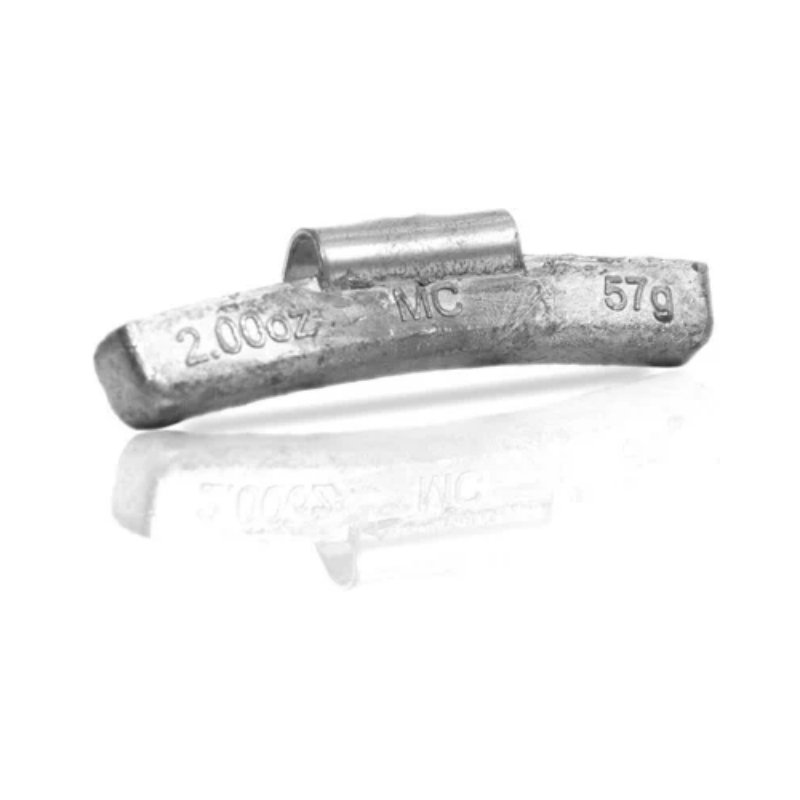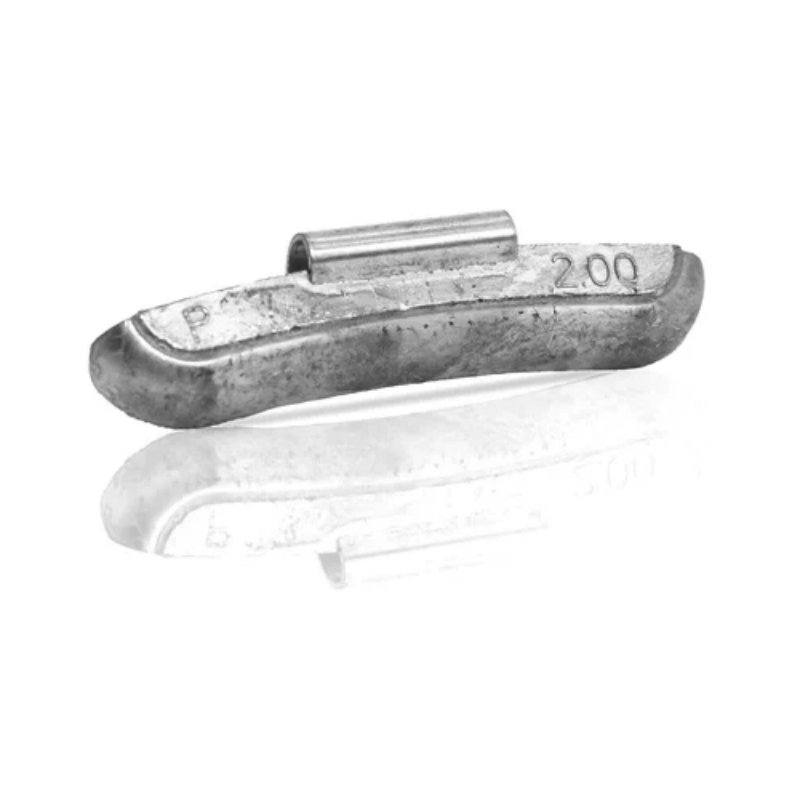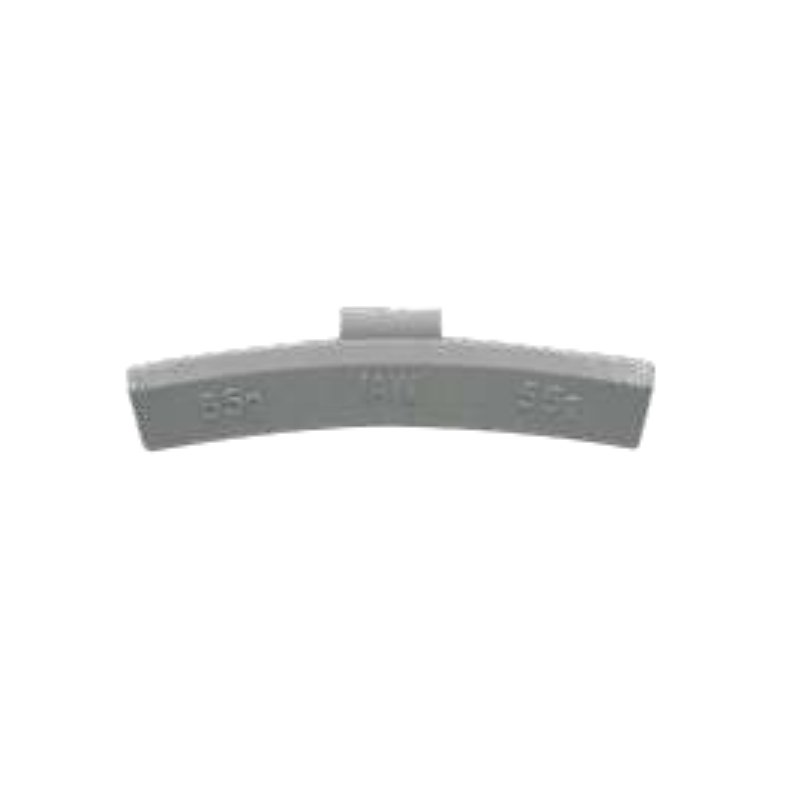


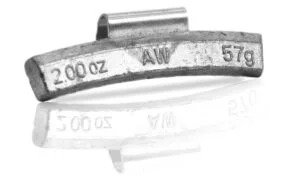
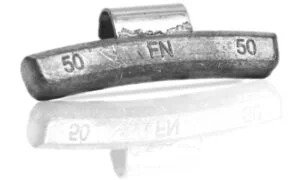
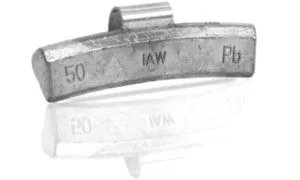
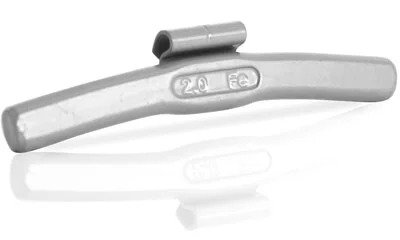
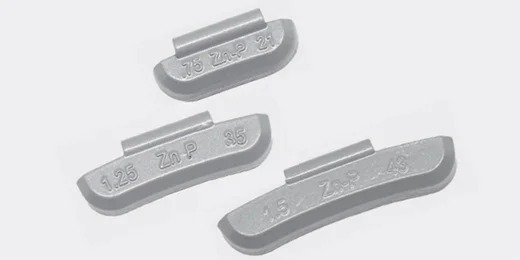
Fortune lead clip-on wheel weights are the high-density benchmark of the range and one of our core product lines. At about 11.34 g/cm3, lead is the densest clip-on material available, so a lead weight delivers the correction in the smallest possible body — the one that hides behind a spoke, clears a tight caliper and sits flush on a shallow flange. Lead also conforms to the flange instead of springing back, giving a quiet, permanent seat that professional technicians have trusted for decades. Fortune supplies lead clip-on weights in coated and uncoated finishes across the full ounce and metric range, with packaging and documentation matched to the market you serve.
Ask a working technician which material he reaches for and the answer is usually lead, for three practical reasons.
Roughly 45% denser than steel and 65% denser than zinc. The same correction takes up far less space, hiding behind spokes and clearing tight calipers.
Lead is malleable. It takes the exact shape of the flange instead of resisting it, closing into a gap-free, quiet seat with a few light taps.
One dense lead weight spans a wider correction range in a smaller body. Carry fewer part numbers and correct almost any wheel.
Material rules differ by market, which is why Fortune supplies all three materials on one series grid.
Lead clip-on weights are the standard specification across most of Asia, the Middle East, Africa and Latin America, and in the majority of U.S. states — it is the default material in the great majority of markets we ship to. In the smaller number of markets that have introduced a lead restriction for wheel balance weights — the European Union since 1 July 2003 under the ELV Directive 2000/53/EC, Canada, and nine U.S. states — Fortune supplies zinc or steel clip-on weights on the same series and the same flange profiles, so your programme does not change, only the material does. Tell us your destination and we will confirm the right specification and the documentation your market requires.
For markets with lead restrictions (e.g., EU, Canada, specific US states), Fortune seamlessly supplies zinc or steel on the same flange profiles, ensuring your programme never stops.
Because lead packs more mass into less space, it is the preferred material where the weight has to disappear. On a classic wheel with a shallow flange, on a multi-spoke alloy where the correction must sit between spokes, or on any wheel where caliper clearance is measured in millimetres, lead solves the problem a bulkier zinc or steel body creates. It also means a lead weight is less likely to be knocked off by kerb contact or by a tyre machine, because less of it stands proud of the flange.
Lead is malleable rather than springy. Under a light hammer strike it conforms to the exact contour of the flange instead of resisting it, so the clip closes fully and the weight sits flush, with no gap and no rattle. That same softness lets lead absorb vibration rather than transmit it, which is why a correctly seated lead weight rarely works loose on a rough road. It is also the most forgiving clip-on material to install: a trainee technician achieves a good seat on lead far more easily than on a springy steel clip.
Lead is one of the most recycled metals in the world: removed weights are collected through established scrap channels in almost every market and return to use almost indefinitely. That gives lead clip-on weights a real residual value at end of life rather than a disposal cost, which is one more reason they remain a sound commercial choice for workshops and distributors.
Fortune supplies lead clip-on weights uncoated, which is the traditional specification most workshops reorder, and coated for customers who want a cleaner finish and extra surface protection. Coated lead carries a polymer layer that keeps the weight looking uniform on a visible flange and protects it from surface oxidation in storage and in service. Uncoated lead remains the economical standard. Both share identical clip geometry, so switching between them does not change series selection or installer technique.
Fortune lead clip-on weights cover the North American ounce series (REG, MC, AW, T) and the metric gram series (FN, IAW) for Japanese, European and Asian alloy wheels. The ounce range runs from 0.25 oz to 3.00 oz, packed 50 pieces per box in the small sizes and 25 pieces per box for heavier weights. The metric range runs from 5 g to 60 g at 25 pieces per box. Because lead is denser, a single box covers a wider spread of corrections than the same box in zinc or steel.
REG is the North American standard for passenger-car steel rims, covering 13 to 17 inch wheels with a standard-width flange.
0.25–0.75 oz
1.00–1.50 oz
1.70–3.00 oz
MC is profiled for most North American vehicles — Buick, Chevrolet, Chrysler, Dodge, Ford, Mazda, Oldsmobile, Pontiac and Saturn.
0.25–0.50 oz
0.75 oz
1.00–1.50 oz
1.70–3.00 oz
AW serves North American alloy rims built before 1995 and covers Acura, Buick, Chevrolet, Chrysler, Dodge, Infiniti, Isuzu, Lexus, Oldsmobile and Pontiac.
0.25–0.50 oz
0.75 oz
1.00–1.50 oz
1.75–3.00 oz
FN covers most Japanese vehicles — Acura, Honda, Infiniti, Lexus, Nissan and Toyota.
5–30 g
35–45 g
50–60 g
IAW spans European, new Ford and select Asian alloys including Audi, BMW, Cadillac, Jaguar, Kia, Nissan, Toyota, Volkswagen and Volvo.
5–30 g
35–45 g
50–60 g
T is the light-truck series for decorative or thicker steel wheels and most non-commercial light-truck alloys.
0.25–1.25 oz
1.50–3.00 oz
Correct fitment starts with the series code, not the box label. Use the guide below to match each Fortune steel clip-on series to the right vehicle makes and rim type, then confirm the exact size against the vehicle service manual or a Fortune catalog. Getting this right the first time prevents comebacks and protects your reputation with every balanced wheel you ship.
| Series | Fits (rim / wheel) | Vehicle Brands |
|---|---|---|
| REG | Standard passenger-car steel wheels, 13″–17″ | Universal Fit (All brands with standard steel rims) |
| MC | Most North American vehicles with alloy rims. | Buick, Chevrolet, Chrysler, Dodge, Ford, Mazda, Oldsmobile, Pontiac & Saturn |
| AW | North American alloy rims built before 1995. | Acura, Buick, Chevrolet, Chrysler, Dodge, Infiniti, Isuzu, Lexus, Oldsmobile & Pontiac |
| T | Light trucks with decorative/larger-thickness steel wheels and most light-truck alloy wheels. | Universal Fit (All Light Truck Brands) |
| FN | Most Japanese vehicles. | Acura, Honda, Infiniti, Lexus, Nissan & Toyota |
| IAW | New Ford models, most European & certain Asian alloy wheels. | Audi, BMW, Cadillac, Jaguar, Kia, Nissan, Toyota, Volkswagen & Volvo |
Installing steel clip-on wheel weights is quick, but precision matters. Follow Fortune four-step method to guarantee retention, protect the rim, and deliver a vibration-free ride. A soft-tip installation hammer and a wheel balancer are all you need; no adhesives or cure time required.

Refer to the wheel weight application guide to select the proper wheel weight for the vehicle you are servicing. Verify that the wheel counterweight has been properly installed by testing the position of the wheel counterweight on the wheel rim. The clips on the counterweight block should align seamlessly with the contour of the wheel rim.
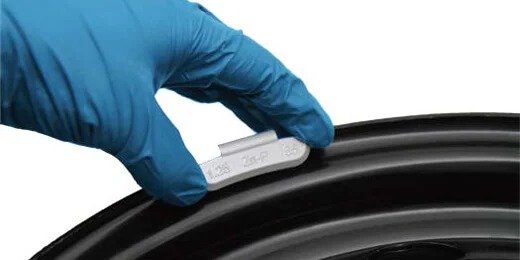
Position the weight at the point of imbalance identified by the balancer. Before you strike anything, make sure the top and bottom of the clip are both in full contact with the rim flange and that the body of the weight is clear of the rim surface. Always use a soft-tip hammer so you never scratch or dent the wheel during installation.
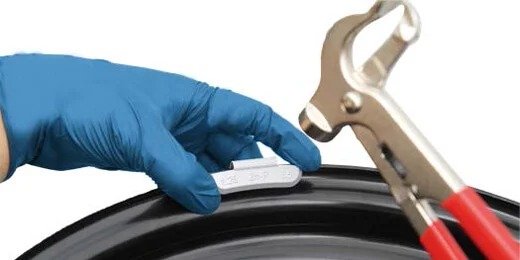
With the weight aligned, strike the clip area only, never the body. Use a soft-tip hammer and tap the clip area no more than twice. Over-striking or hitting the body can crack the clip, loosen retention or shift the weight, leading to failure. Two firm, accurate taps are enough to seat a steel clip-on securely.
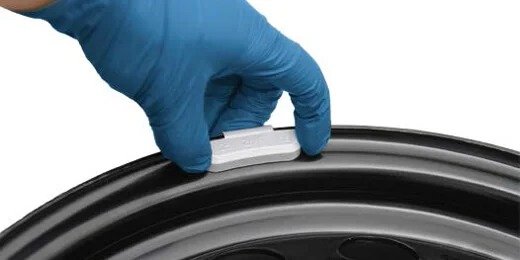
Spin the wheel on the balancer and confirm the heavy point is corrected with no wobble or vibration. If it is still out of balance, add or remove weights as needed. Finish with a short road test and listen for unusual vibration or handling changes. If the wheel runs true, the steel clip-on weights are doing their job.
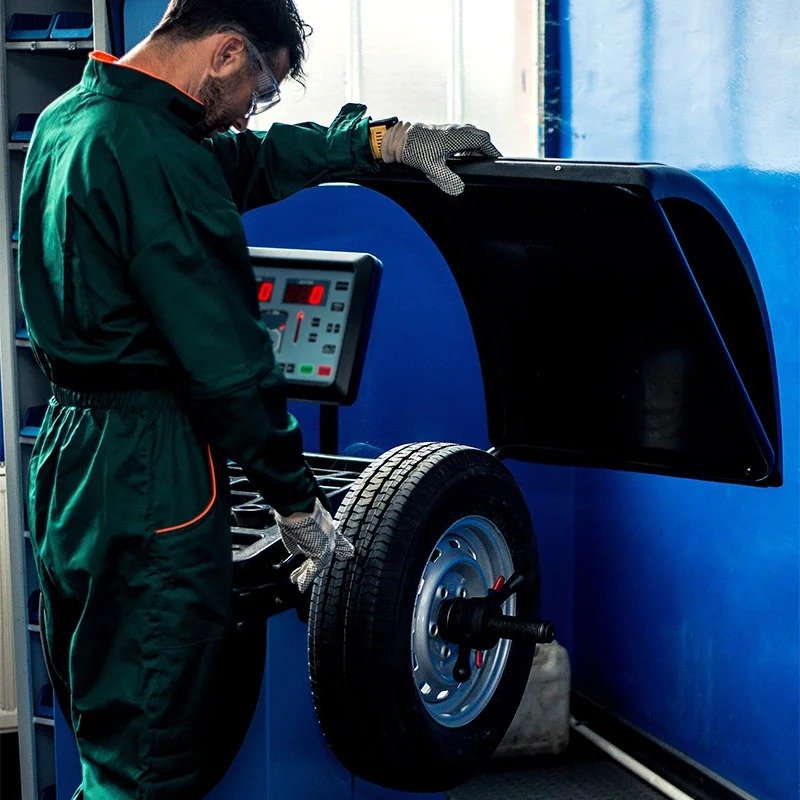
From your first sketch to full-scale production — four engineering milestones that turn your private-label idea into shelf-ready product. Our OEM process is transparent, timeline-driven and designed for buyers who need custom specifications without the engineering overhead.

Tell us the rim type, vehicle market and coating requirement. Our engineering team locks the geometry and material formula within 24 hours — cold-rolled steel strip grade, zinc layer thickness between 5 and 8 microns, lead alloy ratio or eco-friendly coating adhesive. No CAD file needed from you.
Progressive-die simulation using SIGMASOFT software validates material flow and identifies potential defects before cutting steel. Five-axis Swiss CNC machining produces functional samples with tolerances held to plus or minus 0.01 millimeters. Samples ship within 48 to 72 hours for immediate fitment testing.
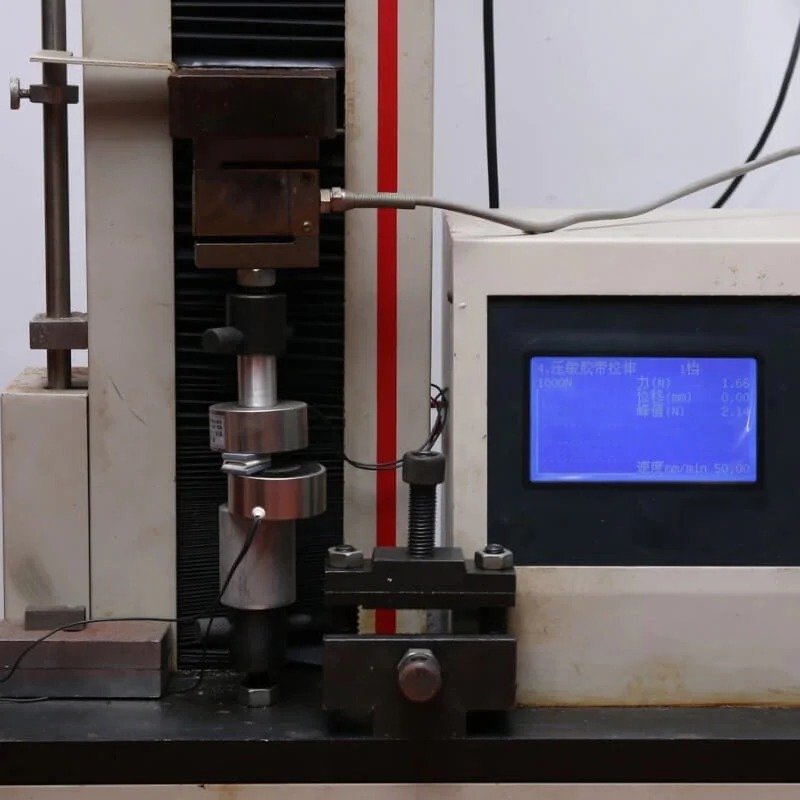
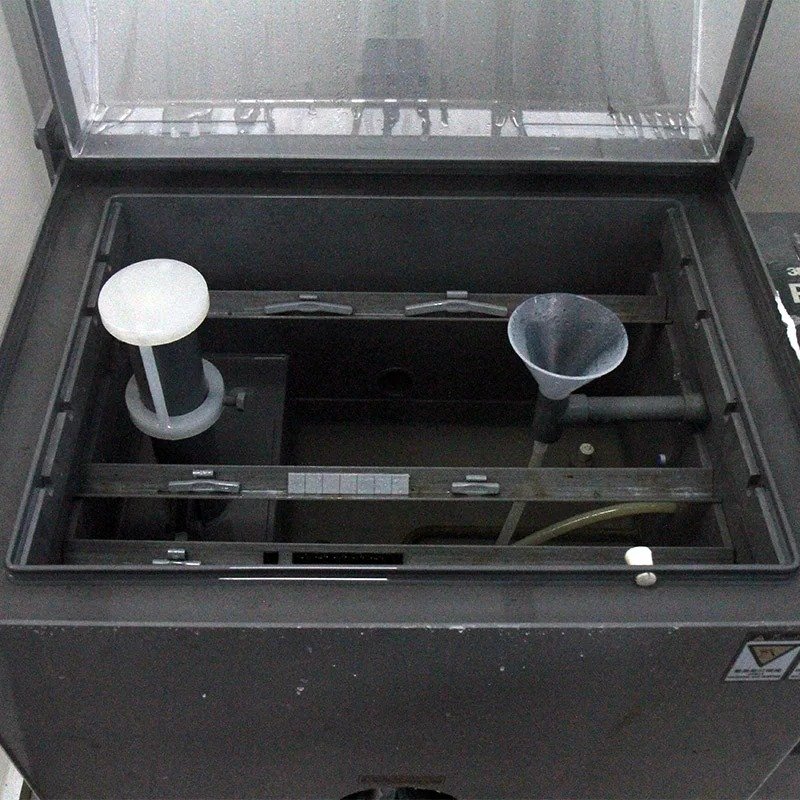
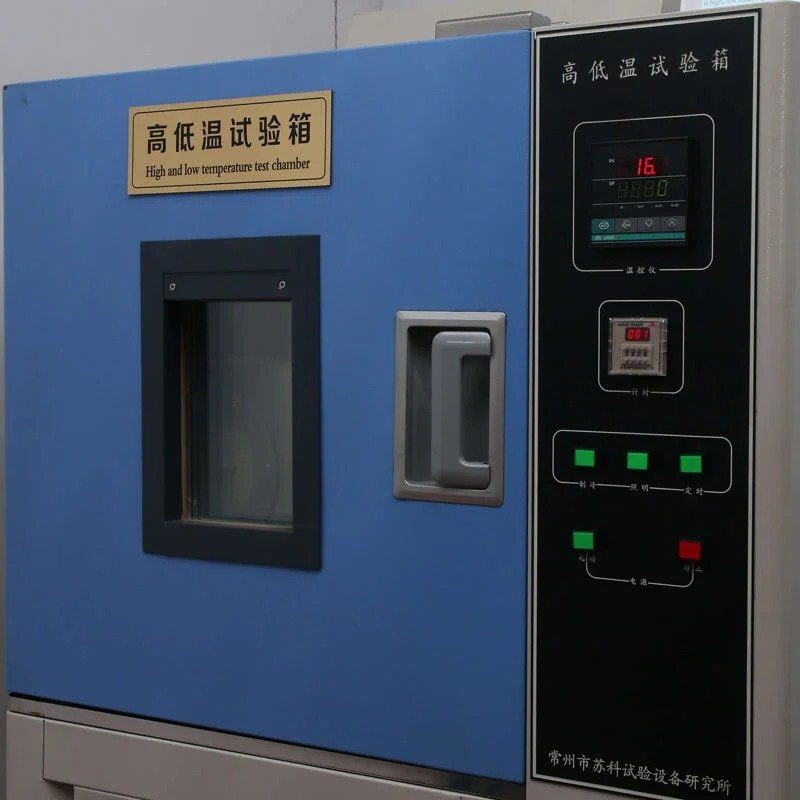
Every batch undergoes comprehensive destructive testing before reaching your warehouse. Salt-spray exposure per ASTM B117 for 500 hours minimum, clip pull-off force testing at 400 newtons, coating adhesion cross-cut evaluation at grade zero, weight tolerance verification within plus or minus 0.5 percent, and installation fatigue cycling to 10,000 cycles. Values pending final factory verification.
Production tooling uses S136 mold steel rated for over 500,000 shots with minimal wear. Tooling turnaround from approval to first article inspection is 15 to 25 days depending on cavity count. One hundred percent automated optical inspection maintains CPK greater than 1.33 with defect rates consistently below 50 parts per million.

Most of them. Lead clip-on wheel weights are the standard specification across most of Asia, the Middle East, Africa and Latin America, and in the majority of U.S. states. A smaller number of markets have introduced a restriction for wheel balance weights — the European Union since 1 July 2003 under the ELV Directive 2000/53/EC, Canada, and nine U.S. states — and Fortune supplies zinc or steel clip-on weights for exactly those destinations, on the same series and flange profiles. Send us your destination and we will confirm the right material and documentation.
Three reasons. Density — about 11.34 g/cm3 — gives the smallest body for any given correction, which solves clearance problems on multi-spoke barrels and shallow flanges. Malleability means the weight conforms to the flange instead of springing back, so it seats with a few light taps and stays quiet. And coverage: one dense weight spans a wider correction range, so a shop carries fewer part numbers. For a technician balancing dozens of wheels a day, that adds up to faster, more accurate work.
Yes, and efficiently so. Lead is one of the most recycled metals in the world: removed weights are collected through established scrap channels in almost every market and return to use almost indefinitely. That gives lead clip-on weights a real residual value at end of life rather than a disposal cost, which is one more reason they remain a sound commercial choice for workshops and distributors.