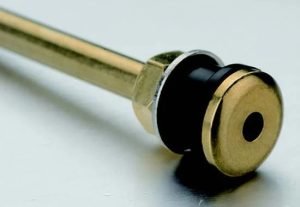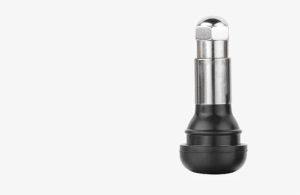
Although an automotive tire valve stem is small, it plays a critical role in maintaining tire pressure and preventing air leakage. During vehicle operation, the valve stem is continuously exposed to demanding conditions such as high and low temperatures, ultraviolet radiation, ozone, rainwater, road salt, vibration, and centrifugal force at high speeds.
If the rubber compound does not provide sufficient aging resistance, the valve stem may gradually harden, lose elasticity, develop surface cracks, suffer reduced sealing performance, and eventually cause slow air leakage.
For this reason, the rubber used in tire valve stems must meet much higher performance requirements than ordinary rubber products.
In commonly used snap-in rubber tire valves, including TR413, TR414, and TR418, EPDM – ethylene propylene diene monomer rubber – is one of the most important base elastomers.
EPDM is well suited to tire valve stems because it offers excellent resistance to ozone, weathering, heat, and oxidation. More importantly, these properties do not come only from antioxidants in the formulation; they are also closely related to the molecular structure of EPDM itself.
What Is EPDM for Tire Valve Stems?
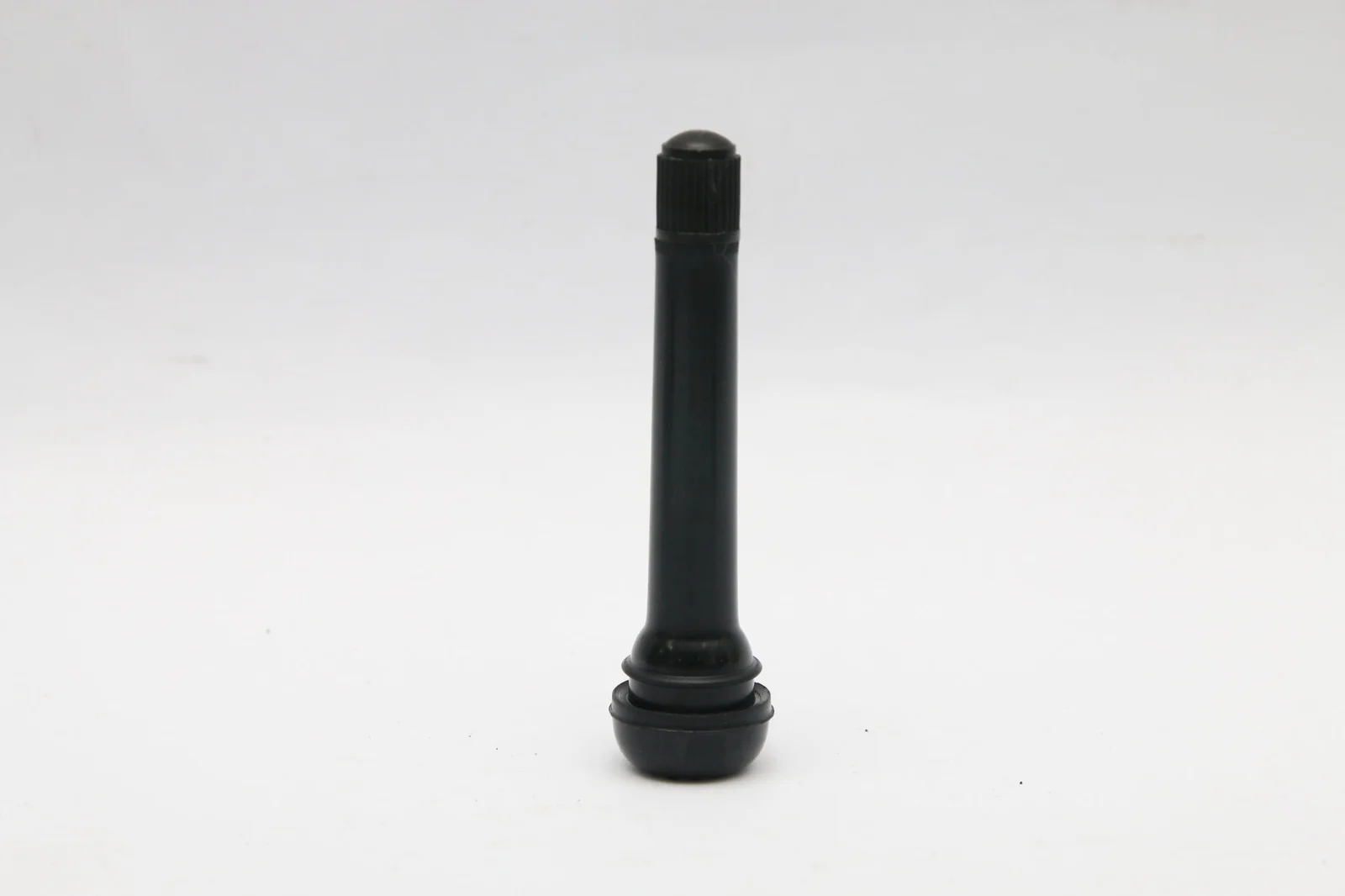
valve stem
EPDM stands for Ethylene Propylene Diene Monomer, a synthetic rubber produced primarily from three types of monomers.
Monomer Chemical Name Main Function
Ethylene Ethylene Provides strength, heat resistance, and structural stability
Propylene Propylene Provides flexibility, elasticity, and weather resistance
Diene Third monomer Introduces a small amount of unsaturation so the rubber can be vulcanized
A commonly used diene monomer in EPDM is ENB, or ethylidene norbornene. The third monomer plays a critical role. It provides the reactive sites required for vulcanization without introducing a large number of double bonds into the main polymer backbone.
This distinctive molecular design allows EPDM to combine good processability and cure performance with excellent resistance to aging.
How Does EPDM for Tire Valve Stems Differ Structurally from Natural Rubber?
valve stems
To understand why EPDM has strong oxidation resistance, it is first necessary to examine the carbon-carbon double bonds in rubber polymer chains.
Molecular Structure of Natural Rubber
Natural rubber consists mainly of cis-1,4-polyisoprene. Its repeating unit can be represented in simplified form as:
CH₃
|
–CH₂–C=CH–CH₂–
The main chain of natural rubber contains a large number of carbon-carbon double bonds: C=C
These double bonds contribute to the excellent elasticity and dynamic performance of natural rubber. However, they are also relatively vulnerable to attack by oxygen and ozone.
When the double bonds and the surrounding molecular structure are damaged, the rubber backbone may gradually undergo chain scission or other structural changes. The resulting effects may include:
Increased hardness
Reduced elasticity
Lower tensile performance
Surface cracking
Reduced sealing performance
Molecular Structure of EPDM
The main backbone of EPDM is formed primarily from ethylene and propylene units and can be represented in simplified form as:
–CH₂–CH₂–CH₂–CH–
|
CH₃
Its polymer backbone consists mainly of stable carbon-carbon single bonds: C–C
The limited number of double bonds is introduced by the diene monomer and is located mainly in pendant groups or side-chain structures, rather than being widely distributed throughout the main polymer backbone.
In simplified terms:
Natural rubber: More C=C double bonds in the main chain
EPDM: A stable C–C backbone, Limited unsaturation in pendant groups
Even after the unsaturated sites introduced by the third monomer participate in vulcanization, the main EPDM backbone remains highly saturated.
This is one of the fundamental reasons EPDM provides excellent resistance to oxidation, ozone, and outdoor weathering.
What Is a Typical Tire Valve Stems Rubber Compound Made Of?
The rubber body of a tire valve stem is not made from EPDM alone. It is a systematically engineered compound containing reinforcing fillers, process aids, curing ingredients, protective additives, and a rubber-to-metal bonding system.
Formulations vary according to the manufacturer, valve design, hardness requirement, manufacturing process, customer specification, and test standard. The following information describes a typical formulation approach and should not be interpreted as a fixed recipe used by every manufacturer.
Ingredient Typical Range Main Function
EPDM 100 phr Base rubber material
Carbon black 50–100 phr Improves strength, hardness, tear resistance, and weatherability
Process oil 10–80 phr Improves processing and flexibility while adjusting hardness
Zinc oxide 3–5 phr Vulcanization activator
Stearic acid 1–2 phr Works with zinc oxide to support vulcanization
Sulfur or other curing agents Depends on system Creates the crosslinked network
Accelerators Depends on system Controls cure rate and crosslink structure
Antioxidants 1–3 phr Delays heat and oxygen aging
Protective wax 1–3 phr Forms an auxiliary protective layer on the rubber surface
Mineral fillers Depends on formula Adjusts hardness, cost, and dimensional stability
Bonding system Small amount Improves adhesion between the rubber and metal insert
The term phr is commonly used in rubber formulation and stands for parts per hundred rubber. It indicates how many parts of an ingredient are added for every 100 parts of the base rubber.
For example:
EPDM: 100 phr
Carbon black: 70 phr
This means that 70 parts of carbon black are added for every 100 parts of EPDM.
Typical dosage ranges are useful only for understanding the structure of a formulation. The final performance of a tire valve stem cannot be judged from a single ingredient or loading level. It must be evaluated together with the complete compound formulation, mixing process, and vulcanization conditions.
Why Is EPDM Suitable for Automotive Tire Valve Stems?
The main advantages of EPDM in automotive tire valve stems are outlined below.
Excellent Ozone Resistance: Tire valve stems remain exposed to the atmosphere throughout their service life, allowing ozone to act continuously on the rubber surface. Because the EPDM backbone is highly saturated and relatively resistant to ozone attack, it helps reduce the risk of surface cracking and sealing failure.
Good Heat-Aging Resistance: The tire and wheel area may reach elevated temperatures during high-speed driving, frequent braking, or prolonged summer exposure. A properly formulated EPDM compound can maintain relatively stable hardness, elasticity, and sealing performance across a broad temperature range.
Strong Weather Resistance: EPDM offers good resistance to sunlight, rainwater, oxygen, and changes in ambient temperature, making it suitable for automotive components that must remain outdoors for extended periods.
Good Low-Temperature Flexibility: In cold climates, the valve stem must remain flexible enough to preserve sealing performance. A well-designed EPDM formulation can retain good flexibility at relatively low temperatures and reduce the risk of excessive hardening.
Good Water Resistance: EPDM provides good resistance to water and many polar media, making it suitable for long-term exposure to rainwater, humid air, and road environments.
Balanced Cost and Performance: Compared with high-performance elastomers such as FKM, EPDM is more suitable for large-scale automotive component production while still meeting the requirements of most passenger-car and commercial-vehicle tire valve applications.
What Are the Limitations of EPDM for Tire Valve Stems?
EPDM is not a universal rubber for every fluid and service environment. Its main limitations include:
Poor resistance to gasoline
Poor resistance to diesel fuel
Poor resistance to most mineral oils
Unsuitability for long-term contact with petroleum-based lubricants
Lower abrasion resistance than some specialized elastomers
The need for specially engineered formulations and rubber-to-metal bonding processes
EPDM is particularly well suited to air, water, steam, ozone, and outdoor environments, but it is generally unsuitable for prolonged contact with fuels and mineral oils.
In normal tire valve service, the rubber is exposed mainly to the gas inside the tire and to external air, rainwater, and road conditions. This allows the advantages of EPDM to be used effectively.
Frequently Asked Questions About EPDM Tire Valve Stems
Are automotive tire valve stems made from pure EPDM?
No. The rubber section of an automotive tire valve stem generally uses EPDM as the base elastomer, but the complete compound also contains carbon black, process oil, curing agents, accelerators, antioxidants, and other additives. The material is therefore an engineered EPDM compound rather than pure, unformulated EPDM.
Why is EPDM more suitable than natural rubber for tire valve stems?
The most important difference lies in the structure of the main polymer backbone. Natural rubber contains more carbon-carbon double bonds in its main chain, making it more vulnerable to oxygen and ozone attack. EPDM has a backbone composed mainly of stable carbon-carbon single bonds and therefore has a higher overall degree of saturation. As a result, EPDM generally provides better ozone resistance, oxidation resistance, and long-term outdoor weatherability than natural rubber.
Does an EPDM label automatically indicate a high-quality tire valve stem?
Not necessarily. Even when two products both use EPDM, their actual performance may differ significantly. Final quality also depends on:
The EPDM grade
The carbon black and process oil systems
The antioxidant and curing systems
Mixing and dispersion quality
Rubber-to-metal bond quality
The vulcanization process
Finished-product testing and batch consistency
The name of the base material is therefore only one dimension of product quality.
How can buyers determine whether an EPDM tire valve stem is reliable?
Appearance and material labels alone are not sufficient. Buyers should also consider whether the supplier has stable control over raw materials, compound mixing, vulcanization molding, rubber-to-metal bonding, and finished-product inspection. During supplier evaluation, buyers can ask whether the product has completed the following validation tests:
Heat-aging testing
Ozone-aging testing
Low-temperature performance testing
Air-tightness testing
Pull-out force testing
Bending-fatigue testing
High-speed durability testing
Rubber-to-metal bond testing
These test results provide a more accurate indication of actual product quality than simply asking whether the valve stem is made with EPDM.
Conclusion: EPDM in Tire Valve Stems
EPDM is widely used in automotive rubber tire valve stems primarily because of its highly saturated molecular backbone.
Compared with natural rubber and other elastomers whose main chains contain more double bonds, EPDM is less vulnerable to oxygen and ozone attack. It therefore provides better resistance to oxidation, ozone, ultraviolet radiation, and long-term outdoor weathering.
However, the performance of a high-quality tire valve stem does not depend only on whether EPDM is used. Product quality is determined by a complete material and manufacturing system, including:
An appropriate EPDM grade
A properly designed carbon black and process oil system
A stable curing system
An effective aging-protection system
Reliable rubber-to-metal bonding
Strict molding and vulcanization control
Comprehensive finished-product testing
For automotive tire valve stems, material structure establishes the performance foundation, while formulation, manufacturing processes, and testing determine the final product quality.