Why Is EPDM Rubber Commonly Used in Automotive Tire Valve Stems?
 20Jul
20Jul 

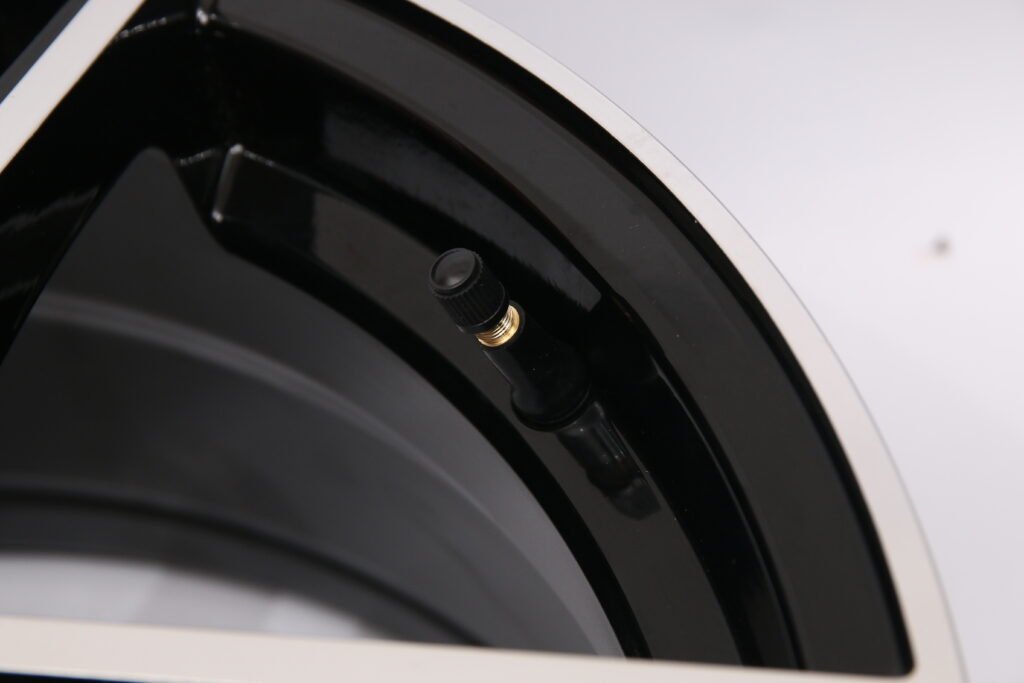
Although a tire valve is one of the smallest components on a wheel assembly, it plays a critical, high-stakes role in stabilizing tire pressure, preventing chronic air leakage, and ensuring overall highway driving safety. For worldwide tire repair shops, automotive parts distributors, wholesalers, and global OEM buyers, obtaining a crystal-clear understanding of valve classifications, material properties, and quality control baselines is the ultimate prerequisite for securing high-yield, premium-grade automotive supply chains.
At Fortune, we engineer our products around these strict standards to guarantee ultimate field performance under global transit conditions. Driven by an unwavering commitment to engineering excellence, our manufacturing facilities operate strictly under the audited IATF 16949:2016 (Certificate Registration No.: 12 111 61578 TMS) Automotive Quality Management System. In this comprehensive procurement blueprint, we unpack the metallurgical, chemical, and diagnostic metrics required to secure high-performance fleet safety.
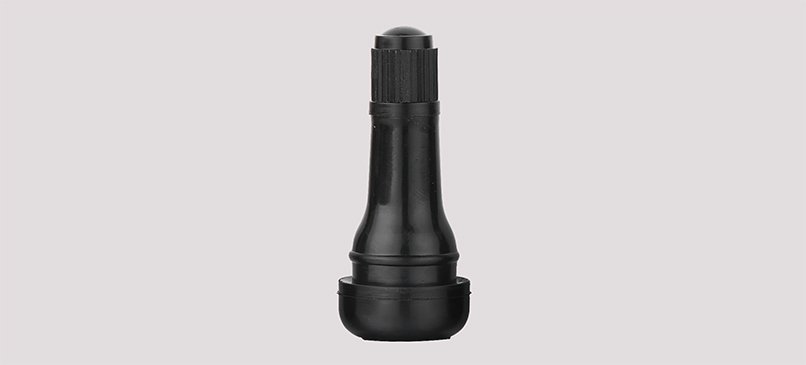
Dominating the passenger vehicle segment, snap-in tubeless rubber tire valves—primarily represented by industry-standard models such as TR413 and TR414—are widely utilized for passenger cars, light trailers, and certain motorcycles. Despite their simple appearance, the hidden rubber formulation determines whether they endure or fail prematurely under extreme environmental conditions.
A compliant source factory must execute a double-layered matrix of functional and dimensional quality control. This includes mandatory insertion/pull-out force validation, 100% automated airtightness testing, high/low-temperature thermal cycling, ozone exposure tests, and shore hardness inspections.
Fortune backs every batch with these precise evaluations along with manual spot checks focusing on brass stem dimensional tolerances, thread precision, surface molding flaws, and strict verification of the valve core brand and specification.
For inner-tube setups heavily utilized in commercial trucks, agricultural machinery, and heavy-duty transport vehicles, models like TR75A and TR78A serve as the primary sealing hubs for these specialized tire valves. These assemblies consist of a vulcanized rubber base, a solid brass stem, a brass/iron retaining nut, a precision valve core, and a protective cap.
To substantiate our polymer integrity under heavy fleet workloads, Fortune evaluates all heavy-duty tube-type bases via the ASTM D1434-22 Standard Test Method for Determining Gas Permeability Characteristics. Under empirical validation at 65°C operational heat under 0.8 MPa workload pressures, our technical data demonstrates the clear superiority of Fortune’s cross-linked Butyl (IIR) compound over standard marketplace alternatives:
When executing bulk procurement for heavy truck tire valves, brass alloy composition dictates both long-term corrosion resistance and customs clearance compliance:
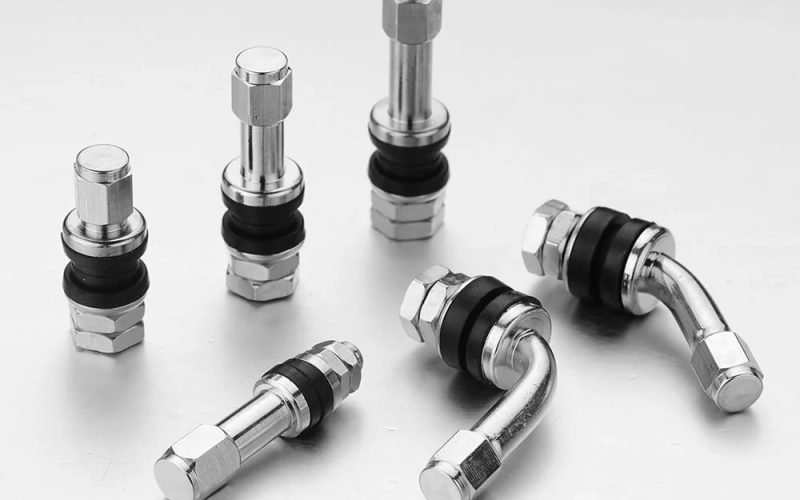
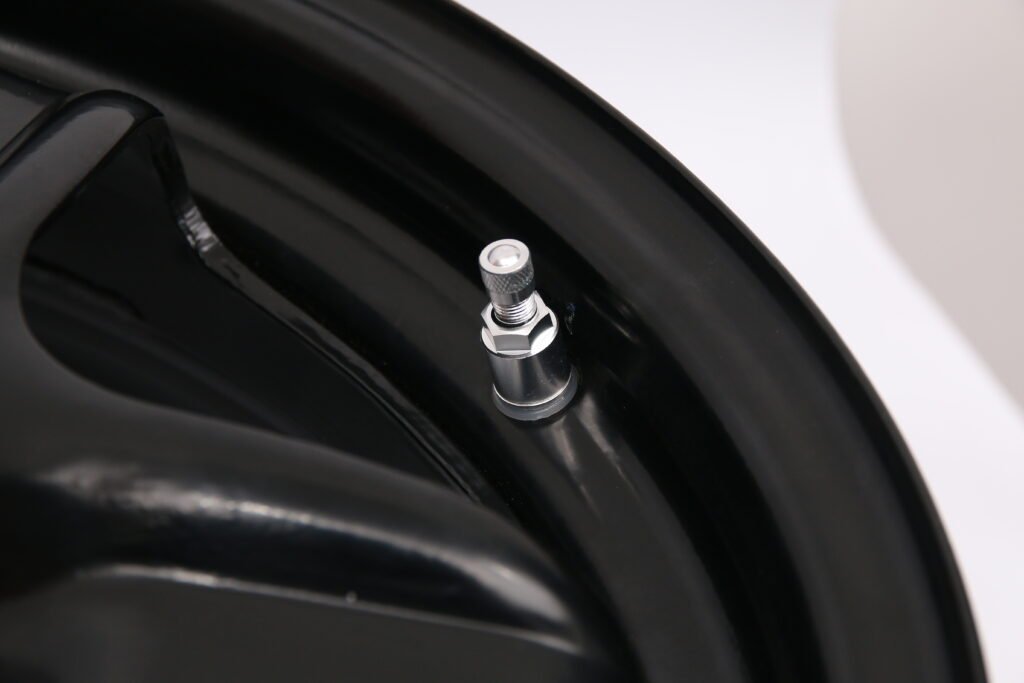
Primarily represented by the MS525 series, clamp-in metal tubeless tire valves are crafted from high-grade brass, premium aluminum, or robust zinc alloys. Because budget-tier manufacturers often attempt to bypass margins by reducing component weight or using uncertified sealing washers, Fortune strictly enforces a four-tier QA matrix across our entire production block to completely eliminate structural vulnerabilities:
Fortune 4-Tier Traceable QA Matrix:
Whether your commercial operation focuses on sourcing high-volume snap-in rubber valves, heavy-duty tube-type valves, or sophisticated clamp-in metal valves for premium wheels, a strict commitment to “Standardized Premium Raw Materials + End-to-End Traceable Quality Control” across all tire valves is the only definitive pathway to neutralizing chronic leakage complaints, optimizing customer retention, and mitigating highway safety liabilities.
About Our Operations: As an established manufacturing partner specializing in high-tolerance tire valving solutions, we at Fortune approach manufacturing with a strict ownership spirit. We believe in empirical facts and verifiable metrics, completely rejecting empty corporate hyperbole. Our facilities provide exhaustive material composition reports and accredited third-party testing certification across every shipment. Backed by IATF 16949:2016, CE, RoHS, and US DOT/NHTSA (FMVSS 139) compliance alignments, we fully support tailored OEM/ODM manufacturing pipelines aligned with the complex regulatory standards of North America, the European Union, and Southeast Asian markets. Partner with Fortune today to fortify your automotive supply chain with components engineered to protect every journey.
Premium international markets demand EPDM due to its chemical resilience. EPDM provides exceptional barrier defense against extreme heat, ozone, UV rays, and long-term weather cross-cracking, vastly extending service life. Fortune’s EPDM lines are specifically designed to fulfill these strict international standards.
High-purity copper and brass alloys present an immaculate, highly reflective, bright golden aesthetic. When a factory utilizes cheap brass alloys with high lead content, the metal exhibits a characteristic dull, faded, or whitish finish. Fortune ensures zero compromise by maintaining absolute metal purity verified through batch chemical tracing.
Top-tier automotive supply chains mandate compliance with SAE J1205_202102 (Standard for Tubeless Tire Valves) / SAE J1206_202102 (Heavy-Duty Tube Valves) or DIN 7780 / ISO 17467:2021 frameworks. These industrial guidelines require that tire valves survive dynamic high-speed mechanical flex testing (minimum 2,000 cpm) and hold structural seal integrity up to a minimum burst threshold of 1.5 MPa. Fortune products undergo continuous testing to satisfy these exact standards under certified testing conditions.
If a factory uses zinc or low-grade aluminum components with high impurity profiles, it causes aggressive galvanic corrosion between the stem thread and the sensor node, which seizes valve caps, destroys sensor casings, and invalidates vehicle telemetry.
 Request a quote