Why Is EPDM Rubber Commonly Used in Automotive Tire Valve Stems?
 20Jul
20Jul 

Have you ever noticed your steering wheel vibrating at highway speeds or your tires wearing out unevenly? In many cases, the problem comes down to wheel imbalance.
Wheel weights may look like small metal pieces attached to your rims, but they play a critical role in keeping your tires properly balanced. Proper wheel balancing improves driving stability, reduces tire wear, enhances fuel efficiency, and helps protect suspension components from unnecessary stress.
Even high-quality tires and wheels are rarely perfectly balanced straight from the factory. When a wheel has a heavier spot, it creates vibration as the tire spins at higher speeds.
Wheel weights solve this problem by balancing the tire and wheel assembly. During wheel balancing, a technician uses a balancing machine to identify uneven weight distribution and places wheel weights at precise locations to create smooth and stable rotation.
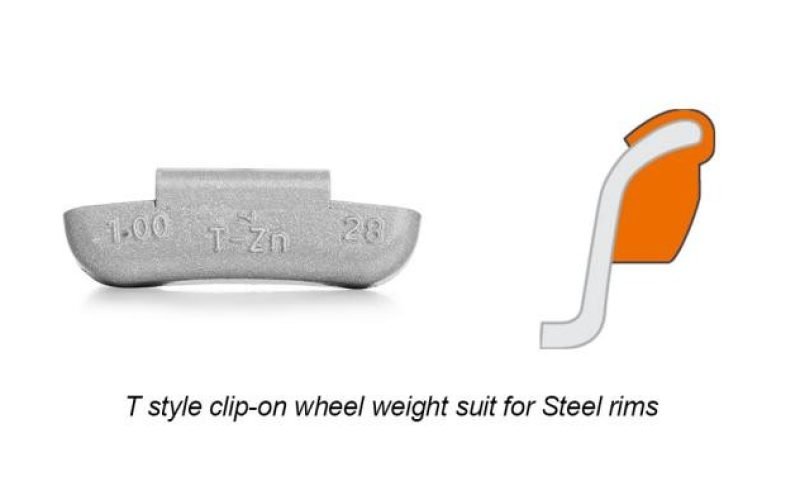
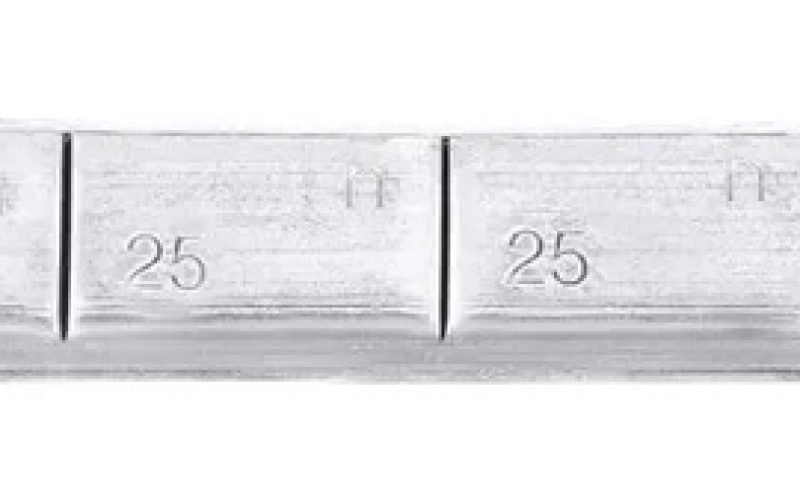
Not all wheels are created equal, which means wheel weights must come in various designs to suit different rims. The two most common types are clip-on and adhesive weights.
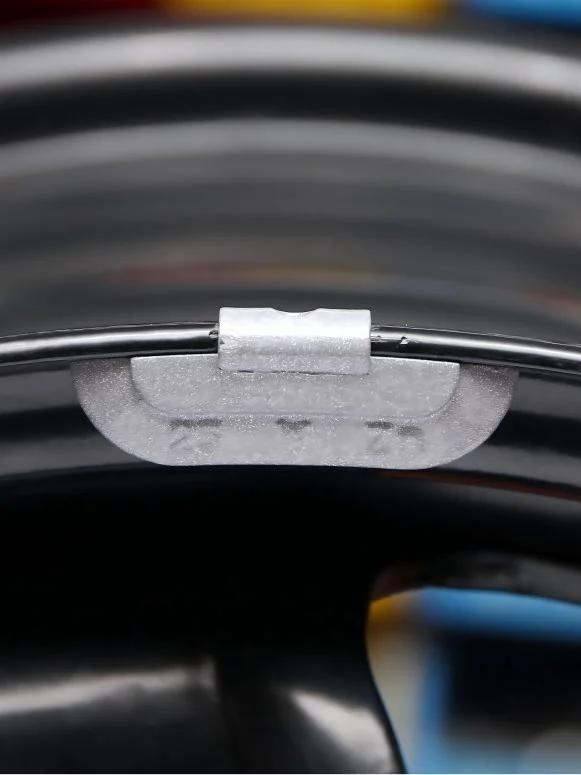
Clip-on weights feature a sturdy metal flange designed to physically clamp onto the lip of the wheel rim.

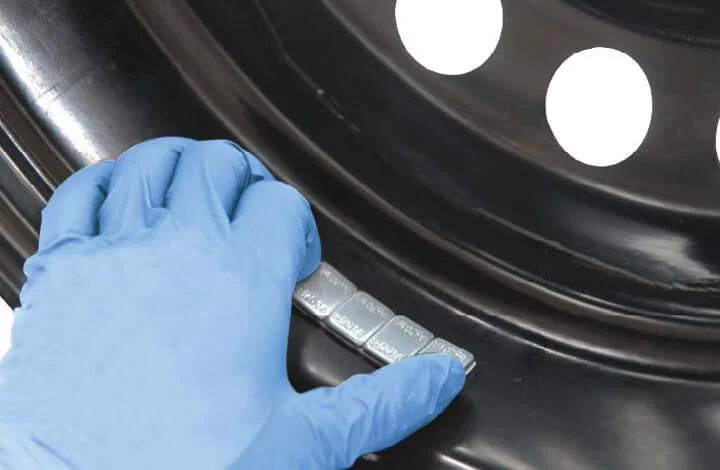
Adhesive weights utilize a heavy-duty backing tape to stick directly onto the inner barrel of the wheel.
Historically, lead was the industry standard due to its high density and malleability. However, due to severe environmental and health concerns, the automotive industry has shifted toward eco-friendly alternatives. Today, top-tier manufacturers rely on:
One of the most common signs of wheel imbalance is vibration while driving. In many vehicles, steering wheel shake becomes noticeable around 50–70 mph when the front wheels are not properly balanced.
Proper wheel balancing reduces vibration and improves overall driving comfort and stability.
Driving Comparison:
| Impact Area | Unbalanced Wheels | Balanced Wheels |
|---|---|---|
| Vibration | Strong vibration at highway speeds | Smooth and stable driving |
| Ride Comfort | Fatigue and discomfort | More comfortable ride |
| Handling | Reduced control and stability | Better steering response |
Without wheel weights, certain areas of the tire wear faster than others, leading to uneven tread patterns over time.
Common signs include:
These patterns reduce tire grip and can negatively affect performance, especially in wet conditions.
Wheel weights help keep tires balanced, reducing vibration that puts extra stress on suspension and steering components such as wheel bearings, shocks, and struts.
Without proper wheel balancing, constant vibration can speed up wear on these parts and lead to higher repair costs over time.
Wheel weights help reduce rolling resistance and unnecessary vibration by keeping tires evenly balanced. Smooth wheel rotation allows the vehicle to operate more efficiently, which may help improve fuel economy.
Proper wheel balancing also helps reduce tire friction and heat buildup, which can extend tire life and reduce the risk of tire damage over time.
Wheel weights are a small but essential part of wheel balancing. They help reduce vibration, improve driving stability, extend tire life, and protect suspension components from unnecessary wear.
For most drivers, proper wheel balancing is a simple maintenance step that improves both safety and long-term vehicle performance.
If a wheel weight falls off, the tire can become unbalanced, causing steering wheel vibration, uneven tire wear, and reduced driving comfort. The issue is usually more noticeable at highway speeds.
Most tire shops recommend checking wheel balance every 5,000–7,000 miles or whenever new tires are installed. Wheel balancing should also be inspected after hitting a pothole, curb, or noticing unusual vibration.
It depends on the wheel type. Adhesive wheel weights are commonly used on alloy and custom wheels because they are hidden and less likely to damage the wheel surface. Clip-on wheel weights are often preferred for steel wheels due to their secure fit and durability.
Properly installed wheel weights can last for many years under normal driving conditions. High-quality steel or zinc wheel weights offer better durability, corrosion resistance, and long-term balancing performance.
Yes. Proper wheel balancing helps reduce rolling resistance and unnecessary vibration, allowing the vehicle to operate more efficiently. Balanced wheels may also reduce tire heat buildup and uneven tire wear.
 Request a quote