Why Is EPDM Rubber Commonly Used in Automotive Tire Valve Stems?
 20Jul
20Jul 

In modern tire balancing systems, steel wheel weights, zinc wheel weights, and lead wheel weights remain the three primary material options. Their physical density, structural strength, and environmental characteristics directly influence balance precision, durability, and regulatory compliance. While all three materials can correct rotational imbalance, differences in mass concentration and corrosion behavior determine long-term performance in real-world driving conditions.
Understanding these differences helps workshops and distributors select appropriate balancing materials based on vehicle type, operating environment, and regulatory requirements.
Material density plays a central role in balancing effectiveness. Higher density allows smaller physical mass to achieve the same corrective force.
| Material | Density (g/cm³) | Balance Efficiency | Durability | Environmental Risk | Typical Size for Same Gram Value |
|---|---|---|---|---|---|
| Steel | ~7.8 | Moderate | High | Low | Larger |
| Zinc | ~7.1 | Moderate | Moderate | Low–Moderate | Medium |
| Lead | ~11.3 | High | Moderate | High | Smallest |
Because lead is the densest, it requires the smallest physical size for equivalent balance correction. Steel, having lower density, requires more volume to achieve the same gram weight.
However, material selection extends beyond density alone.

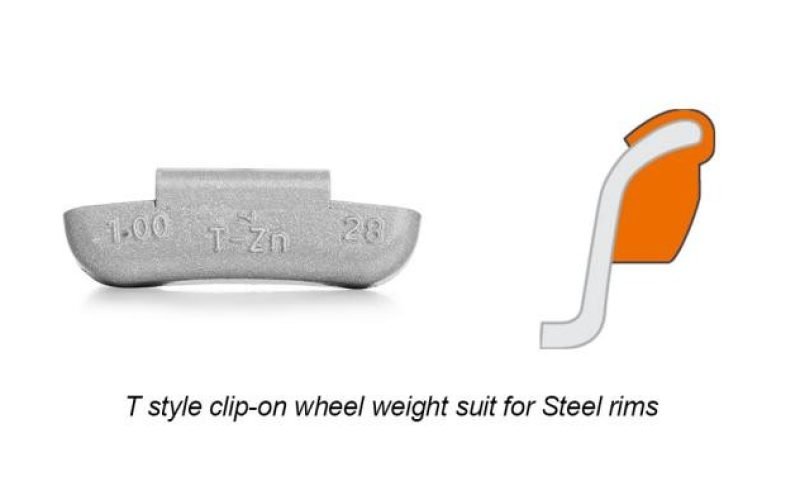
Steel wheel weights are widely used due to structural strength and mechanical stability. Their impact resistance allows them to withstand vibration, road debris, and high-speed rotation without deformation.
Key characteristics:
Because steel has lower density than lead, a larger weight body is required for equivalent correction. This does not reduce balancing accuracy but may influence placement space on compact alloy wheels.
Proper coating and surface treatment are essential to prevent corrosion, especially in regions exposed to road salt.
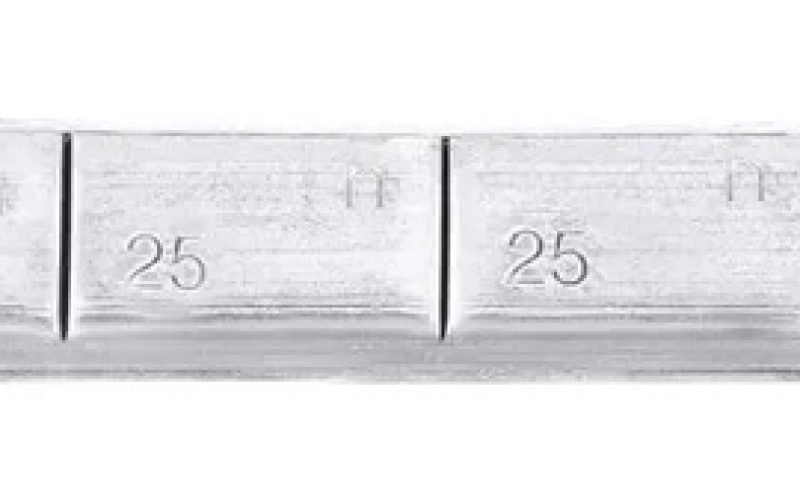
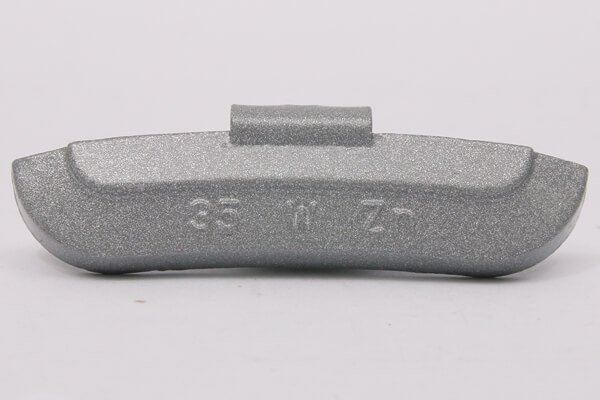
Zinc wheel weights provide a non-toxic alternative to lead while maintaining acceptable balance accuracy. They are frequently used on passenger vehicles and alloy wheels.
Performance characteristics include:
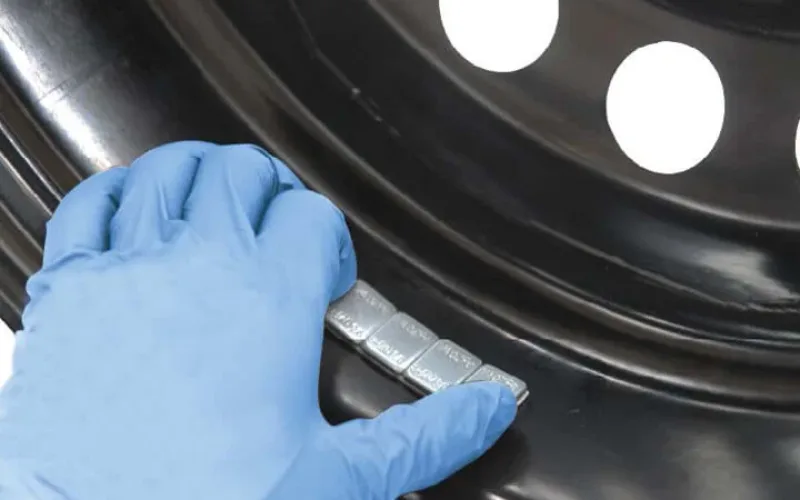
Adhesive zinc weights require precise surface preparation. Poor adhesion or improper placement can reduce balance consistency over time.
Zinc offers a compromise between environmental safety and functional performance.
Lead wheel weights deliver the highest density and the most compact balancing solution. Their malleability allows precise shaping and placement.
Advantages:
However, lead oxidizes and gradually degrades when exposed to abrasion and environmental moisture. More importantly, regulatory restrictions in many countries limit or prohibit its use due to toxicity concerns.
From a purely mechanical perspective, lead remains effective. From a regulatory and environmental standpoint, it is increasingly phased out.
Material selection significantly impacts environmental compliance.
Steel presents minimal environmental risk and supports sustainable recycling systems.
Although zinc can enter water systems in high concentrations, its environmental impact remains substantially lower than lead.
Regulatory shifts globally favor steel and zinc alternatives over lead.
Steel maintains structural integrity under mechanical impact and temperature variation. With proper protective coating, it resists corrosion effectively. It performs reliably in heavy-duty and commercial applications.
Zinc resists rust and performs well in coastal and winter climates. It is softer than steel and may deform under severe impact but remains suitable for standard passenger use.
Lead’s softness allows it to absorb minor impacts without cracking. However, it gradually oxidizes and fragments over time, contributing to environmental contamination.
Material pricing influences large-scale distribution and fleet usage.
Market trends show steady growth in steel and zinc adoption due to environmental regulations and global compliance requirements.
Fortune manufactures steel and zinc wheel weights under controlled production standards, including gram tolerance calibration, coating durability testing, and adhesion validation for adhesive variants. This ensures consistent balance accuracy while meeting regulatory and environmental expectations.
Steel or zinc wheel weights provide sufficient balance accuracy, corrosion resistance, and regulatory compliance. Steel offers strong durability; zinc offers easier shaping and moderate density benefits.
Adhesive zinc or coated steel weights allow precise placement for high-speed balancing. Regular inspection ensures retention integrity under aggressive driving conditions.
Steel remains the preferred option due to its recyclability and non-toxic profile. Zinc serves as an acceptable secondary alternative where specific installation requirements apply.
Steel, zinc, and lead wheel weights each offer distinct performance characteristics. Lead provides the highest density and compact balancing but carries significant environmental risk. Zinc offers moderate density with improved regulatory compliance. Steel delivers durability, recyclability, and long-term stability, though it requires larger volume for equivalent correction.
For modern applications prioritizing safety, compliance, and sustainability, steel and zinc wheel weights represent the most practical and responsible balancing solutions.
Many shops stopped using lead wheel weights because lead is toxic. Lead can harm people and animals. Laws in the United States, Europe, and Asia now ban or limit lead wheel weights to protect health and the environment.
Density affects how much material is needed for balance. Lead has the highest density, so a small piece balances a tire. Steel has lower density, so a larger piece is needed. Zinc falls between lead and steel.
Steel wheel weights work well for most wheels, including steel and many alloy wheels. Installers should handle them carefully to avoid scratching alloy rims. Protective coatings on steel weights help prevent rust and damage.
Yes, drivers can recycle steel, zinc, and lead wheel weights. Many recycling centers accept these metals. Recycling helps reduce waste and supports environmental protection. Always check local recycling rules before dropping off old wheel weights.
 Request a quote