Why Is EPDM Rubber Commonly Used in Automotive Tire Valve Stems?
 20Jul
20Jul 


n vehicle dynamics and balancing systems, overall wheel mass and corrective components such as wheel tire weights, steel adhesive wheel weights, and zinc adhesive wheel weights directly influence rotational inertia, unsprung mass, and rolling resistance. While wheels and tires determine the majority of rotating mass, the precision and material selection of balancing weights also contribute to system stability and long-term efficiency. From a manufacturing standpoint, controlling mass distribution is not only about performance—it is about energy efficiency, ride refinement, and component durability.
Understanding how wheel tire weight interacts with suspension geometry and drivetrain load helps clarify its impact on fuel consumption and ride quality.
Vehicle mass is divided into sprung mass (body and chassis supported by suspension) and unsprung mass (wheels, tires, brake assemblies, and related components). Wheel tire weight represents a significant portion of unsprung mass.
Higher unsprung mass reduces the suspension’s ability to respond quickly to surface irregularities. As wheel weight increases:
Reducing wheel mass improves the suspension’s response speed and allows more consistent tire-to-road contact. This improves both grip stability and vibration control, particularly on uneven pavement.
From an engineering perspective, even small increases in rotating and unsprung mass produce amplified dynamic effects due to rotational inertia.
Wheel assemblies are rotating components. Increasing their mass does not only add static weight—it raises rotational inertia. The engine must generate additional torque to accelerate heavier wheels, and braking systems must dissipate more kinetic energy during deceleration.
Testing on passenger vehicles has shown that switching to heavier wheel assemblies can measurably reduce fuel economy and extend stopping distances under comparable conditions. Conversely, lightweight assemblies improve throttle response and reduce drivetrain load.
The effect becomes more noticeable in urban driving, where acceleration and deceleration cycles are frequent.
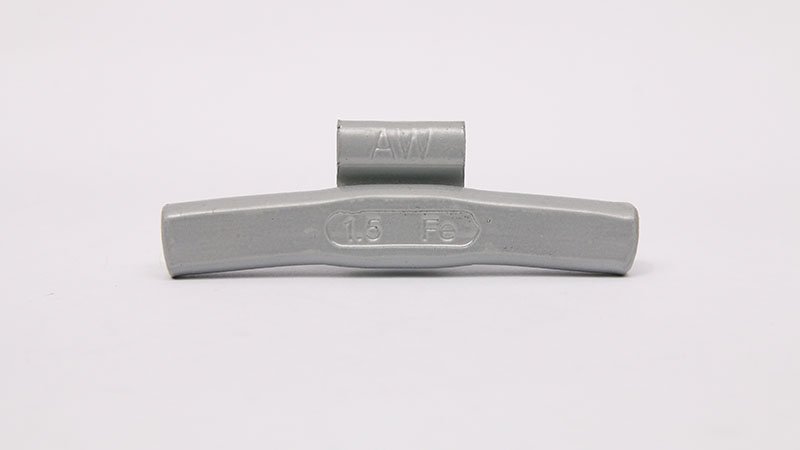
Fuel consumption is influenced by two primary factors related to wheel weight:
Heavier tires and wheels deform more under load, increasing hysteresis losses within the tire structure. This energy is converted into heat rather than forward motion, requiring additional fuel input.
Industry studies indicate that moderate reductions in rotating mass can yield measurable improvements in fuel economy. In heavy-duty and fleet applications, lightweight wheel configurations have demonstrated fuel savings of up to 8% under controlled operating conditions.
For commercial vehicles operating annually over long distances, such efficiency gains translate into significant fuel cost reductions.
During acceleration, the engine must overcome both vehicle mass and wheel rotational inertia. Heavier assemblies increase torque demand, particularly during start-stop driving cycles.
A simplified comparison illustrates the trend:
| Wheel Assembly Mass | Rotational Resistance | Engine Load | Fuel Consumption Trend |
|---|---|---|---|
| Lower Mass | Reduced | Lower | Improved |
| Higher Mass | Increased | Higher | Reduced Efficiency |
Although tire compound and inflation pressure also affect rolling resistance, mass remains a primary mechanical contributor.
Suspension systems are tuned to manage specific mass ranges. When unsprung mass increases beyond optimal design values:
Reducing wheel tire weight improves suspension compliance. Testing data across multiple vehicle platforms indicates reductions in whole-body vibration and shock exposure when rotating mass is lowered.
Engineering analysis suggests that reducing 1 kg of unsprung rotating mass can deliver a greater dynamic benefit than removing several kilograms from the vehicle body structure, due to the combined effect of rotation and vertical motion.
However, weight reduction must not compromise wheel stiffness. Insufficient structural rigidity can negatively affect handling precision.
Lower rotational mass improves steering responsiveness because less gyroscopic force resists directional changes. This enhances:
Braking improvements are generally moderate under standard driving conditions, as braking performance is primarily influenced by tire grip and brake system design. However, reduced rotational inertia still lowers braking system workload.
Heavier wheels increase gyroscopic stabilization, making directional transitions slower and reducing agility.

For standard urban and highway driving, moderate weight reductions improve ride refinement and fuel economy without requiring extensive suspension modification.
In performance-oriented or track applications, rotating mass becomes more critical. Lighter assemblies support quicker load transfer and sharper steering transitions, provided suspension calibration matches the new mass characteristics.
Electric and hybrid vehicles also benefit from weight optimization. Because battery systems increase overall vehicle mass, reducing wheel tire weight helps offset energy consumption and supports extended driving range.
Wheel selection must consider:
Steel wheels remain durable and cost-efficient but are typically heavier. Alloy wheels reduce mass and improve dynamic response. Larger diameter wheels may improve lateral stability but often increase total mass, which can offset efficiency gains.
Balancing accuracy is equally critical. Poor mass distribution increases vibration and energy loss. High-quality wheel tire weights ensure precise correction and reduce repeat balancing cycles.
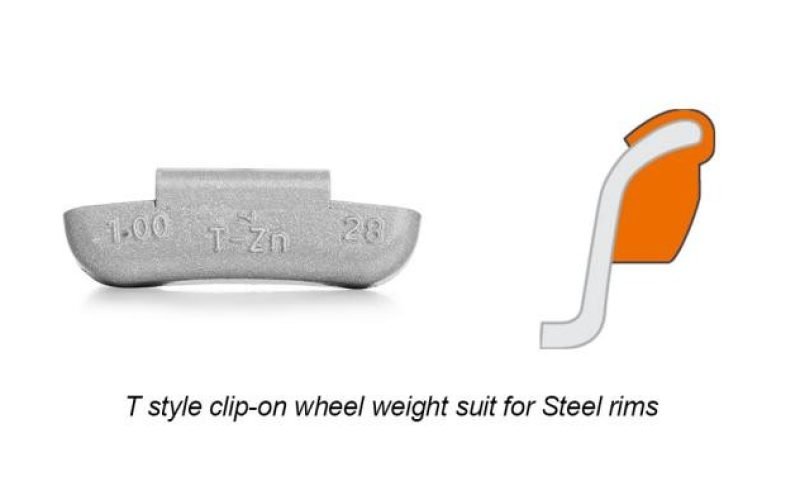
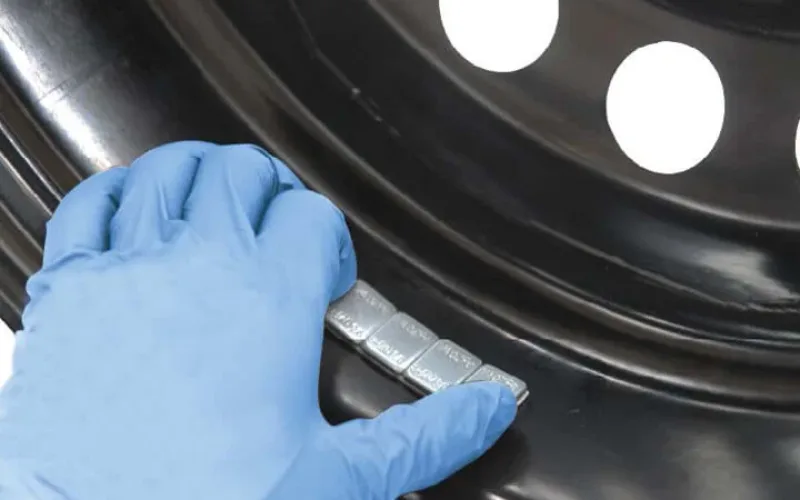
At fortune, we manufacture both steel adhesive wheel weights and zinc adhesive wheel weights using controlled stamping and casting processes. Production includes:
Consistent weight increments and stable adhesive bonding help maintain wheel balance over long service intervals, reducing vibration-induced energy loss and improving overall ride refinement.
Material compliance and global supply capability support OEM and aftermarket distribution requirements.
Weight reduction strategies are most beneficial when:
However, structural durability and long-term fatigue resistance must always be maintained.
Wheel tire weight influences vehicle performance through its effect on unsprung mass, rotational inertia, and rolling resistance. Heavier assemblies increase engine workload, raise fuel consumption, and reduce suspension responsiveness. Lower mass improves ride comfort, steering precision, and energy efficiency.
Accurate balancing using properly engineered wheel tire weights—whether steel adhesive wheel weights or zinc adhesive wheel weights—ensures stable mass distribution and minimizes vibration-related energy losses.
From a manufacturing perspective, controlling material density, adhesive integrity, and coating durability is essential to maintaining long-term wheel balance performance. Optimized weight management, combined with precise balancing components, forms a complete system approach to improving both fuel efficiency and ride quality.
Wheel tire weight is the total mass of your wheels and tires. This weight can impact your driving experience by changing how your car feels on the road. Lighter wheels help your car move easier and use less fuel.
Wheel weight affects fuel efficiency because heavier wheels make your engine work harder. You will use more gas when your wheels are heavy. Lightweight wheels help you save money by improving your car’s fuel economy.
Yes, lighter wheels can improve handling and cornering. Your car will respond faster to steering. You will feel more control during turns. This change can also boost acceleration and speed, making your car more fun to drive.
Wheel tire weight can change braking performance and ride comfort. Heavy wheels may slow your car’s response when you stop. Lightweight wheels help your suspension work better, so you feel fewer bumps and enjoy a smoother ride.
 Request a quote