 05Mar
05Mar 

As of June 2024, 15 states and Washington, D.C. have banned lead wheel weights. This helps keep people healthy. Lead from these weights can hurt kids and the environment. It is a bigger problem in cities. Almost all new cars do not use lead anymore. Drivers, mechanics, and businesses must follow these laws. They should use safer materials like steel or zinc for wheel weights. This helps everyone follow the rules and keeps communities cleaner.
Key Takeaways
- Fifteen states and Washington, D.C. do not allow lead wheel weights. This is to keep people and nature safe.
- Drivers and auto shops must use safer things like zinc or steel for wheel weights. This helps them follow state laws.
- Auto shops should tell customers why lead is bad. They should also explain why non-lead choices are better. Shops that follow these rules do not get fined. They also earn trust from their customers.
- Using non-lead wheel weights keeps air and water clean. This is good for everyone.
States with Lead Wheel Weight Bans
List of States with Bans
A lot of states want to keep people and nature safe. They do this by banning lead wheel weights. These bans stop lead from getting into dirt and water. Here are the states that have bans or are thinking about them:
| State | Effective Date |
|---|---|
| California | January 1, 2010 |
| Illinois | January 1, 2020 |
| Maine | N/A |
| New York | April 1, 2011 |
| Vermont | N/A |
| Washington | N/A |
| Maryland | N/A (considered) |
| Minnesota | N/A (attempted) |
| New Jersey | Pending |
| Oregon | July 1, 2021 |
| New Hampshire | January 1, 2022 |
| Massachusetts | July 1, 2022 |
| Michigan | October 1, 2023 |
| District of Columbia | April 1, 2024 |
| Wisconsin | July 1, 2024 |
Note: Some states, like New Jersey, want to pass new laws but have not done it yet. Maryland and Minnesota have talked about bans but have not made them real.
Key Details of State Laws
Every state makes its own rules for wheel weights. Most rules say you cannot sell, use, or put lead wheel weights on cars. Some states also have rules for makers and tire shops. California started its ban in 2010. It is not allowed to sell or put on lead wheel weights there. Illinois made a similar rule in 2020. But it lets farm and military vehicles use them.
New York stopped the sale and use of lead wheel weights in 2011. Oregon and Massachusetts made their bans later. The District of Columbia now tells shops to keep electronic records of their work. New Hampshire wants shops to keep records for three years. Michigan gives money to help shops use safer wheel weights.
Tip: Drivers and auto shops should look at their state’s rules before they buy or put on wheel weights. This helps them not get fined and keeps cars safe.
Enforcement and Penalties
State workers check if shops follow the rules about wheel weights. They might visit tire shops or look at their records. Breaking these laws can cost a lot of money. The table shows how some states check their bans and what happens if you break the rules:
| State | Enforcement Actions | Penalties |
|---|---|---|
| Illinois | Bans installation and sale; exempts agricultural equipment and military vehicles. | $500 civil fine per occurrence |
| Oregon | DEQ inspections of tire service facilities. | Up to $25,000 for knowing violations |
| New Hampshire | Prohibits installation; requires records for 3 years. | $200–$1,200 per violation |
| Massachusetts | Integrated into Motor Vehicle Inspection Program. | Shop fines up to $5,000; mechanic certification revocation possible |
| Michigan | Comprehensive ban; shop conversion grants. | $1,000 per violation; loss of state rebates |
| District of Columbia | Requires electronic service record annotation. | $750 fine + mandatory compliance workshop |
| Wisconsin | Phased enforcement; education period first. | First offense: warning; second: $500; third: $2,000 |
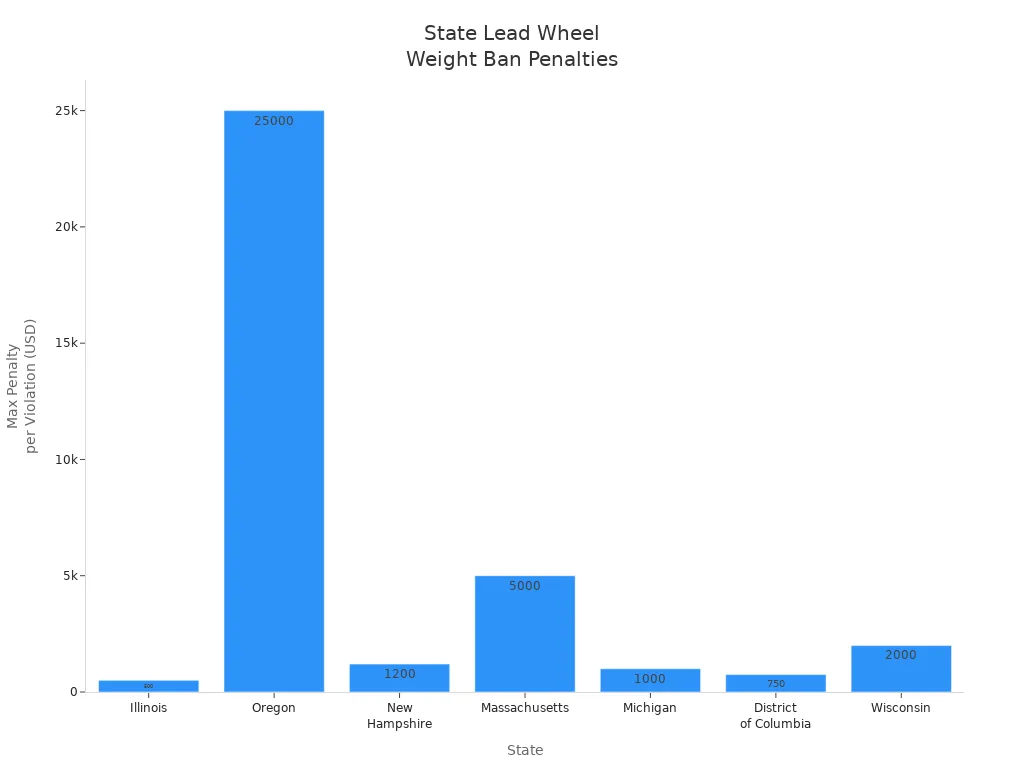
Shops that do not follow the law may pay big fines. Sometimes, mechanics can lose their certification. Wisconsin gives a warning the first time. If you break the rule again, you pay more money.
Alert: Following the law helps nature and saves money. Using approved wheel weights, like zinc or steel, keeps cars legal and safe.
Alternatives to Lead Wheel Weights
Zinc and Steel Wheel Weights
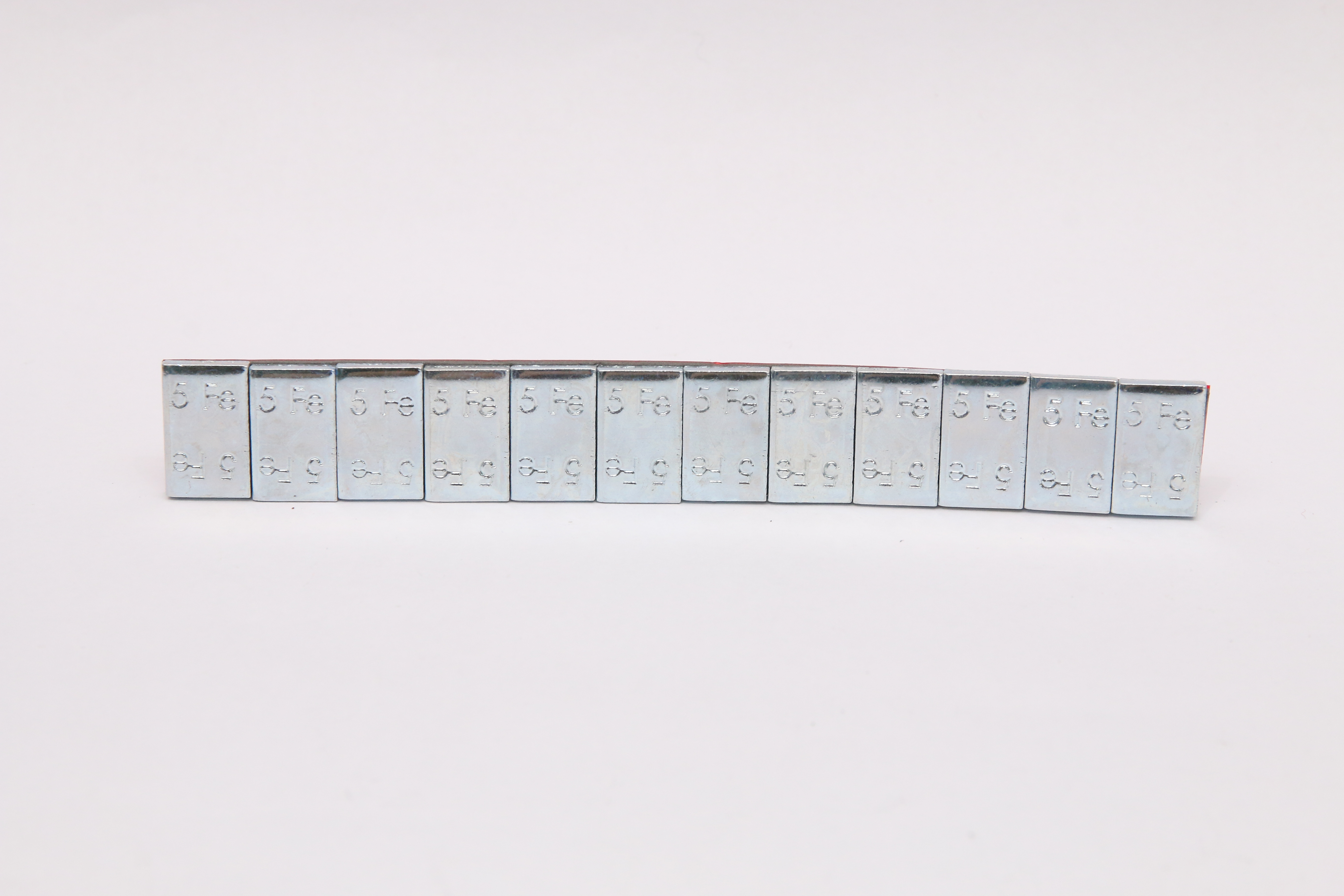
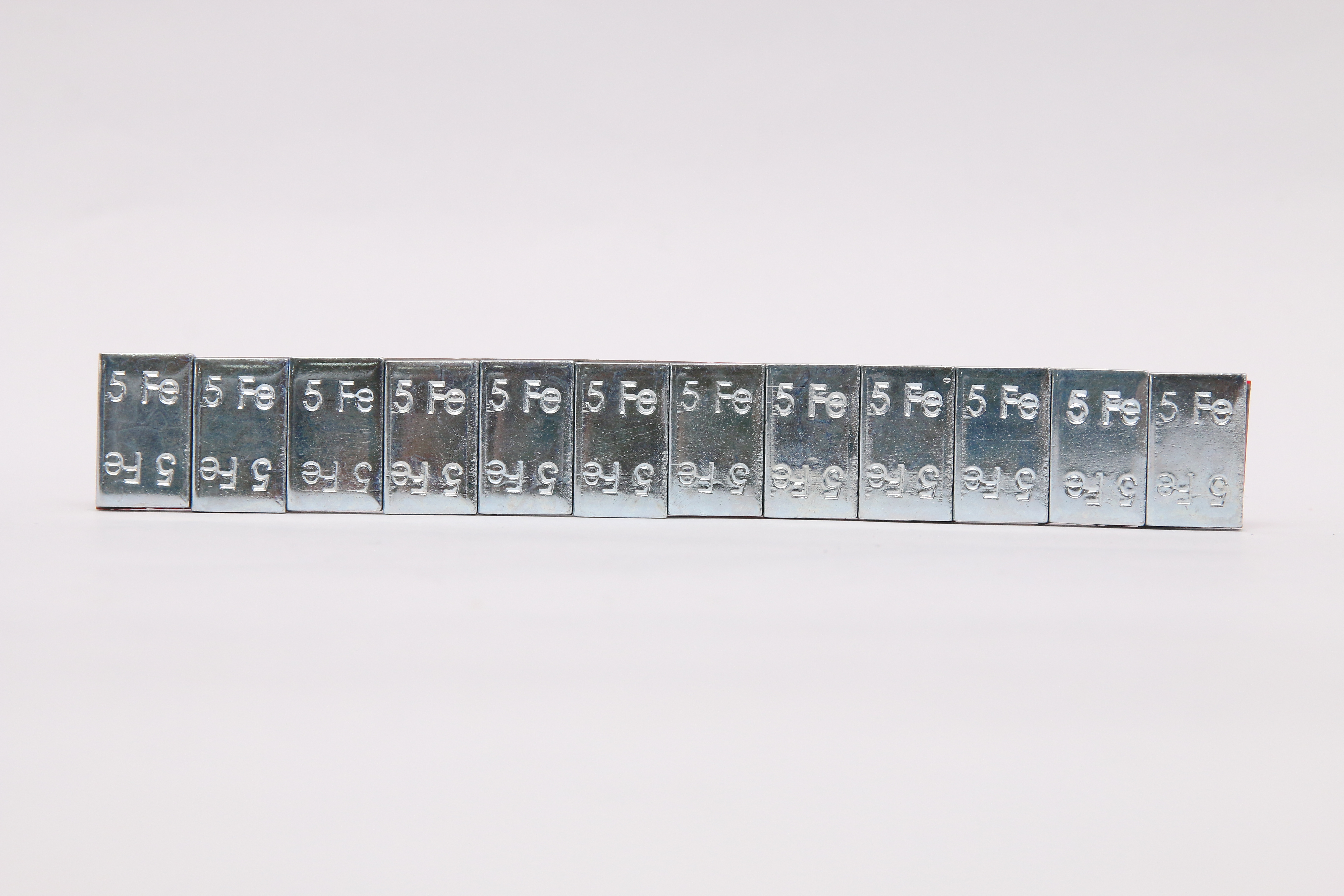
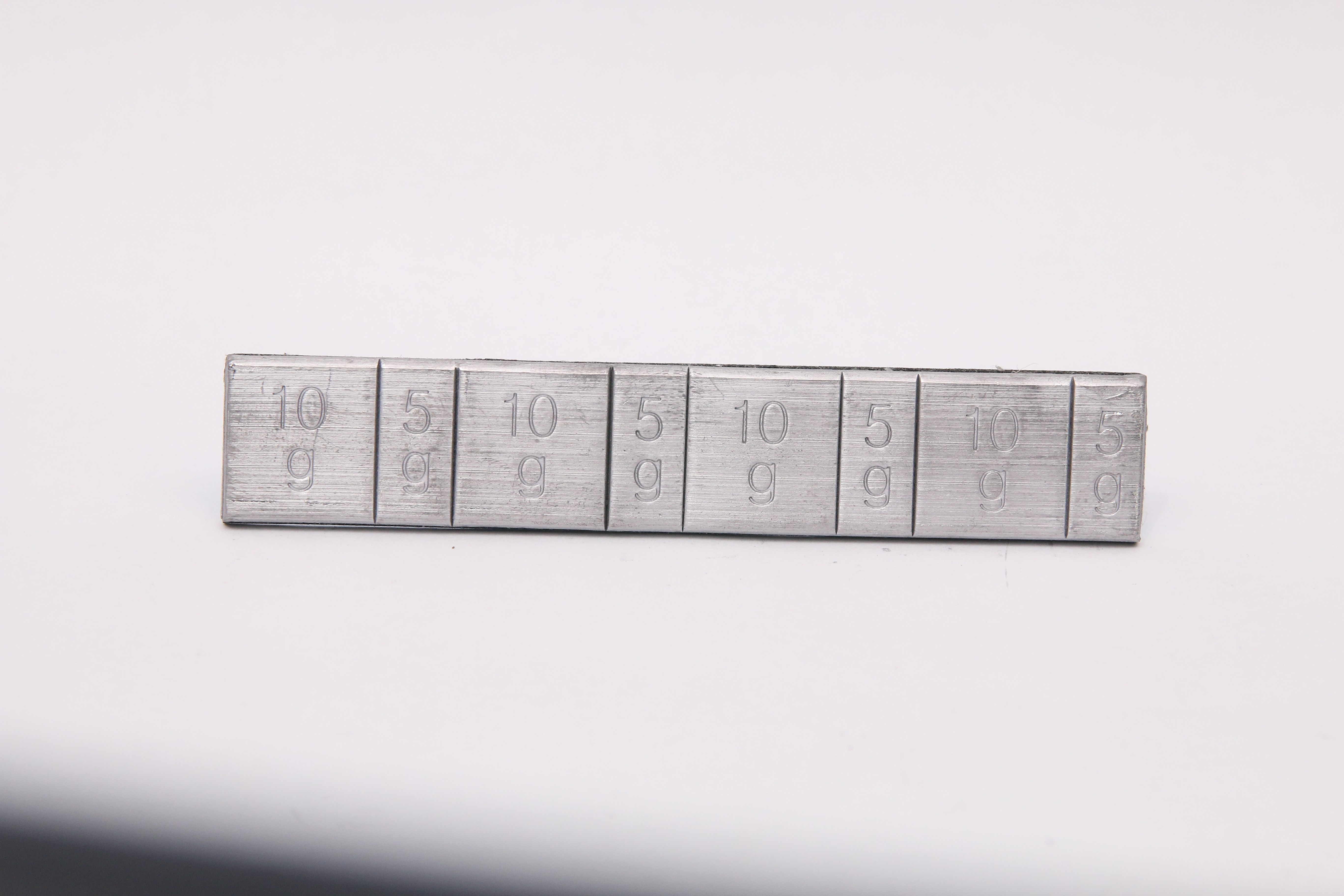
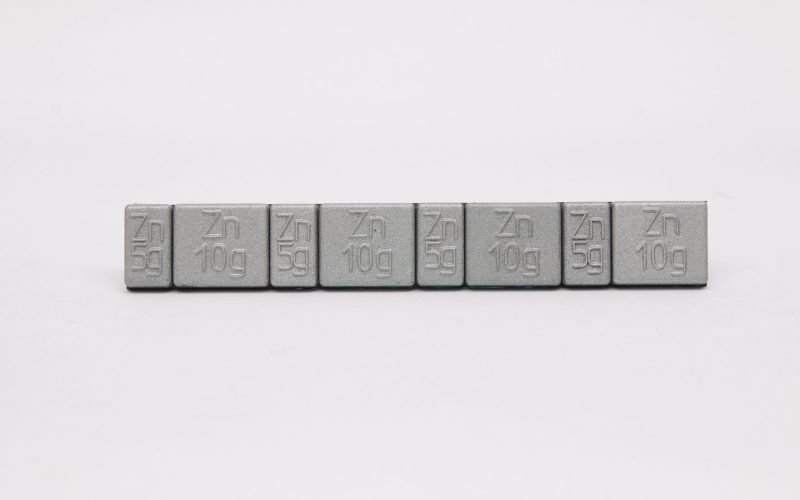
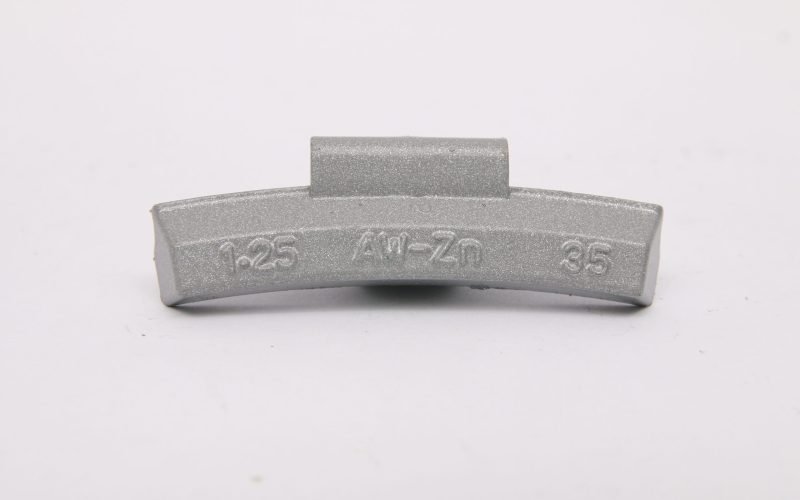
Many shops and drivers pick zinc and steel wheel weights now. These materials work well and help keep nature safe. Zinc wheel weights are almost as heavy as lead. This means they balance tires nicely. Steel wheel weights are strong and do not rust easily. They last a long time, even in bad weather. Both choices are safer because they do not have toxic lead.
Fortune Wheel Weights sells many zinc and steel products. These weights fit lots of vehicles, like cars and trucks. Steel wheel weights cost more than lead ones. But they last longer and can be recycled. Zinc wheel weights also fight rust and meet safety rules. Many environmental groups say steel or zinc is better for the planet.
Tip: Using zinc or steel wheel weights helps drivers follow state laws. It also keeps roads safer for everyone.
Here is a quick look at common alternatives:
| Alternative Material | Benefits | Environmental Impact |
|---|---|---|
| Zinc | Good balance, corrosion-resistant | Less lead in soil and water |
| Steel | Strong, recyclable | Eco-friendly, easy to recycle |
| Aluminum | Lightweight | Lower carbon footprint |
| Composite | Eco-friendly, innovative | Meets safety standards |
Other Non-Lead Options
Some companies make wheel weights from aluminum or composite materials. Aluminum is light and does not rust. Composite wheel weights, like the 3M™ Wheel Weight TN4023L, use non-lead materials. They still balance tires well. These new choices help stop pollution and meet safety rules.
More drivers want eco-friendly wheel weights now. The market for non-lead wheel weights is growing fast. Companies like Fortune keep making better designs. Experts think there will be more choices soon as technology improves.
Note: Switching to non-lead wheel weights helps keep air and water clean. It also helps shops and drivers stay ready for new laws.
Practical Implications
Impact on Auto Shops
Auto shops face new rules in states with lead wheel weight bans. They must check every vehicle for lead wheel weights and replace them with safer options if needed. Shops cannot throw old lead weights in the trash. They must recycle them, return them to suppliers, or treat them as hazardous waste. This keeps harmful materials out of the environment.
Many shop owners think clip-on weights are better for the planet than stick-on types. This is not true. Clip-on weights often contain more lead, which can harm nature. Some believe using lead weights is still allowed, but most states have made it illegal. Shops must use non-toxic alternatives, such as zinc or steel, to follow the law.
Consumer education plays a big role in compliance. Shops that teach their customers about the dangers of lead and the benefits of non-lead wheel weights see better results. Awareness campaigns help both shop owners and drivers understand the rules and make safer choices.
Tip: Shops that follow these rules avoid fines and build trust with their customers.
What Drivers Should Know
Drivers need to know if their cars have lead wheel weights. They can look for chemical symbols on the weights. For example, “Fe” means iron (steel) and “Zn” means zinc. Non-lead weights are usually bigger than lead ones. If drivers are not sure, they can ask the manufacturer.
Here is a table with important facts for drivers:
| Compliance Requirement | Details |
|---|---|
| Replacement of Lead Weights | Repair shops must replace lead wheel weights with compliant ones when removed. |
| Disposal of Non-Compliant Weights | Options include returning to suppliers, recycling, or disposing as hazardous waste. Discarding in trash is prohibited. |
| Penalties for Non-Compliance | Violators may face civil penalties up to $2,500 and additional daily fines of $500 for ongoing violations. |
| Sale of Vehicles with Lead Weights | Used vehicles can be sold with lead weights, but they cannot be reattached if removed prior to sale. |
Many drivers think using non-toxic wheel weights is a choice. In reality, the law requires it in many places. Educational campaigns help drivers learn why wheel balancing matters and how to stay safe and legal. When drivers know the facts, they help protect their families and the environment.
Many states have stopped using lead wheel weights. They want to keep people and nature safe. Groups like the EPA ask for safer choices. Companies now make zinc and steel wheel weights. The table below shows important changes:
| Key Insights | Description |
|---|---|
| Regulatory Shifts | States make more rules about lead products. |
| Environmental Concerns | EPA and safety groups want less lead pollution. |
| Market Adaptation | Companies build new, safer wheel weights. |
Other states might ban lead wheel weights soon. Using lead-free wheel weights keeps dirt and water clean. Drivers and shops should learn the rules and pick safer products.
FAQ
What are lead wheel weights?
Lead wheel weights are small metal pieces that help balance car tires. They attach to the wheel rim. Lead makes them heavy and easy to shape. Many states now ban them because lead can harm people and the environment.
Why did states ban lead wheel weights?
States banned lead wheel weights to protect health and nature. Lead can pollute soil and water. Children can get sick from lead exposure. Using safer materials like zinc or steel helps keep communities safe.
How can someone tell if a wheel weight contains lead?
People can check the markings on the weight. “Pb” means lead. “Zn” means zinc. “Fe” means steel. Lead weights often look smaller than zinc or steel weights with the same weight.
What should auto shops do with old lead wheel weights?
Auto shops must recycle old lead wheel weights. They cannot throw them in the trash. Shops can return them to suppliers or take them to a recycling center that handles hazardous materials.
Are non-lead wheel weights as effective as lead ones?
Yes. Zinc and steel wheel weights balance tires well. They last a long time and do not pollute the environment. Many experts recommend using non-lead weights for safety and legal reasons.
 Request a quote