What is the difference between rubber and metal tire valves?
 20Mar
20Mar 


You should know the wheel hub screw is a critical fastener. It secures the wheel hub assembly to your vehicle’s steering knuckle. This screw’s main job is to keep the entire wheel and hub connected to your vehicle’s suspension. Problems with any wheel part, like the hub, are common. AAA data shows that of 29 million roadside calls, a large portion involved flat tires, highlighting the wheel’s importance. A secure hub keeps your wheel stable. This connection between the hub and the wheel is vital for your vehicle. The hub assembly and wheel must work perfectly for a safe vehicle.
A wheel hub screw does more than just hold parts together. It performs several critical jobs to keep your vehicle safe and running smoothly. Each function relies on the screw’s strength and proper installation to protect the wheel bearing and hub.
The primary job of a wheel hub screw is to create a powerful clamping force. When you tighten the screw to the correct specification, it pulls the wheel hub assembly tightly against the steering knuckle. This force creates a strong ‘friction coupling’ between the metal surfaces. This connection is vital. It prevents the hub assembly from shifting or moving under the stress of driving. This secure fit ensures the wheel, hub, and internal bearing components act as a single, solid unit, resisting the rotational and lateral forces your vehicle experiences. A secure hub is essential for the proper function of the wheel bearing.
Your vehicle’s stability depends directly on the integrity of its wheel hub screws. If these screws are not torqued correctly, your wheel alignment can suffer.
Important Note: An improperly tightened screw can cause the wheel to seat unevenly against the hub. This misalignment leads to persistent vibrations, especially at higher speeds, and causes uneven tire wear, which shortens the life of your tires.
Over-tightening can be just as bad as under-tightening. It can warp the wheel or the hub itself, leading to poor handling and affecting the performance of the wheel bearings and hub bearings. The screws must prevent “vibrational self-loosening” to maintain stability and protect the wheel bearing. A stable hub ensures the wheel bearings and hub bearings operate correctly.
Your vehicle’s wheel and hub endure incredible forces, and the screws bear a significant part of this load. The entire wheel and hub system must handle these dynamic stresses. These forces include:
The clamping force helps distribute these loads through friction between the wheel and the hub. However, the screws also directly support a portion of the vehicle’s weight. A single screw on a 3,000-pound vehicle might support around 150 pounds of vertical weight. This makes the screw’s strength essential for the longevity of the bearing, wheel bearings, and hub bearings. A strong bearing is key for a smooth ride. The hub contains a critical bearing, and the wheel itself relies on this bearing.
You must pay attention to your vehicle to catch problems early. A failing wheel hub screw often gives warning signs before a complete failure. Knowing these signs helps you perform timely maintenance and avoid dangerous situations. A regular inspection can protect your wheel, hub, and the critical bearing inside.
A simple visual check can reveal a lot about the health of your wheel hub components. You should look for obvious signs of trouble.
Rust is a major enemy. The combination of road salt, water, and brake dust creates a highly corrosive environment around your wheel. This mixture can cause “corrosive fretting,” a process that attacks the metal. The threaded surfaces of a screw are natural weak points. The manufacturing process can create microscopic breaks in the metal’s structure. These tiny grooves trap moisture and salt, which accelerates rusting. Over time, this rust can effectively weld the screw to the hub, a process known as ‘chemi-welding.’ This makes removal difficult and weakens the screw, increasing the risk of failure. A compromised screw cannot properly support the wheel bearing.
Look for these specific issues during your inspection:
Any of these signs mean an immediate replacement is necessary to protect the hub bearings and ensure your wheel is secure.
Your vehicle often communicates problems through sounds and feelings. These symptoms can point directly to issues with the wheel hub and its screws. Loose screws or damaged threads on the hub unit create instability. This instability compromises your driving safety and is one of the key signs of wheel bearing damage.
Feel the Vibration 🚗 A primary symptom is a vibration you can feel in the steering wheel. This vibration often starts at lower speeds. It will progressively worsen as your vehicle accelerates. This is one of the most common symptoms of worn wheel bearings, often caused by a loose or failing hub assembly.
You might also hear distinct noises. Listen for these sounds, especially when turning or driving at low speeds:
These physical warnings tell you that the wheel and hub assembly is not secure. This puts immense stress on the wheel bearings and hub bearings, leading to premature failure. Addressing these symptoms quickly is crucial for your safety and for the proper maintenance of your vehicle.
Sometimes, you should plan a replacement before any symptoms appear. Proactive maintenance is the best strategy for safety-critical parts. This approach is essential for preventing wheel bearings failure. A replacement is a small investment for your vehicle’s safety.
Consider a proactive replacement in these situations:
A proactive replacement ensures the entire wheel system, including the bearing and hub, functions as designed. This simple maintenance step provides peace of mind and is a cornerstone of responsible vehicle ownership.
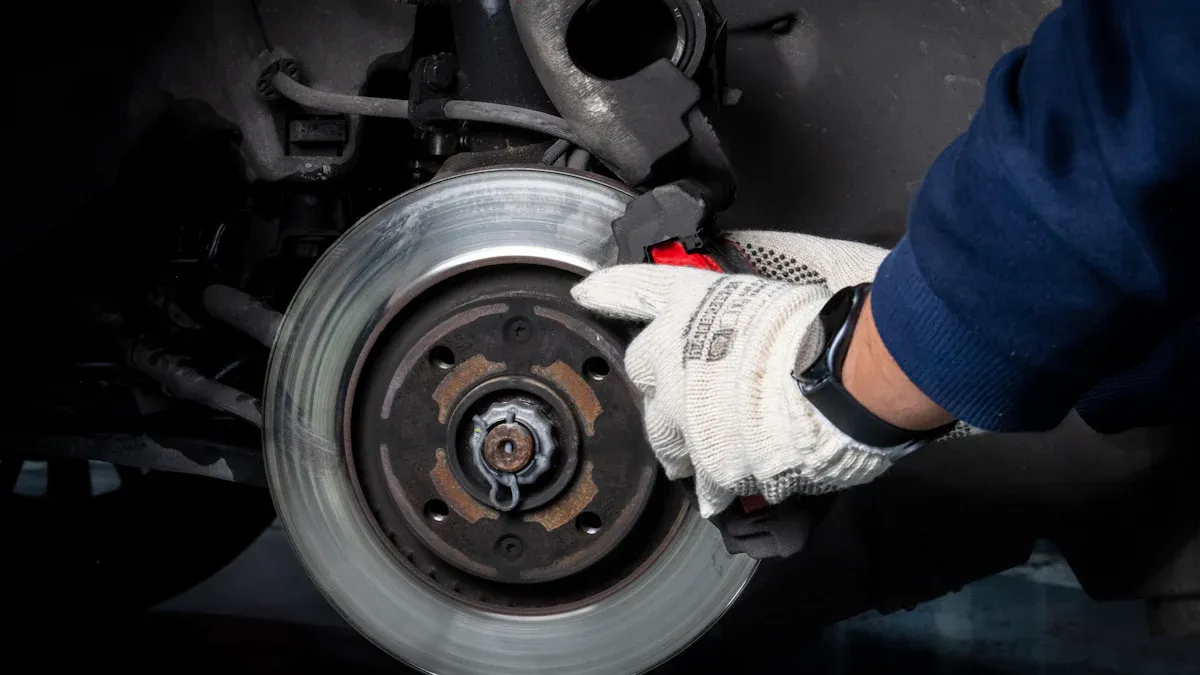
When you need to perform a replacement on your vehicle, following a precise process is essential for safety. This step-by-step guide covers the critical aspects of replacing screws for your wheel bearing and hub assembly. Proper installation protects the wheel, hub, and bearing components, ensuring your vehicle remains safe on the road. This detailed procedure for the replacement of wheel bearings is a crucial piece of maintenance.
Choosing the right part is the first and most important step in any replacement job. You should always select a wheel hub screw that meets Original Equipment Manufacturer (OEM) specifications. This ensures the part has the correct size, thread pitch, and strength for your specific vehicle. The benefits of premium wheel bearing and hub assemblies extend to the hardware that holds them.
Aftermarket parts can be a gamble. While some suppliers produce high-quality components, many cheaper options lack proper quality control. This can lead to serious problems.
For safety-critical jobs like DIY wheel bearing replacements, using a high-quality, OEM-spec part is non-negotiable. It ensures the proper performance of the wheel bearings and hub bearings. The performance benefits of premium wheel assembly parts are clear when it comes to safety and longevity.
Proper torque is not a suggestion; it is a strict requirement. Torque is the rotational force applied to a fastener. Using the correct amount ensures the screw creates the right clamping force to hold the wheel hub assembly securely. You can find the official torque specifications for your vehicle in the service manual or dealership shop guide. The owner’s manual also typically lists the specs for wheel lug nuts.
Warning: Never guess the torque or rely on an impact wrench for final tightening. An impact wrench can easily over-tighten a screw, which can stretch the metal, damage the threads, or even break the fastener.
Under-torquing is just as dangerous. A loose screw can cause:
Over-torquing can lead to different but equally severe issues, such as warped brake rotors or broken lugs. Both scenarios put immense stress on the wheel bearing, leading to premature failure of the bearing and hub. For successful DIY wheel bearing replacements, a calibrated torque wrench is an essential tool.
Below is a chart showing typical torque ranges for common bolt sizes. However, you must always confirm the exact specification for your vehicle.
| Hardware Bolt or Stud Size | Typical Torque Range in Ft/Lbs |
|---|---|
| 12 x 1.5 mm | 70 – 80 |
| 12 x 1.25 mm | 70 – 80 |
| 14 x 1.5 mm | 85 – 90 |
| 14 x 1.25 mm | 85 – 90 |
| 7/16 in. | 70 – 80 |
| 1/2 in. | 75 – 85 |
| 9/16 in. | 135 – 145 |

Following these guidelines on the proper handling of wheel bearing assemblies ensures the longevity of the bearing and the safety of your vehicle. This is a key part of hub bearing replacements.
How you tighten the screws is just as important as how much you tighten them. A specific sequence ensures the wheel pulls evenly against the hub. This creates a flat, secure connection and prevents tiny movements that can cause screws to loosen over time. This sequence is a core part of a successful installation.
You should always use a multi-stage, crisscross pattern for the installation. This method compensates for any minor imperfections in the wheel or hub surfaces.
Pro Tip: The Star Pattern ⭐ Imagine a star drawn over your wheel’s lug pattern. Tighten the screws by following the points of the star. This ensures even pressure across the entire hub surface, which is vital for the health of the wheel bearings and hub bearings.
Here is the recommended process for a safe installation:
This careful installation process protects the bearing from uneven loads and is the best way to guarantee a safe and lasting replacement for your wheel bearings and hub bearings.

While you can perform some vehicle maintenance yourself, a wheel hub screw replacement is a job where professional help is often the best choice. The safety of your vehicle depends on a perfect installation, and mechanics have the training and tools to guarantee a quality outcome for your wheel.
A professional shop has specialized equipment that is essential for this job. The most important tool is a calibrated torque wrench. Using the wrong tool, like a powerful impact wrench, for the final installation can cause serious damage to your wheel and hub.
Warning: An impact wrench delivers powerful, uncontrolled bursts of force. It does not provide the precise measurement needed for a safe wheel hub installation.
The risks of using the wrong tool for this maintenance are significant:
Professional technicians bring a level of precision that is difficult to achieve at home. They are trained to perform safety-critical repairs on your vehicle. Many qualified mechanics hold certifications from the National Institute for Automotive Service Excellence (ASE), such as the A4 – Suspension & Steering certification. This proves their expertise with the wheel, hub, and bearing systems.
A professional follows exact procedures to ensure a quality installation. They consult the manufacturer’s guide for your vehicle to find the exact torque value. They tighten the screws in a specific star pattern to ensure the wheel mounts evenly against the hub. This precision protects the new wheel bearing and hub bearings from uneven stress, ensuring the long-term health of your wheel bearings. This careful maintenance protects the bearing and the entire wheel.
Choosing a professional for your wheel hub screw replacement gives you valuable peace of mind. When a certified shop performs the work, they take on the responsibility for the job. This often includes a warranty on both the parts and the labor. Many shops offer a 12-month or 12,000-mile warranty on wheel bearings and hub assembly repairs.
This means if the bearing or hub fails prematurely due to a defect or an installation error, the shop will fix it at no extra cost. This guarantee protects your investment and ensures the safety of your wheel. Entrusting this critical maintenance to a professional ensures the job is done right, protecting the wheel bearing and giving you confidence every time you drive.
Your wheel hub screw is a non-negotiable safety part for your wheel. You must watch for signs of failure, like noise or vibration, to prevent wheel bearing failure. A successful replacement protects the wheel bearing and hub bearing. This replacement requires the correct parts and torque to secure the wheel and hub. This prevents wheel failure. A bad bearing can cause wheel failure. The wheel bearing inside the hub is critical. A healthy bearing supports the wheel. A failing bearing causes wheel failure. For this vital wheel job, professional help ensures the safety of your wheel, hub, and bearing.
You should never reuse old wheel hub screws. Tightening stretches the metal, which weakens the screw. A used screw cannot provide the correct clamping force. Always install new screws with a new hub or bearing to ensure your wheel remains secure.
A wheel hub screw fastens the hub assembly to the vehicle’s knuckle. A lug nut fastens the wheel to the hub assembly’s studs. Both are critical for keeping your wheel attached, but they secure different parts of the wheel assembly.
A failed screw can cause severe vibration and damage the wheel bearing. In the worst-case scenario, multiple screw failures could allow the entire hub and wheel assembly to detach from your vehicle while driving. This creates an extremely dangerous situation for your wheel.
You cannot easily see the hub screws with the wheel on. A mechanic should inspect them any time the wheel is removed for service, like during a tire rotation or brake job. This check ensures the wheel is always properly supported.
 Request a quote