 24Mar
24Mar 

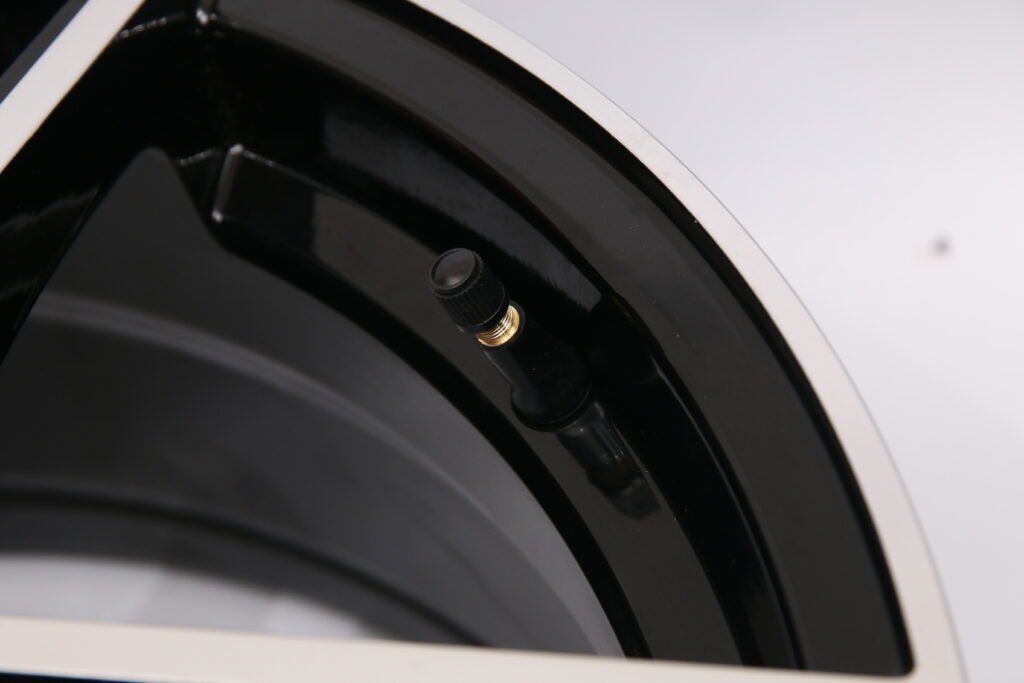
Tubeless tire valve cores enable air to enter and remain within the tire without the need for an inner tube. This is crucial for maintaining the airtightness of both automotive and bicycle tires. Fortune manufactures tire valve cores using robust and durable materials, ensuring exceptional performance under both everyday use and demanding conditions. Please refer to the table below to learn more about common materials and their respective advantages:
| Material | Impact on Performance |
|---|---|
| Brass | Sturdy and durable, easy to form, and corrosion-resistant; features a long service life. |
| Rubber | Tightly sealed and flexible; fits snugly against the rim edge to prevent air leakage. |
| Advanced Alloys | Due to its exceptionally high strength and ability to withstand harsh environments, it is widely utilized in fields with extremely demanding performance requirements. |
| Stainless Steel | Due to its extremely high strength and corrosion resistance, this material is widely used in the fields of aircraft and heavy machinery. |
The market for tubeless tire valve cores is currently exhibiting a trend of rapid growth:
- Over the next five years, the market is projected to expand at an annual rate of 8% to 10%.
- Annual automobile production continues to climb year after year.
- Consumers are seeking higher-quality tires.
- Consumers are looking for products that are both energy-efficient and environmentally friendly.
Ford Motor Company has earned the trust of consumers worldwide by ensuring that its products possess exceptional quality and outstanding performance.
Key Takeaways
- The function of a tubeless tire valve core is to maintain air pressure within the tire. It performs this role without the need for an inner tube, creating a tight seal to prevent air leakage.
- Tubeless valve cores help prevent tire blowouts and extend tire lifespan, thereby contributing to a safer and more comfortable driving experience.
- You should regularly inspect your tubeless valve cores for any blockages and clean them as needed. This helps ensure the proper functioning of the tubeless system.
- Please select the appropriate valve type based on your specific vehicle model. Choosing between metal or rubber materials according to your actual requirements will help enhance the overall performance of your tires.
- Fortune’s tubeless tire valves are robust and durable, suitable for a wide range of vehicle models. With their exceptional durability and superior performance, they are the ideal choice to meet your needs.
Purpose of Tubeless Tire Valve
Air Seal and Pressure Maintenance
The valve core in a tubeless tire is crucial for maintaining internal air pressure. It creates a tight seal at the valve opening, thereby helping the tire maintain the correct inflation pressure. This sealing mechanism prevents air leakage, even when the tire encounters bumps or experiences temperature fluctuations. The base of the valve core must fit snugly against the rim seat, and the valve nut must be securely tightened. These steps help prevent air leaks and ensure tire safety.
There are numerous reasons why air leaks may occur in a tubeless system. The table below lists some common causes and their effects:
| Cause | Explanation |
|---|---|
| Damaged rim tape | May cause the tubeless system to leak air. |
| Clogged valves | This may lead to a leak and requires maintenance to ensure proper operation. |
| Issues with the valve | A malfunction in the valve itself could lead to a gas leak; therefore, it requires inspection. |
Regular inspection and maintenance of tubeless tire valves help ensure their proper functioning. Occasionally, the sealant inside the tire may clog the valve core, making it difficult to inflate or deflate the tire. Removing and cleaning the valve core resolves this issue, thereby ensuring the system operates smoothly.
The valves manufactured by Fortune are safe, reliable, and deliver exceptional performance. Crafted from high-quality rubber and utilizing advanced sealing technology, each valve is meticulously manufactured and rigorously tested to ensure a tight seal, effectively maintaining tire pressure across a wide range of vehicles.
Role in Tubeless Systems
The tubeless tire valve is a critical component in any tubeless system. Working in conjunction with tubeless-compatible tires and rims, it creates an airtight seal that eliminates the need for an inner tube. Furthermore, this valve allows you to inject sealant into the tire interior; this sealant instantly plugs small punctures as they occur, effectively preventing air loss.
The function of a tubeless valve core extends far beyond merely maintaining tire pressure. It helps ensure a tight fit between the tire and the rim, guaranteeing that the entire system remains airtight and leak-free. Its design facilitates the easy addition of sealant and convenient pressure checks, thereby providing both motorists and cyclists with a smoother and safer riding experience.
Fortune valve cores feature unique characteristics specifically engineered to enhance these performance attributes. They are precision-crafted from robust materials capable of withstanding high pressures and demanding operating conditions. Select models even feature chrome-plated sleeves, offering a sleek and stylish aesthetic. Fortune’s advanced sealing technology ensures superior performance and extended service life, providing users with complete peace of mind on every journey.
Tubeless Tire Valve Components
Metal vs. Rubber Valves
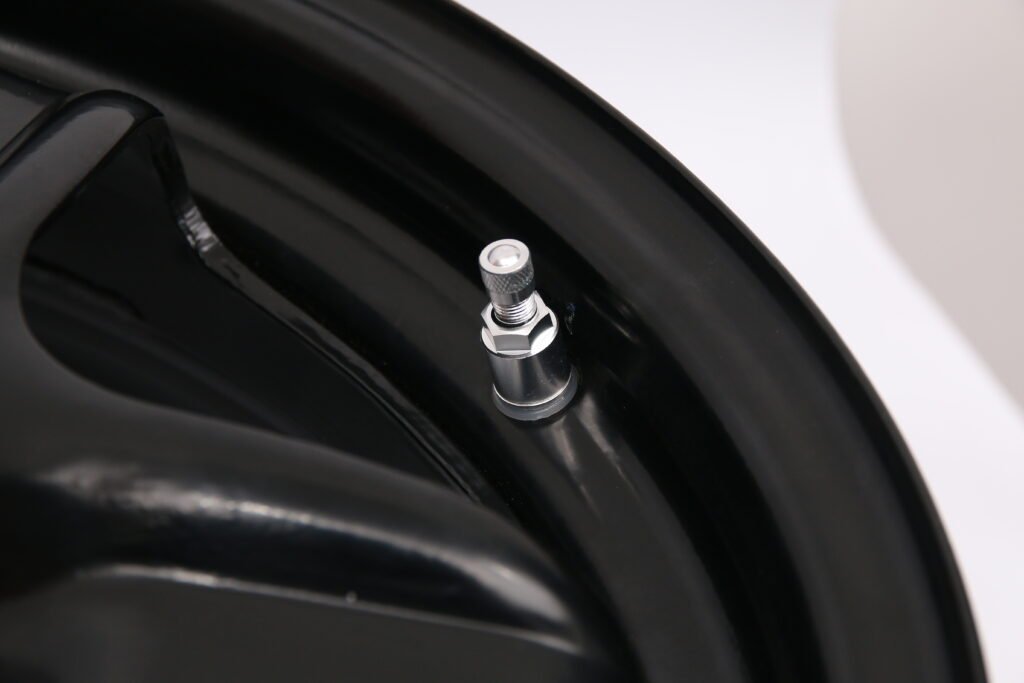
Tubeless tire valves primarily come in two types: metal and rubber. Each type possesses unique characteristics that enable it to perform effectively under various conditions. Metal valves, crafted from brass or aluminum, offer exceptional resistance to rust and physical damage. They are best suited for heavy-duty or high-performance vehicles. Rubber valves, made from EPDM rubber, are lightweight and easy to install. Thanks to their excellent installation compatibility and lower cost, rubber valves have become the standard choice for most everyday passenger vehicles.
Fortuna manufactures both types of valves using high-quality materials. Their metal valves are capable of withstanding high pressures and harsh operating environments, while their rubber valves maintain their flexibility and ensure a tight seal, even under fluctuating weather conditions. Both types have successfully passed rigorous leakage and strength tests.
Fortuna’s valves comply with key certification standards, such as ISO/TS 16949 and ISO 9001. This demonstrates Fortuna’s strong commitment to safety and quality.
Valve Core and Base
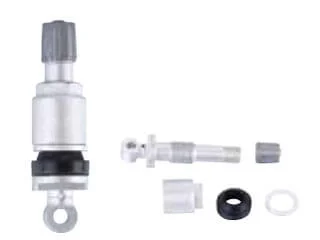
A tubeless tire valve core consists of several key components. Each component plays a crucial role in the proper functioning of the valve core. The valve core acts as a one-way air valve, allowing air to enter while preventing it from leaking out. Inside the valve core is a spring-loaded pin that regulates airflow. The base of the valve core fits snugly against the rim, creating an airtight seal that prevents air leakage from the tire.
The table below lists the main components and their functions:
| Component | Function |
|---|---|
| Snap-In Design | Installation is quick and easy; it is securely fixed. |
| Valve Stem | Air is allowed to enter or exit during the inflation or deflation process. |
| Valve Core | It acts as a one-way valve, allowing air to enter but preventing leakage. |
| Valve Cap | Protect core components from dust and water intrusion, keeping them clean. |
| Air Tight Seal | Prevents air leakage between the valve stem and the rim. |
Many Fortune valve cores are removable, facilitating the addition of sealant or the cleaning of the valve core. Certain models feature specialized rubber bases designed to adapt to a variety of rim profiles. These characteristics ensure compatibility with a wide range of wheel types. The quick-cleaning capability helps maintain optimal airflow and streamlines the maintenance process.
Tip: Removable valve cores allow users to add sealant or clear blockages without having to remove the tire.
Thanks to Fortune’s patented valve seats and advanced design, their tubeless tire valves deliver reliable performance across a diverse range of vehicle models.
How Tubeless Tire Valves Work
Sealing Mechanism
Tubeless tire valves rely on the synergistic interaction of multiple components to maintain tire pressure. The robust and durable valve stem helps preserve the integrity of the valve seal. A removable valve core facilitates the injection of sealant and allows for the regulation of airflow. The valve seat ring anchors the valve in place, thereby preventing air leakage. Furthermore, the rubber base fits snugly against the rim, ensuring a tight and secure seal. All these components work in concert to effectively prevent air loss.
Companies such as Fortune utilize high-quality materials and precision engineering to extend the service life of their valve seals. Their valves undergo rigorous testing for both leakage and structural strength; these tests ensure that the valves remain airtight, even under high-pressure conditions or in harsh operating environments.
Installation Process
Installing a tubeless tire valve requires careful execution. First, allow the wheel to cool to room temperature. Completely deflate the tire. Push one side of the tire bead into the rim’s drop channel. Use a tire lever to pry the bead away from the rim. Remove the inner tube, but ensure that the bead on the opposite side remains seated against the rim. Install the tubeless valve and hand-tighten the knurled nut. Never use tools, as this may damage the rubber gasket.
With its snap-in valves and clear installation instructions, the Fortune brand makes the installation process significantly easier. Their valves are compatible with a wide variety of rim shapes and sizes. After installing the valve, check for air leaks and inject tire sealant. Rotate the wheel to ensure the sealant is evenly distributed and fills any minute gaps.
Common issues include failing to verify whether the rim supports a tubeless system, omitting the rim tape, attempting installation while the tire is dry, or insufficient tire pressure. Top-tier brands address these challenges by providing high-quality rim tape, user-friendly installation guides, and valve cores that are compatible with air pumps or inflators.
| Testing Condition | Tubeless Valve Performance | Other Valve Types Performance |
|---|---|---|
| On-Road Performance | Monitor airtightness and stability under high pressure; evaluate the ease of inflation and deflation.Monitor airtightness and stability under high pressure; evaluate the ease of inflation and deflation. | Circumstances vary; under similar conditions, reliability is typically lower. |
| Off-Road Durability | Withstood impact, vibration, and the ingress of dust and moisture; identified structural weak points.Withstood impact, vibration, and the ingress of dust and moisture; identified structural weak points. | Under extreme conditions, its durability is often poor. |
Tip: After installing a tubeless tire valve core, please be sure to check for air leaks. This ensures both the safety of the tire and that it remains in a ready-to-use condition at all times.
Tubeless vs. Traditional Valves
Key Differences
Both tubeless and traditional tube-type tire valves are capable of maintaining air pressure within the tire; however, they operate on different principles. Tubeless systems utilize a specialized valve designed to seal air inside the tire without the need for an inner tube, whereas tube-type systems require a separate inner tube to contain the air. Consequently, the operational mechanisms and maintenance procedures for these two systems differ significantly.
The table below outlines the differences between tubeless and tube-type wheelsets:
| Feature | Tubeless Wheelsets | Tube-Type (Clincher) Wheelsets |
|---|---|---|
| Puncture Resistance | Self-sealing with sealant | Requires tube replacement |
| Tire Pressure | Can run lower pressures | Higher pressure required |
| Ride Comfort | Smoother at lower pressures | Harsher feel at high pressures |
| Weight | Slightly lighter (no tube) | Slightly heavier (with tube) |
| Installation | More complex (sealant setup) | Simple, beginner-friendly |
| Maintenance | Sealant refresh required | Basic inner tube changes |
| Cost | Slightly higher upfront | Lower initial cost |
Valves on tubeless wheels allow you to use lower tire pressures. This results in a smoother ride and helps prevent flat tires. Valves on wheels with inner tubes, however, require higher tire pressures, which may lead to a bumpier ride.
Advantages of Tubeless Valves
Tubeless tire valves offer numerous advantages across various types of vehicles. They help retain tire inflation, which translates to fewer air leaks and a longer tire lifespan. On passenger cars, these valves assist in maintaining proper tire pressure, thereby enhancing driving safety. Large trucks utilize these valves due to their exceptional performance under demanding operating conditions and their ability to reduce maintenance costs. For bicycles, these valves facilitate rapid inflation and minimize the risk of flat tires, thereby improving cycling safety.
Fortune sells a wide variety of tubeless tire valves suitable for various types of vehicles. The table below lists some of these products:
| Part# | Feature | Color | Working Pressure Range (kgt/cm2) | Working Temperature Range |
|---|---|---|---|---|
| 9001 | Standard Type | Black | 0 | -40 to +100°C |
| 9002 | High/low temperature Resistant | Red | 0 | -54 to +150°C |
| 9005 | Freon Resistant | White | 0 | -20 to +100°C |
| 9008 | Gas Resistant | White | 0 | N/A |
Fortuna valves have successfully passed rigorous testing standards, including ISO/TS16949, ISO 9001, TÜV, and DOT. These tests demonstrate that Fortuna consistently prioritizes safety and quality, striving to provide peace of mind for every user.
Tip: Choosing the right valves can enhance your tire performance, ensure safer driving, and provide a smoother ride.
Benefits of Tubeless Tire Valves
Performance and Safety
Tubeless tire valves offer numerous benefits to drivers and cyclists alike. They help prevent flat tires and extend the lifespan of the tires. Since there is no inner tube, pinch flats—where the tube gets pinched between the rim and the tire—cannot occur. A liquid sealant inside the tire can instantly seal small punctures, thereby ensuring safety while driving or riding.
- Because they lack an inner tube, tubeless tires reduce the likelihood of a flat tire.
- The sealant inside the tire quickly seals small leaks and punctures.
- The tires last longer, even when used on bumpy roads or trails.
Experts state that tubeless tire valves help maintain the tire’s structural integrity and safety. High-quality valves prevent air leakage, thereby helping the tire maintain proper inflation pressure. When tire pressure is at the appropriate level, the risk of a blowout is reduced. Many modern valves are designed to work in conjunction with Tire Pressure Monitoring Systems (TPMS). These systems provide alerts when tire pressure drops, thereby helping drivers ensure their safety.
Recent surveys indicate that many cyclists favor tubeless systems. Mountain bikers report choosing tubeless systems because the tires are more robust, while road cyclists note a reduction in flat tires. Commuting cyclists acknowledge that the installation process can be somewhat complex, yet many still value the advantages these systems provide.
Tubeless tire valves are also more environmentally friendly. Many valves are made from materials that are harmless to the natural environment and recyclable. This means that, compared to older-style inner-tube valves, they generate less waste.
Customization and Compatibility
Fortune offers a wide variety of tubeless tire valves suitable for various types of vehicles. Its OEM and ODM product lines enable users to select the appropriate valves based on their specific requirements. The valves manufactured by Fortune are compatible with a diverse range of rim shapes and sizes, and are crafted from robust materials such as EPDM rubber and brass. These materials are highly durable and resistant to rust.
| Feature | Description |
|---|---|
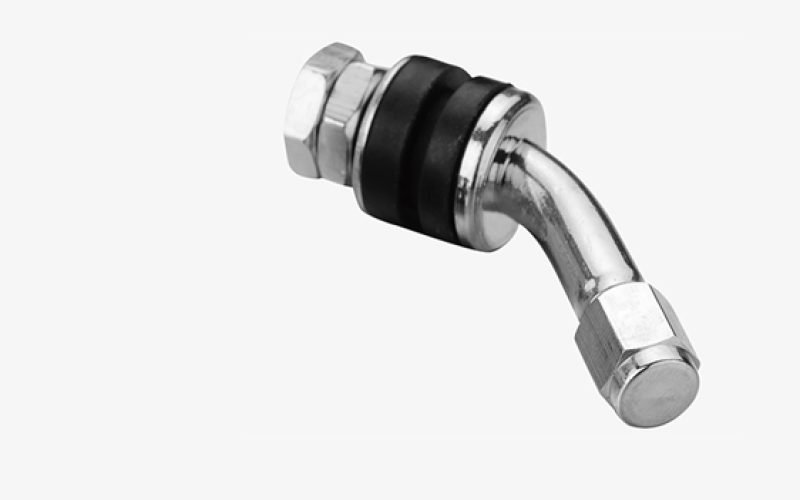
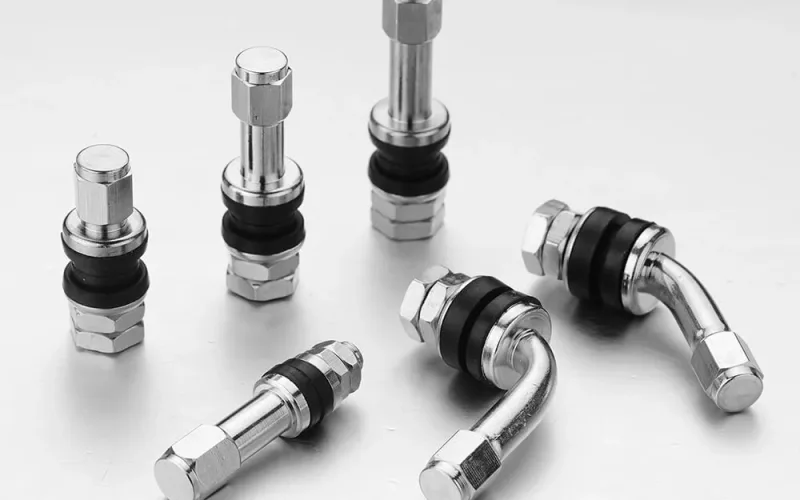
| Valve Types | Includes tubeless, snap-in, clamp-in, and angled valve stems. |
| Airtight Performance | Makes a tight seal to keep air in. |
| Corrosion Resistance | Made from materials that do not rust or break down. |
| Easy Installation | Simple to put in on many types of vehicles. |
| Customizable Designs | Can be made for different vehicles. |
| Material Quality | Uses strong EPDM rubber or brass for long life. |
| Compatibility | Models like TR412, TR413, TR414, and TR415 fit most wheels. |
The Fortune team is dedicated to helping people select the most suitable valves for their cars, trucks, or motorcycles. Their valves are compatible with a wide variety of rims and liners, making it easy for both repair shops and riders to find the right fit.
Tip: Choosing the right tubeless tire valves not only enhances tire safety and extends service life but also ensures excellent performance in all weather conditions.
Tubeless tire valves maintain the air pressure inside the tire, helping to prevent sudden blowouts. This small component makes driving and riding safer for many people. The table below illustrates why these valves are so important:
| Benefit | Description |
|---|---|
| Prevent Air Leakage | Maintain stable tire pressure to ensure safe handling and braking. |
| Support Tire Longevity | Reduces rolling resistance and heat, extending tire service life. |
| Enhance Fuel Efficiency | Correct tire pressure can improve fuel economy by 3% to 5%. |
| Enable Smart Monitoring | Supports the Tire Pressure Monitoring System (TPMS) and can send real-time tire pressure alerts. |
| Ensure Compatibility | Suitable for a wide range of vehicle models and road conditions. |
- Fewer flat tires, greater peace of mind when parked.
- Self-sealing plugs quickly seal small punctures.
- Lower tire pressure delivers a more comfortable ride and superior grip.
Fortune tire valves are robust and durable, ensuring peace of mind on every journey.
FAQ
What is the main job of a tubeless tire valve?
The valve on a tubeless tire locks air inside the tire. It forms a tight seal with the rim, helping the tire maintain air pressure and ensuring driving safety.
How do you know if a tubeless tire valve needs replacing?
Please watch out for the following signs:
- Air leaks around the valve
- Cracks or damage to the valve stem
- Difficulty maintaining tire pressure
Can Fortune tubeless tire valves fit any vehicle?
Fortune offers a wide variety of valve stems suitable for passenger cars, trucks, and motorcycles. The company also provides customized options for specialized wheels or specific requirements.
How do you clean a clogged tubeless tire valve?
Use a valve tool to remove the valve core. Rinse the valve core with clean water. Wipe it dry before reinstalling it. This helps facilitate airflow and ensures the valve functions properly.
 Request a quote