What is the difference between rubber and metal tire valves?
 20Mar
20Mar 
In high-speed applications, small sealing components such as valve cores, the valve stem, and complete wheel valves directly affect pressure stability and safety margins. For performance platforms running elevated tire pressures and repeated thermal cycles, core design and material control are no longer secondary considerations.
As vehicle outputs increase and tire constructions become stiffer, the demand for high-pressure, corrosion-resistant valve stem cores continues to rise across both track-focused and street performance segments.
Several manufacturers supply upgraded cores designed for higher pressure tolerance and improved sealing reliability:
While specifications vary, evaluation typically focuses on material composition, pressure rating, seal structure, and compatibility with tire pressure monitoring systems (TPMS).
| Valve Stem Core | Material | Max Pressure | Corrosion Resistance | TPMS Compatible | Typical Application |
|---|---|---|---|---|---|
| Schrader High-Pressure | Nickel-plated brass | 200 psi | High | Yes | High-speed street |
| Continental Racing | Stainless steel | 250 psi | Very high | Yes | Track / racing |
| Fortune UltraSeal | Nickel-plated brass | 220 psi | High | Yes | Performance street & track |
| Counteract Vortex | Brass + special seal | 210 psi | Moderate–High | Yes | All-weather / specialty |
Pressure capability alone is not the only selection factor. Seal elasticity, spring calibration, and plating consistency influence long-term air retention more significantly in real-world conditions.
At fortune, production batches of UltraSeal cores undergo pressure cycling and salt spray validation to maintain stable sealing performance under rotational heat and environmental exposure.

High-performance cores are commonly manufactured from:
Nickel plating improves corrosion resistance without compromising machinability. Stainless steel offers higher structural rigidity but increases machining complexity and cost.
Seal compound selection is critical. EPDM resists ozone, temperature fluctuation, and chemical degradation more effectively than standard rubber compounds. Poor seal material is often the root cause of slow leakage rather than metal failure.
Manufacturing tolerances must align with SAE dimensional standards to ensure consistent fit inside the valve stem housing.
fortune controls plating thickness and seal compression rates during assembly to maintain uniform opening pressure and sealing rebound.
Performance vehicles frequently operate above standard passenger tire pressures, particularly in:
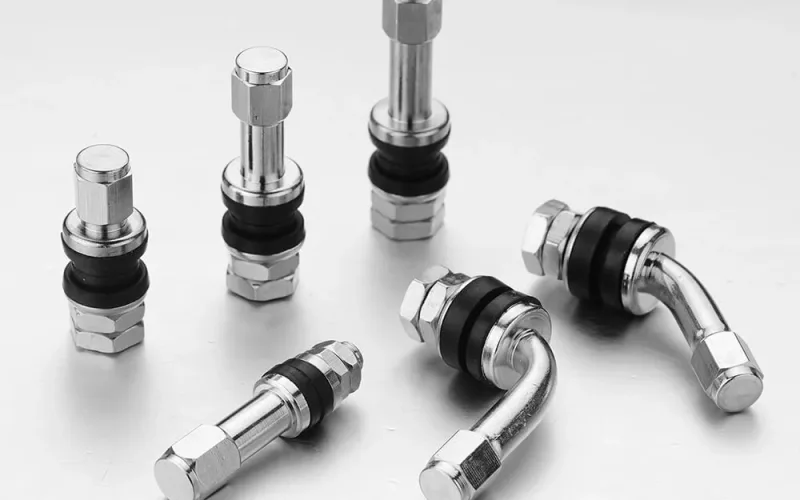
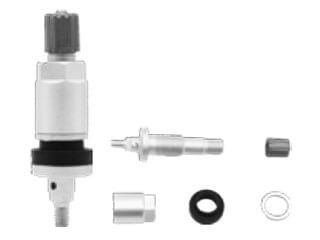
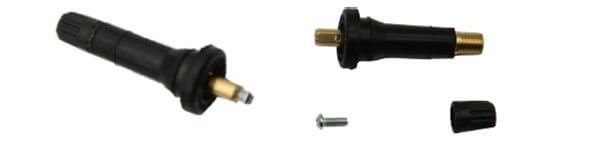
High-pressure snap-in valves are suitable for moderate performance use. For sustained high-speed or racing applications, metal clamp-in valves provide higher structural stability and improved heat resistance.
Clamp-in systems can tolerate pressures exceeding 200 psi, depending on material grade and seal configuration.
Core selection must correspond with the overall valve stem assembly. Installing a high-pressure core into a low-rated rubber stem does not increase system capability.
Corrosion remains a primary failure mode in wheel valves. Exposure to:
can accelerate degradation.
Nickel-plated brass offers balanced corrosion resistance and cost efficiency. Stainless steel provides extended durability but may introduce galvanic considerations when paired with certain aluminum stems.
Salt spray testing and thermal shock validation are standard durability benchmarks in professional manufacturing environments.
fortune performs batch-based corrosion simulation to confirm coating adhesion and prevent premature oxidation under coastal or winter operating conditions.
Air loss related to valve stem cores typically results from:
Even minor leakage can compromise performance tire behavior at high speeds.
Preventive measures include:
From a manufacturing standpoint, maintaining consistent spring preload and elastomer elasticity reduces micro-leak risk over extended service intervals.
Schrader’s high-pressure core features nickel-plated brass construction and temperature resistance suitable for extreme climates. Its sealing system is optimized for up to 200 psi applications, making it suitable for performance street use.
The plating improves corrosion resistance while preserving machinability for accurate thread engagement.
Continental’s stainless steel racing core emphasizes airflow efficiency and structural rigidity. The high-flow design supports rapid inflation and pressure adjustment in track environments.
Its stainless body enhances resistance to heat generated during sustained high-speed operation.
The UltraSeal Performance Core produced by Ningbo Fortune Auto Parts utilizes nickel-plated brass with reinforced sealing geometry.
Design focus includes:
The structure supports up to 220 psi, positioning it between standard street and racing-grade requirements. Production emphasizes dimensional consistency to reduce variance during automated assembly.
The Vortex core integrates a modified internal chamber design intended to improve airflow behavior. Its brass construction combined with specialized sealing aims to stabilize pressure under dynamic conditions.
While featuring advanced airflow claims, real-world performance remains dependent on installation accuracy and overall valve stem integrity.
Selection criteria should include:
Replacing cores during tire installation remains industry best practice. For performance vehicles, periodic inspection is recommended, especially after track sessions.
fortune supplies valve cores, valve stems, and complete wheel valve assemblies to distributors requiring OEM-level consistency and private-label flexibility.
Proper installation requires:
Routine inspection should focus on corrosion, seal wear, and slow pressure drop.
Metal stems generally exceed the service life of rubber stems, but cores should still be replaced during major tire service intervals.
Valve stem cores play a critical role in maintaining pressure stability within high-performance tire systems. Material selection, seal quality, corrosion resistance, and dimensional precision determine long-term reliability more than branding or nominal pressure rating.
As performance vehicles continue operating at higher speeds and pressures, upgraded cores matched to compatible valve stems and wheel valves become standard practice rather than optional upgrades.
Through controlled plating, validated seal materials, and batch-level pressure testing, fortune ensures consistent air retention performance for performance street and track applications across global markets.
A valve stem core is the tiny part inside your tire’s valve stem. It keeps air in your tire. If you want your tires to stay full and safe, you need a good core. Performance cars need strong, leak-proof cores for best results.
You should check your valve stem cores every time you get new tires. Most experts recommend replacing them every 4 to 6 years. If you see rust, leaks, or damage, swap them out right away.
Yes, you can! All you need is a valve core tool. Just unscrew the old core and screw in the new one. Make sure it’s snug, not too tight. Always check for leaks after you finish.
Tip: Always wear gloves and eye protection when working with tires.
Most high-performance valve stem cores, like Fortune UltraSeal, work with tire pressure monitoring systems (TPMS). Always check the product details to be sure. Using the right core helps your TPMS give you accurate tire pressure readings.
 Request a quote