What is the difference between rubber and metal tire valves?
 20Mar
20Mar 

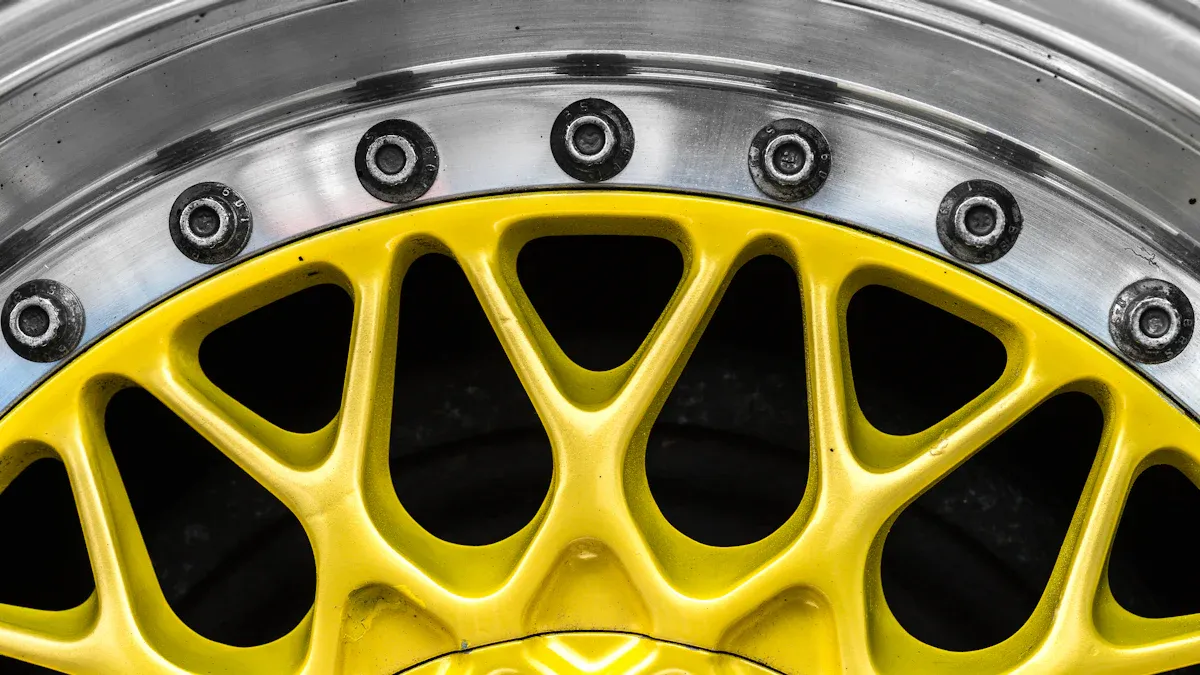
Your wheel rim bolts are the only components securing the wheels to your vehicle. You must choose the correct bolts to ensure your safety. Each year, hundreds of accidents happen when wheels detach from vehicles, creating dangerous road debris. The National Transportation Safety Board reports that between 750 and 1,050 wheel separations occur on tractor-trailers alone annually. Using the wrong hardware can lead to catastrophic failure, severe vehicle damage, and serious accidents.
Your wheel bolts do much more than just hold your wheels. They are critical engineering components that manage immense forces every time you drive. Understanding their role and the risks of using improper hardware is essential for your safety on the road.
Wheel bolts are central to your vehicle’s handling and stability. They secure the wheel by creating a powerful connection that manages the dynamic forces of driving. Here is how it works:
Using the wrong bolts or choosing low-quality alternatives introduces serious dangers. Studies on light-duty vehicles and even mining trucks show that incorrect hardware is a primary cause of failure. These bolts can fail from fatigue and overloading.
Warning: Counterfeit or poorly made bolts are a significant hazard. They often contain material defects that reduce their strength, causing them to fail standard safety tests. These bolts can crack or snap suddenly under normal driving conditions, leading to wheel detachment, structural failure, and catastrophic accidents.
To avoid these risks, you must choose bolts from a manufacturer committed to excellence. At Fortune, we build our wheel rim bolts to meet the highest industry benchmarks for safety and performance. Our manufacturing process adheres to strict quality management systems, including the globally recognized ISO 9001 certification. This ensures every product we make is consistent, reliable, and tested for superior strength.
We never use inferior materials. Our commitment is simple:
“Customer first, quality first.”
This principle guides our entire process, from engineering to final inspection. You can drive with confidence knowing your wheels are secured by hardware built for safety and durability.
Choosing the right hardware is simple when you know what to look for. You must match three key specifications to your vehicle and wheels: the seat type, the thread size, and the shank length. Getting any of these wrong can compromise your safety.
The “seat” is the part of the bolt that makes direct contact with the wheel’s lug hole. This surface must match the wheel’s design perfectly to center the wheel and distribute force evenly. Using the wrong seat type creates a tiny, unsafe contact point. This can cause the bolt to loosen or even break.
There are three primary seat types for wheel rim bolts:
| Seat Type | Shape & Angle | Common Applications | Visual Identifier |
|---|---|---|---|
| Conical (Tapered) | Tapered cone shape, usually 60° | Most aftermarket wheels and many American/Japanese vehicles | Looks like a cone or funnel |
| Ball (Radius) | Rounded, spherical shape | Factory (OEM) wheels on many European cars like VW, Audi, and Mercedes-Benz | Has a distinct, rounded end |
| Flat (Mag Shank) | Flat surface with a separate washer | Some older Japanese and American vehicles | A flat base with a long, unthreaded shank and a washer |
Important Note: You must never use a conical seat bolt on a wheel designed for a ball seat, or vice versa. The mismatched shapes will not secure the wheel properly, leading to vibrations and potential wheel detachment. Always check your wheel’s requirements.
Every bolt has a specific thread size that must match the threaded hole in your vehicle’s wheel hub. This measurement consists of two numbers: diameter and thread pitch.
You will see these written together, like M14x1.5. This means the bolt has a 14mm diameter and a 1.5mm thread pitch. Your vehicle owner’s manual or a professional can provide the correct size.
Here are some common thread sizes for popular vehicles:
| Brand/Usage | Common Thread Size |
|---|---|
| Many European & Asian Vehicles | M12 x 1.5 |
| Japanese Brands (e.g., Nissan, Subaru) | M12 x 1.25 |
| Volkswagen, Audi, BMW, Mercedes | M14 x 1.5 |
| Many American-Made Vehicles | 1/2″ x 20 UNF |
The shank is the threaded portion of the bolt. Its length is just as critical as the seat type and thread size. You need a bolt that is long enough to fully engage the threads in the hub but not so long that it causes damage.
Safety Warning: Using bolts with the wrong length can lead to catastrophic failure. If the bolt is too long, it may feel tight, but it is only tight against the hub’s internals, not the wheel itself. This creates a dangerous situation where the wheel is not properly attached to the vehicle.
A good rule of thumb is to ensure the bolt makes at least 6 to 8 full turns before it begins to tighten. Always verify the correct length when changing to aftermarket wheels or adding wheel spacers, as these often require longer bolts.
The head of the bolt is the part you turn with a tool to tighten or loosen it. The type of head determines which tool you need and is often dictated by the design of your wheels. The two main styles you will encounter are the standard hex head and the specialized tuner head.
Standard Hex Head Bolts
This is the most common type of bolt head. It has a six-sided (hexagonal) shape. You use a standard socket and wrench to install and remove these bolts. Most factory (OEM) wheels use hex head bolts because they are simple, effective, and compatible with common tools that every mechanic and most car owners have.
Tuner Bolts (Internal Drive or Spline Drive)
Many aftermarket wheels have very small lug holes. A standard socket is too thick to fit inside these holes without scratching or damaging the wheel. You need a special type of bolt for these wheels: the tuner bolt.
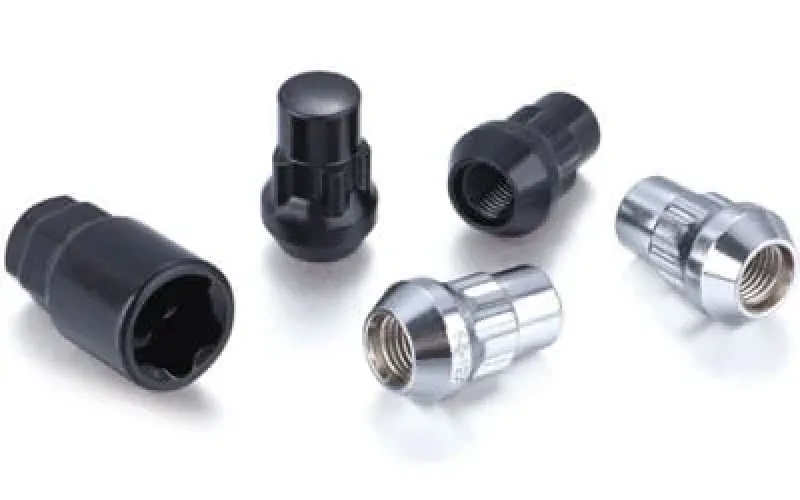
Instead of an external hex shape, tuner bolts have an internal pattern. You use a special “key” or adapter that fits inside the bolt head to tighten it. These bolts are essential for specific applications and offer several advantages:
Some advanced tuner bolts use a 12-point spline design. This pattern allows for even better tool grip in tight spaces and lets you apply higher torque safely compared to other internal drive styles.
Pro Tip: Guard Your Key!
Tuner bolts require a unique key for installation and removal. Always keep this key in a safe and accessible place in your vehicle, such as your glove box or with your spare tire tools. Losing the key can make it extremely difficult to change a flat tire on the road.
Here is a simple comparison to help you choose:
| Feature 🔧 | Standard Hex Bolt | Tuner Bolt |
|---|---|---|
| Tool Needed | Standard socket and wrench | Special key or adapter |
| Best For | Most factory (OEM) wheels | Aftermarket wheels with small lug holes |
| Pros | Uses common tools, widely available | Protects wheels from scratches, offers a clean look, provides added security |
| Cons | Socket may not fit in aftermarket wheels | Requires a special key that can be lost |
The seat of a bolt is where it meets the wheel. This contact point is vital for safety. You must match the bolt’s seat to the design of your wheel’s lug hole. A perfect match ensures the wheel is centered and secure. Let’s examine the three main types you will encounter.
The conical seat is the most common type you will find. It has a straight, tapered surface that looks like a cone. This design is very effective at centering the wheel on the hub as you tighten it.
This design creates a secure fit when paired with a wheel that has a matching tapered lug hole.
The ball seat bolt has a rounded, spherical head. You should not confuse it with the tapered conical seat. The curved surface of a ball seat fits perfectly into a wheel with a matching rounded lug hole. This type is standard for many European car manufacturers. You will find that brands like Mercedes-Benz, Audi, and Volkswagen often use ball seat bolts on their factory wheels.

Critical Safety Alert: Never use a conical bolt on a wheel made for a ball seat. The shapes do not match. This creates a tiny, unsafe contact point that can cause the bolt to loosen or break while you are driving.
The flat seat is the most distinct of the three. It does not use a tapered or rounded shape to center the wheel. Instead, it has a flat base that sits flush against the wheel surface.
This design relies on the shank for alignment and the flat washer for clamping force.
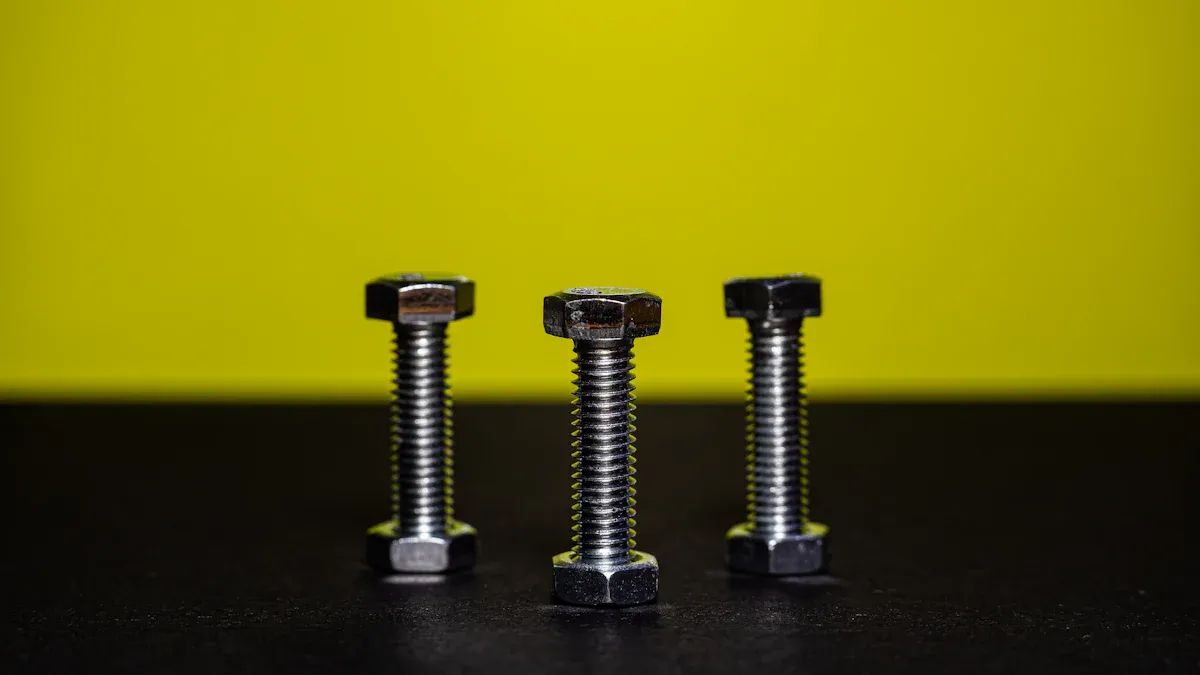
The material of a wheel bolt directly impacts its strength, durability, and safety. You need to understand what your bolts are made of to ensure they can handle the immense forces of driving. Most bolts are made from high-strength steel, but other materials like titanium offer unique benefits for specific uses.
Most quality wheel bolts are made from high-strength steel alloys. Manufacturers assign these bolts a property class, or grade, that tells you their strength. A higher number means a stronger bolt. For example, Grade 10.9 bolts are very common in the automotive industry because they offer excellent tensile strength.
You can see how different grades compare in strength below:
| Grade | Tensile Strength (MPa) | Common Applications |
|---|---|---|
| 8.8 | 830 | General automotive parts |
| 10.9 | 1040 | High-strength automotive components |
| 12.9 | 1220 | High-performance racing, heavy machinery |
Choosing a bolt with the right grade ensures it can handle the clamping force and driving stress without failing.
Titanium is a premium material used in high-performance and racing applications. Its main advantage is its low weight. Titanium is approximately 40% lighter than steel. This weight reduction helps lower your vehicle’s “unsprung weight,” which is the weight not supported by the suspension. Lighter wheels allow your suspension to react faster, improving handling and ride quality.
However, this performance comes at a high price. A single titanium bolt can cost 5 to 10 times more than a high-strength steel equivalent. For most drivers, steel offers the best balance of strength and value.
A bolt’s material provides strength, but its coating provides protection. Coatings are essential for preventing rust and corrosion, which can weaken a bolt over time.
A good coating ensures your bolts remain strong and reliable for years.
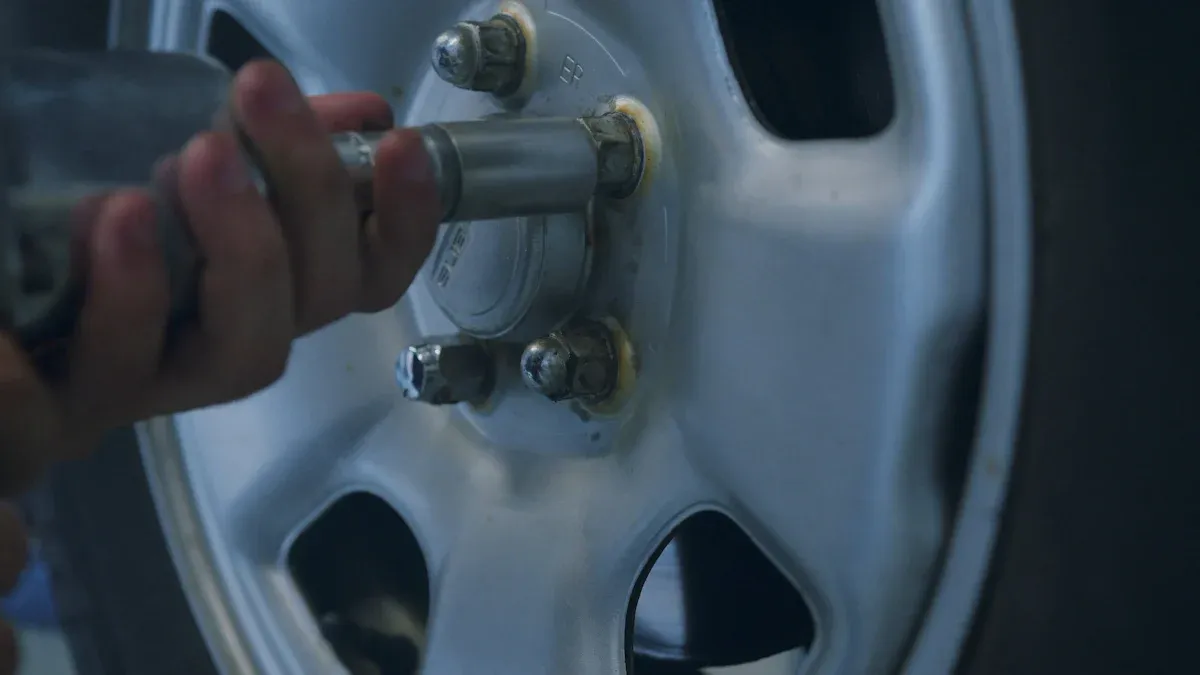
Properly installing your wheels is one of the most important safety procedures you can perform on your vehicle. Following the correct steps ensures your wheels are secure and your vehicle is safe to drive. This guide will walk you through the process from start to finish.
You cannot complete this job safely without the right equipment. Using the wrong tools can lead to damaged parts or an insecure wheel. Before you begin, gather the necessary items to do the job correctly and efficiently.
You will need the following tools:
Safety First!
Always work on a flat, level surface. This prevents the vehicle from shifting or falling while it is on the jack stands.
Following a specific sequence is key to ensuring your wheel is mounted evenly and securely. Rushing this process or skipping steps can lead to vibrations, damaged parts, or even wheel detachment.
Follow these steps for a safe and successful installation:
A torque wrench is not an optional tool; it is essential for your safety. It is a special instrument designed to apply a precise amount of rotational force, or torque, to a fastener. Guessing how tight your bolts are is extremely dangerous. A torque wrench removes the guesswork and ensures every bolt has the correct clamping force.
There are several types of torque wrenches, but they all achieve the same goal.
Important Note: Using a torque wrench is the only way to know your bolts are tightened correctly. Over-tightening can stretch and weaken the bolts, while under-tightening can allow them to loosen as you drive. Both scenarios can lead to catastrophic failure.
You might think tightening your wheel bolts is as simple as going around in a circle. However, the order you tighten them in is just as important as the final torque. The correct method is called the star pattern (or criss-cross pattern). This technique is a fundamental rule of auto mechanics for a very important reason: it guarantees the wheel mounts evenly and safely.
Following the star pattern ensures you apply balanced pressure across the entire wheel hub. Think about tightening the lid on a large container. If you tighten one side all the way down first, the other side will lift up. The same thing happens with your wheel. Tightening bolts in a circle creates uneven clamping force. This can cause the wheel to sit at a slight angle, even if it feels tight.
This systematic, criss-cross sequence is crucial for several reasons:
Warning: Never tighten adjacent bolts one after another. When you tighten a bolt, the one next to it becomes the path of least resistance. Tightening them in a circle can cause the wheel to tilt, creating a dangerous and insecure connection.
So, how do you perform the star pattern? You simply tighten the bolts in an order that criss-crosses the wheel. Always tighten the bolts in two stages: first to snug them up, and then a second time to the final torque spec.
Here is how to do it based on the number of bolts on your wheel:
For a 4-Bolt Wheel: Imagine the bolts are numbered like a clock at 12, 3, 6, and 9.
For a 5-Bolt Wheel: 🔩 This is the classic star shape.
For a 6-Bolt Wheel: This pattern is like drawing two triangles.
This simple procedure is a non-negotiable step for safety. It ensures your wheel is perfectly flat against the hub, giving you a secure connection that you can trust on the road.
Using a torque wrench is only half the battle. You must apply the correct amount of force, known as the torque specification. This value is not a suggestion; it is a precise engineering requirement for your vehicle’s safety. Applying the right torque ensures the bolt achieves the correct clamping force without being damaged.
Finding the correct torque value for your vehicle is straightforward. For a stock vehicle with its original wheels, your owner’s manual is the most authoritative source for the recommended torque specifications. You can usually find this information in the section covering tire changes or vehicle specifications.
If you cannot find your manual, you have other options:
Applying the wrong amount of torque is dangerous. Both too much and too little force can lead to serious problems. Under-tightening is risky because the bolts can vibrate loose as you drive, which could lead to wheel detachment.
Over-tightening, however, causes more hidden damage. When you apply too much force, you can:
These issues often go unnoticed until a component fails, putting you in a dangerous situation on the road.
You might think adding grease or anti-seize to bolt threads is helpful, but it is extremely hazardous. Torque specifications are calculated for clean, dry threads. Lubricant dramatically reduces friction.
Safety Warning: If you lubricate the threads and then apply the torque specification intended for dry threads, you will severely over-torque the fastener. The torque wrench will “click” at the specified value, but the actual clamping force will be much higher than what the bolt was designed to handle.
This hidden over-tightening can stretch the bolt beyond its elastic limit, causing it to fail. Always install your bolts dry unless the vehicle manufacturer explicitly tells you otherwise.
Even a small mistake during wheel installation can lead to big problems. You can keep your vehicle safe by avoiding these common errors. Knowing what not to do is just as important as knowing the right steps.
You must match your bolt’s seat to your wheel’s lug hole. Using a conical bolt on a wheel designed for a ball seat creates a tiny, unsafe contact point. This mismatch prevents the wheel from centering correctly and securely.
Warning: A mismatched seat concentrates all the clamping force onto a very small area. This can cause the bolt to loosen over time or even break from the stress, leading to dangerous vibrations and potential wheel failure.
The length of your bolt is critical for a secure connection. A bolt that is too short will not have enough thread engagement in the hub. This means it cannot achieve the proper clamping force and could strip the threads or back out while you drive. On the other hand, a bolt that is too long can cause serious damage.
Some vehicles use special Torque-to-Yield (TTY) bolts, also known as stretch bolts. These are designed for single use only. Manufacturers engineer these bolts to stretch permanently when you tighten them to their yield point. This stretching creates a very precise and consistent clamping force.
Critical Safety Alert: You must never reuse a TTY bolt. Once it has been installed and stretched, it loses its elasticity. If you try to install it again, it will not provide the correct clamping force. Scientific tests show that a reused TTY bolt stretches much more than a new one and can quickly reach its breaking point, leading to failure. Always replace them with new ones.
You might think you can “feel” when a bolt is tight enough. This is one of the most dangerous assumptions you can make. Your hands are not calibrated instruments. Relying on guesswork instead of a torque wrench puts you, your passengers, and others on the road at risk. Studies by the Tire Industry Association (TIA) have shown that even experienced technicians cannot accurately judge torque by hand.
Many people make this mistake by using an impact wrench to fully tighten their wheel bolts. An impact wrench is a tool for speed, not precision. It delivers powerful, uncontrolled bursts of force. A standard automotive impact wrench can easily apply over 300 ft-lbs of torque. This is more than double the specification for most passenger cars, which typically require between 80 and 100 ft-lbs.
This massive, unmeasured force leads to severe over-tightening.
The Only Safe Method 🛠️
There is no substitute for a torque wrench. It is the only tool that guarantees you apply the exact clamping force required by your vehicle’s manufacturer. Using one is not an optional step; it is a critical safety procedure. Always use a torque wrench for the final tightening, and always follow the star pattern. Guessing is gambling with your safety.
Your vehicle often gives you warning signs before a major failure occurs. You can spot problems with your wheel bolts by paying attention to how your car feels and by performing simple visual checks. Knowing these signs helps you prevent a dangerous situation on the road.
A sudden vibration is one of the first signs of a loose or failing bolt. You should not ignore this feeling. The timing and location of the vibration can help you identify the cause.
If you feel any new vibrations, you should pull over safely and check your bolts immediately.
Rust is a clear enemy of metal strength. You should inspect your bolts regularly for any signs of corrosion. Look for reddish-brown flakes, pitting on the surface, or any discoloration. Corrosion weakens the metal and can cause a bolt to snap under pressure. A heavy layer of rust can also prevent you from tightening the bolt to the correct torque. If you see significant rust, it is time to replace your bolts.
A healthy bolt has clean, well-defined threads and a sharp, hexagonal head. You should inspect your bolts whenever you rotate your tires or change a wheel. Look closely at the threaded portion. Damaged threads will not align properly with the nut. You should never force a nut onto a bolt with damaged threads. This can cause the bolt to spin inside the hub, leading to a much more difficult repair. Also, check the bolt head. If the corners are rounded or stripped, you will not be able to torque it correctly. Replace any bolt with damaged threads or a worn head to ensure a secure fit.
If you find that your wheel bolts constantly need re-tightening, you have a serious safety problem. This is a clear warning sign that something is wrong with your wheel assembly. A bolt that is correctly installed and torqued should not come loose on its own. You must investigate the root cause immediately to prevent a dangerous failure.
Several issues can cause your bolts to repeatedly loosen. The most common culprits include:
The Domino Effect of a Loose Bolt ⛓️
Once a single bolt loosens, it creates a dangerous chain reaction. The forces from driving are no longer distributed evenly. Instead, they shift to the remaining tight bolts, especially the ones next to the loose one. This extra stress causes them to back off more easily. As more bolts loosen, the total clamping force drops, and the stress on the few remaining tight bolts skyrockets. This can lead to them snapping from fatigue, causing the wheel to detach.
Your safety on the road depends on your hardware. You must always verify your wheel rim bolts match both your vehicle and your wheels. Applying the correct torque is a critical safety procedure, not an optional step. Make bolt inspection a regular part of your vehicle maintenance routine.
For guaranteed quality and expert guidance, you can trust a professional manufacturer like Fortune to secure your wheels safely.
You must re-check the torque after driving about 50 miles (80 km) on newly installed wheels. This ensures everything has settled correctly. After that, you should inspect your bolts during your regular vehicle maintenance checks.
No. You should only use an impact wrench to speed up removal. For installation, use it only to snug the bolts lightly. You must use a calibrated torque wrench for the final tightening to prevent dangerous over-tightening and component damage.
First, check your glove box or spare tire tool kit for the key. If it is truly lost, contact the bolt manufacturer for a replacement. A professional tire shop may also have a master key set to help you remove the bolts.
Pro Tip 🔑
Keep a record of your key’s part number. This makes ordering a replacement much easier.
A wheel bolt is a single piece with a head and threads that screws directly into your vehicle’s hub. A lug nut is a fastener that threads onto a stud. The stud is a threaded post that is permanently part of the hub assembly.
 Request a quote