What is the difference between rubber and metal tire valves?
 20Mar
20Mar 


In modern wheel assemblies, tire valves, tire valve caps, and internal tire valve cores function together to maintain stable air pressure. While the valve core provides the primary sealing mechanism, the external cap acts as secondary protection against dust, moisture, road salt, and mechanical contamination. A durable cap reduces the risk of corrosion at the valve opening and helps prevent slow air loss caused by debris intrusion.
For passenger vehicles, commercial fleets, and off-road platforms, selecting a properly manufactured valve cap is a small but critical step in protecting long-term tire performance.
Below is a technical review of commonly used durable valve cap types based on material strength, sealing performance, and environmental resistance.
Manufactured from anodized aluminum alloy, this type emphasizes corrosion resistance and structural rigidity. Internal rubber gaskets enhance sealing performance, reducing moisture ingress. Aluminum construction resists deformation under temperature variation, making it suitable for daily drivers and light commercial vehicles.
Designed for truck and high-load applications, these caps typically use reinforced polymer or coated metal construction. Their primary advantage lies in resistance to mud, vibration, and repeated thermal cycling. Heavy-duty vehicles benefit from improved contamination control around exposed valve threads.
This design focuses on temperature resistance. Materials are selected to prevent cracking in cold climates and oxidation in high-heat environments. Suitable for regions with seasonal temperature extremes, these caps maintain thread integrity and sealing consistency.
Caps in this category use treated metal surfaces with anti-corrosion coatings. In coastal or winter road conditions where salt exposure is common, coating quality directly influences long-term durability. Protective plating reduces oxidation at the contact surface between cap and valve stem.
Off-road environments expose valve stems to sand, stones, and debris impact. Knurled aluminum caps provide mechanical strength and easy manual removal. Their rigid body protects valve openings during trail driving or construction site operation.
These caps provide standard aluminum protection at a lower price point. Suitable for fleet maintenance or multi-vehicle households, they deliver acceptable corrosion resistance and basic sealing performance without advanced coatings.
Precision threading ensures smooth manual installation and removal. Anodized surfaces resist fading and light corrosion. These caps are suited for drivers who perform regular tire pressure checks and require consistent reusability.
While visually oriented, these caps maintain functional sealing properties through integrated O-ring structures. Material selection typically includes coated aluminum or stainless steel, balancing appearance with moderate durability.
Designed for compatibility across passenger cars, SUVs, and motorcycles, these caps emphasize dimensional consistency. Knurled grip surfaces allow removal even in low-temperature conditions where metal contraction can increase thread tightness.
High-grade metal construction combined with internal rubber sealing rings provides stable long-term protection. These caps are intended for drivers prioritizing extended service life over decorative features.

| Product Type | Primary Material | Application Focus | Key Technical Strength |
|---|---|---|---|
| Anodized Aluminum | Aircraft-grade aluminum | Daily driving | Corrosion resistance |
| Heavy-Duty Polymer/Metal | Reinforced composite | Trucks | Impact durability |
| Coated Anti-Corrosion Metal | Plated metal | Coastal climates | Salt resistance |
| Knurled Aluminum | Solid aluminum | Off-road | Mechanical strength |
| Plastic Dome Caps | High-grade polymer | Budget use | Lightweight sealing |
Metal caps generally offer stronger structural protection and improved resistance to temperature variation. Polymer caps remain suitable for standard commuting environments where extreme exposure is limited.
Without a cap, dirt and water can accumulate around the valve opening. Over time, contamination may interfere with the sealing function of the tire valve core. This increases the risk of slow pressure leakage.
A properly sealed cap:
Valve caps are exposed to:
Low-quality caps may crack, seize, or corrode, complicating removal during pressure checks. Durable materials extend service intervals and maintain functional reliability.
Replacing tires prematurely due to pressure loss is significantly more expensive than maintaining protective components. Reliable valve caps help preserve inflation stability, indirectly supporting:
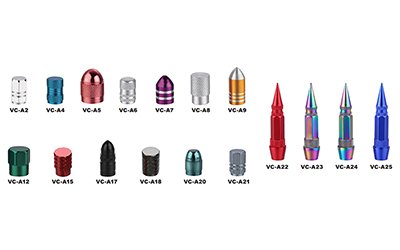
Caps equipped with O-rings or rubber washers improve secondary sealing. Although the valve core performs primary air retention, a cap with internal sealing reduces contamination risk.
Most valve caps follow standard Schrader valve threading. However, heavy-duty trucks or high-pressure systems may require reinforced cap designs to prevent thread fatigue.
Knurled or textured surfaces allow manual removal without tools. Caps that seize due to poor material compatibility with metal stems should be avoided.
From a production standpoint, dimensional accuracy and coating consistency determine durability. Thread precision ensures proper engagement without cross-threading. Surface treatments influence corrosion resistance under salt spray conditions.
Fortune manufactures tire valves and related protective components under controlled quality systems. Material sourcing, surface treatment validation, and sealing performance checks are integrated into production processes to ensure long-term compatibility between valve stems, valve cores, and caps. This approach supports stable air retention performance across passenger and commercial vehicle platforms.
Tire valve caps are secondary protective components that contribute to the reliability of the overall tire inflation system. When paired with properly manufactured tire valves and high-quality tire valve cores, durable caps reduce contamination, prevent corrosion, and support long-term pressure stability.
Selecting caps based on material quality, environmental exposure, and service conditions ensures consistent performance. Although small in size, properly engineered valve caps play a measurable role in maintaining safe, efficient vehicle operation throughout the tire service cycle.
Metal caps give you stronger protection. You get better resistance to corrosion, cracking, and weather damage. Choose metal if you want your valve stems to last longer and your tires to stay safe in tough conditions.
Check your valve caps every time you inspect your tires. Replace them if you see cracks, rust, or a loose fit. New caps keep your tires sealed and protected. Regular replacement saves you money on tire repairs.
Most valve caps use a universal size. You can use them on cars, trucks, motorcycles, and bikes. Always check the product description for compatibility. Universal-fit caps make your life easier and protect all your vehicles.
Absolutely! Stylish valve caps add a custom touch to your wheels. You can choose colors or finishes that match your car. Upgrade your caps and make your vehicle stand out on the road or at car meets.
 Request a quote