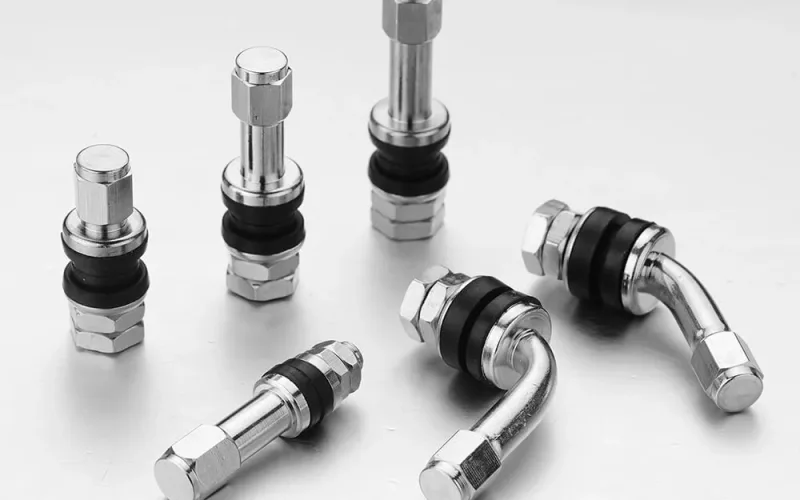
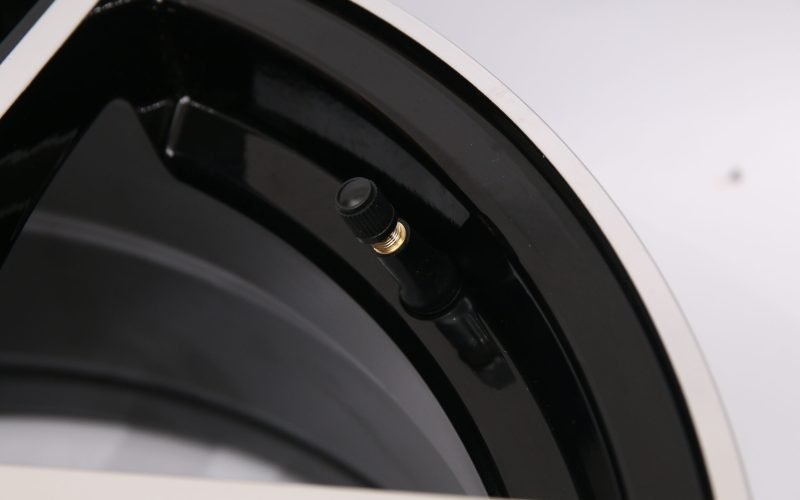
What is the difference between rubber and metal tire valves?
 20Mar
20Mar 


In any wheel mounting system, lug nuts, lug bolts, and wheel locks function as the final clamping interface between the wheel and the hub. Their geometry, thread accuracy, and seating design directly determine whether the applied torque converts into effective clamping force. Improper specification selection can reduce thread engagement, distort seating surfaces, or lead to loss of preload under dynamic load conditions.
For manufacturers and distributors, hardware consistency is critical. At fortune, we supply precision-machined lug nuts and related fastening components produced under controlled material sourcing, thread inspection, and surface treatment validation to ensure reliable performance in global markets.
Selecting correct wheel fastening hardware requires evaluation of three primary parameters: seat type, thread specification, and head design.
The seat is the contact interface between the lug nut and the wheel. This surface centers the wheel and distributes clamping force. A mismatch between seat geometry and wheel lug hole reduces contact area, concentrating stress and preventing proper torque transfer.
There are three primary seat designs used in the industry.
The conical seat is the most widely applied configuration, especially in aftermarket wheels. It features a tapered surface, typically 60 degrees, which aligns with a matching tapered wheel hole.
Engineering characteristics:
Because centering relies on taper alignment, deviation in angle or machining tolerance affects seating accuracy and clamp consistency.
The spherical seat uses a rounded interface that mates with a ball-shaped wheel recess. This configuration is common in many European vehicle platforms and certain OEM wheel systems.
Mechanical considerations:
Installing a spherical nut into a conical wheel seat significantly reduces effective clamping surface, increasing the risk of loosening under vibration.
The mag seat design features a flat seating surface combined with a separate washer and extended shank. The washer distributes load across a flat wheel pad.
Key structural elements:
The washer is not optional. Without it, clamping force becomes uneven, and seating deformation can occur.
Seat matching is the first and most critical step in lug nut selection. Incorrect geometry directly compromises mechanical integrity.
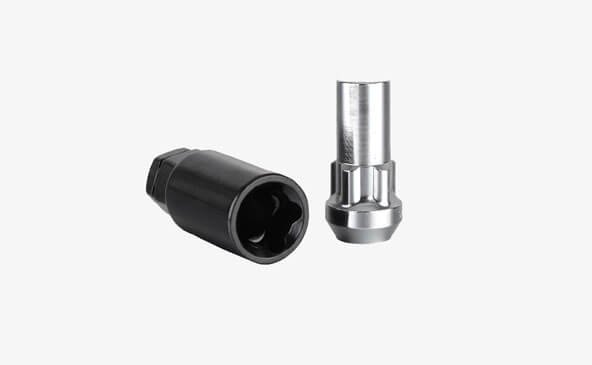
After seat verification, thread specification must be confirmed. Thread size defines stud or bolt diameter, while thread pitch determines thread spacing.
Example: M12×1.5
For SAE threads, pitch is measured in threads per inch (TPI).
Incorrect thread specification results in:
Thread engagement length should generally equal or exceed the diameter of the stud to ensure structural integrity under load cycles.
Common thread sizes include:
Metric:
SAE:
Manufacturing tolerances in thread rolling or machining directly affect torque accuracy and repeatability. fortune controls thread gauge inspection and hardness treatment to maintain consistent fitment across production batches.
Once seat and thread specifications are defined, head style determines installation compatibility and functional requirements.
The standard hex head is compatible with conventional sockets and torque tools. It remains widely used in OEM applications due to simplicity and service accessibility.
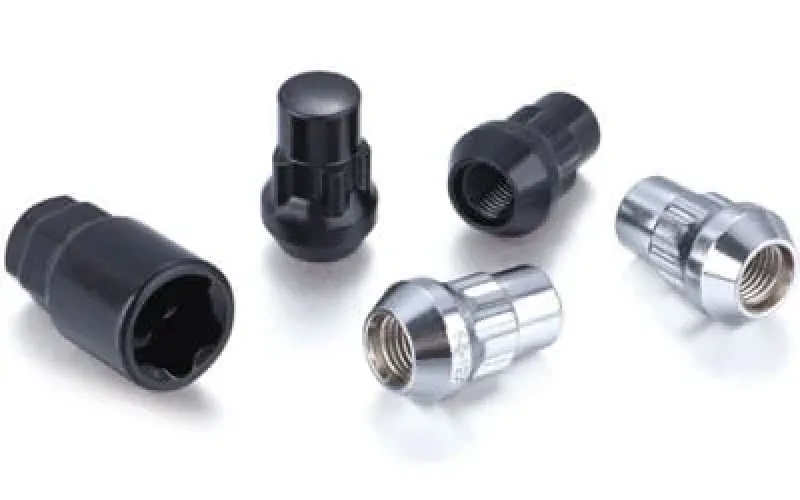
Spline drive nuts feature external grooves requiring a matching key tool. They are commonly applied where lug hole clearance is limited, such as in multi-spoke aftermarket wheels.
Technical advantages include:
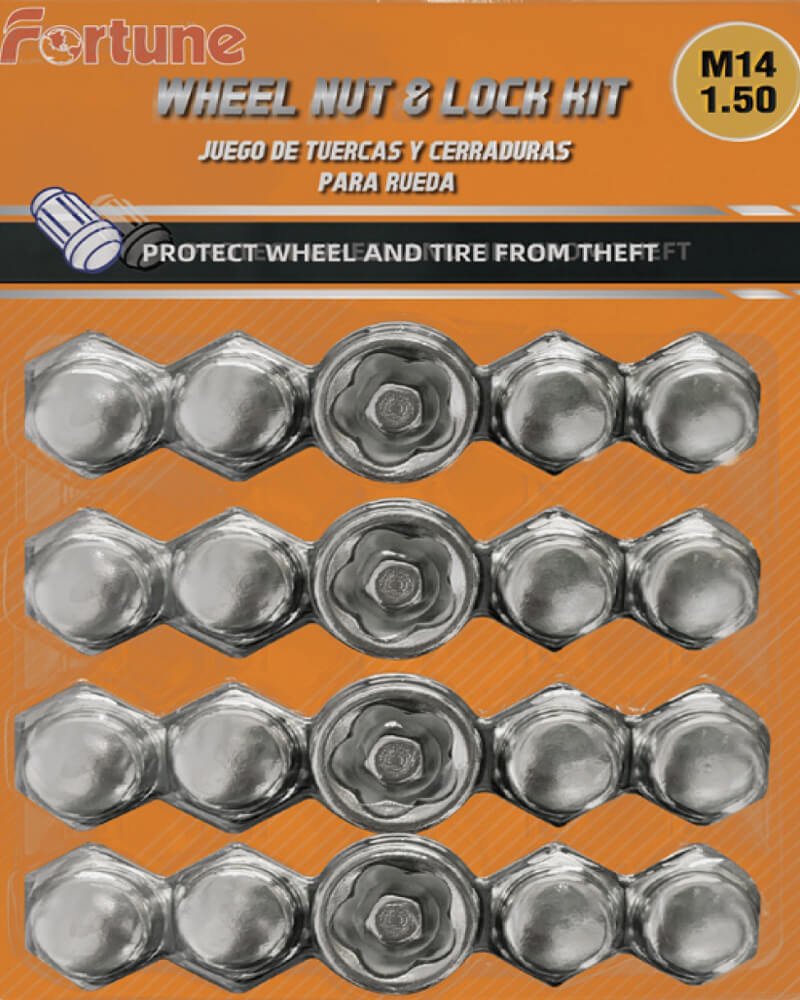
For enhanced security applications, wheel locks are integrated into the lug system using coded key interfaces. These components require precise machining to maintain torque transmission without damaging the spline pattern.
Closed-end nuts encapsulate the stud tip, protecting threads from moisture and contamination. This configuration supports corrosion resistance in standard-length stud applications.
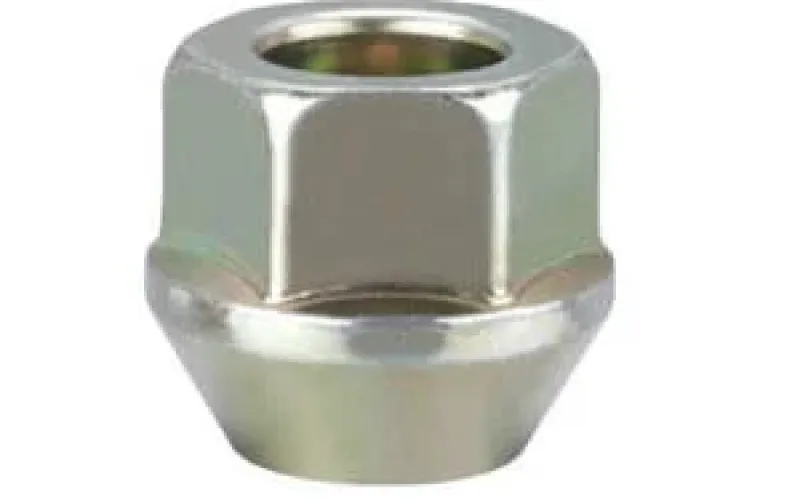
Open-end nuts are required when:
Using a closed-end nut on an extended stud can cause bottoming before clamp load is achieved, resulting in insufficient wheel retention.
Some vehicle platforms use lug bolts instead of stud-and-nut systems. Lug bolts thread directly into the hub through the wheel, eliminating fixed studs.
Structural differences:
Both systems demand correct seat type, thread pitch, and torque specification. Interchanging hardware between these systems is not permissible.
fortune manufactures both lug nuts and compatible fastening solutions designed to meet dimensional standards across multiple hub systems.
When converting from OEM wheels to aftermarket wheels, original hardware often cannot be reused. Differences commonly include:
Aftermarket wheels typically require conical seats even if the factory system used spherical or mag seats. Reusing incompatible hardware reduces contact stability and increases operational risk.
Material determines tensile strength, corrosion resistance, and fatigue performance.
Proper heat treatment and plating thickness control are essential to prevent hydrogen embrittlement or surface cracking.
Titanium is primarily applied in performance and motorsport environments where unsprung mass reduction is critical.
fortune produces lug nuts using controlled alloy sourcing and validated coating processes, including salt spray testing and torque cycle verification, to ensure long-term durability.
Correct installation is as important as hardware selection.
Best practices include:
Improper torque—either under or over specification—can lead to stud elongation, seat deformation, or clamp loss.
Choosing wheel lug nuts requires precise alignment of seat geometry, thread specification, and head design. Lug bolts and wheel locks follow the same engineering principles: accurate thread engagement, controlled clamping force, and correct seating interface.
Material strength, coating durability, and dimensional tolerance directly influence long-term fastening reliability. At fortune, production emphasizes thread accuracy, hardness control, coating validation, and batch inspection to maintain consistent mechanical performance across global automotive applications.
Correct fastening hardware is not a cosmetic component; it is a structural element responsible for maintaining wheel-to-hub integrity under continuous dynamic load.
You should almost never reuse old lug nuts on a new wheel. Aftermarket wheels often require a different seat type or thread size than your factory ones. Using the wrong hardware can prevent the wheel from seating correctly, creating a major safety risk.
Using the wrong seat type is very dangerous. For example, a ball seat nut in a conical hole only makes contact on a tiny edge. This small contact point cannot secure the wheel properly, which can lead to loosening and severe damage.
You should always re-torque your lug nuts after driving 25-50 miles on a new installation. This check ensures everything has settled correctly. After that, it is a good practice to check the torque during regular vehicle maintenance, like tire rotations.
The finish primarily affects appearance and corrosion resistance.
For example, a chrome or PVD finish helps protect the steel from rust. While color does not impact safety, a quality finish will keep your lug nuts looking good and functioning properly for longer.
 Request a quote