What is the difference between rubber and metal tire valves?
 20Mar
20Mar 

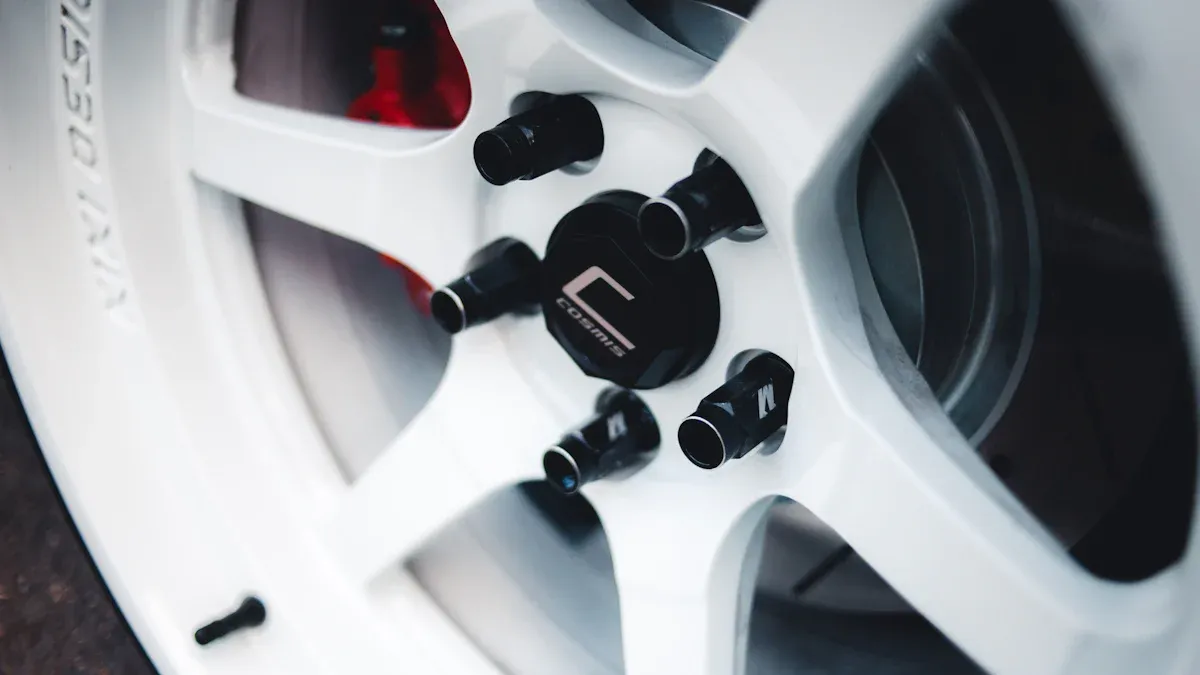
You found the perfect set of aftermarket wheels. Your job is not done yet. Your factory hardware is likely unsafe for the new rims. Choosing the proper lug nuts is a critical safety step. The importance of lug nuts cannot be overstated, as using the wrong ones can lead to catastrophic failure.
Annual UK Road Incidents from Improper Wheel Installation | Incident Type | Annual Cases | |:—|:—:| | Wheel Detachments | 150 – 400 | | Injury Accidents | 10 – 27 | | Fatal Accidents | 3 – 7 |
Let’s ensure your new wheels are secure. We will walk through how to select the correct rim lug nuts for a safe ride.
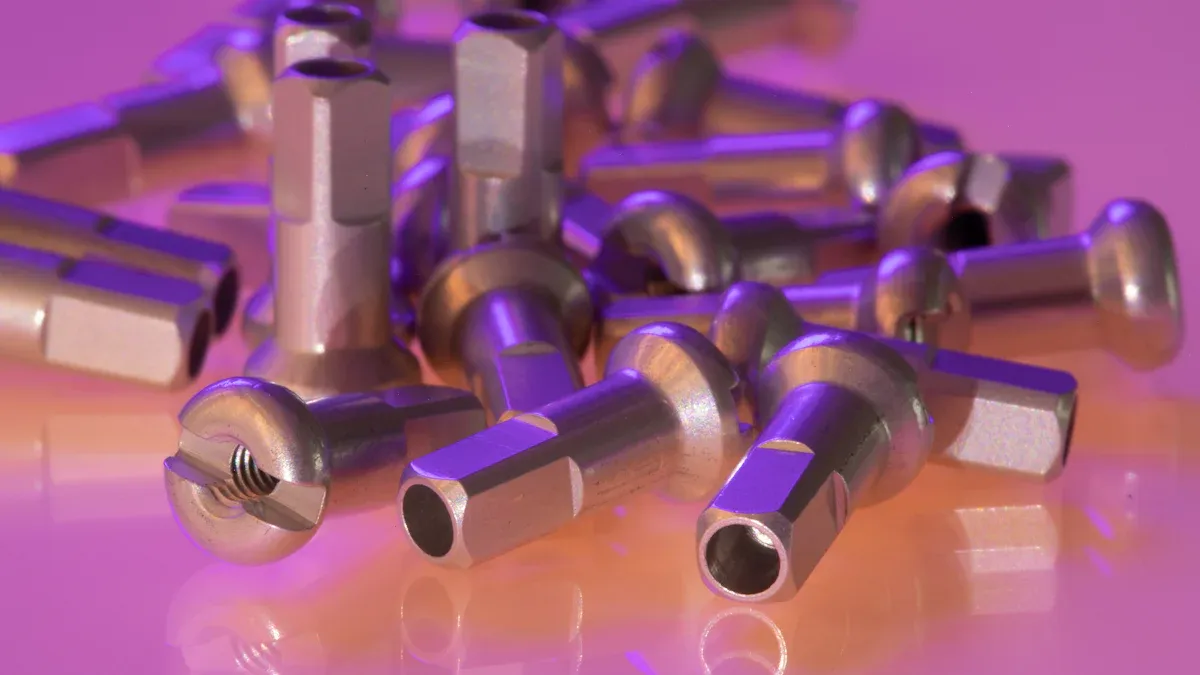
Your first task is matching the lug nut to your new wheels. Most people overlook this detail. However, it is the most important factor for safety. The shape of the lug nut must perfectly match the shape of the lug hole on the wheel.
The lug nut seat is the contact point. It is the part of the nut that touches the wheel’s surface. This contact performs two critical jobs. It secures the wheel tightly against the hub. It also correctly centers the wheel on your vehicle’s axle. An incorrect match between the nut and the wheel creates a tiny, unsafe gap. This gap prevents the wheel from being properly secured. There are three main seat types you will encounter.
You can identify a conical seat lug nut by its tapered shape. It looks like a cone. This design is the most common for aftermarket wheels. The seat has a 60-degree angled surface that fits into a matching bevel on the wheel. This cone shape creates a self-centering action when you tighten the nut, ensuring the wheel is perfectly aligned.
A ball seat lug nut has a rounded or spherical end. It looks like an inverted bowl. This style is common on original factory wheels from certain manufacturers. You will often find ball seats on vehicles from Honda, Acura, Volkswagen, and Mercedes-Benz.
It is extremely dangerous to use the wrong seat type. Never use a conical nut on a wheel designed for a ball seat, or vice versa. The shapes do not match. The nut will only make minimal contact with the wheel.
⚠️ Safety Alert: The Danger of Mismatched Seats
Using the wrong seat type creates a hazardous situation. The lug nuts will not torque down correctly and will constantly loosen as you drive. This can lead to:
- Stripping the threads on your studs.
- Damaging the lug holes in your new wheels.
- Severe wheel vibration.
- The wheel becoming unstable and detaching from your vehicle.
Always confirm the required seat style with your wheel manufacturer before buying your lug nuts.
You will encounter a third, more specialized lug nut design: the mag seat. This type looks very different from conical or ball seats. It has a long, straight, smooth shaft called a shank. It also uses a separate flat washer. The shank slides directly into the lug hole of the wheel. This design provides a very secure and centered fit. The flat washer sits between the nut and the wheel’s surface, distributing the clamping force evenly.
The shank’s length and diameter are critical for a proper fit. You must match these dimensions to your wheel’s specifications. Using a shank that is too short or too long can be dangerous.
The table below shows an example of typical specifications for this style of nut.
| Feature | Specification |
|---|---|
| Shank Diameter | 0.679 inches |
| Washer Type | Cragar Style Chrome Cupped (hardened steel) |
| Washer Design | Cupped with a ‘Wheel Side’ for maximum clamping area |
You will most often find mag seat lug nuts on older vehicles. Certain Toyota and Nissan models used them on factory wheels. They are also very common on classic and new retro-style aftermarket wheels, such as those from Cragar or Center Line. Always check your wheel’s requirements, as these three main seat types are not interchangeable.
💡 Pro Tip: Don’t Forget the Washer!
The washer is not optional. It is an essential part of the mag seat system. It protects your wheel’s finish from damage and ensures the lug nut can be torqued correctly. Never install a mag seat lug nut without its washer.
After you confirm the seat type, your next step is to find the correct thread size for your vehicle. The lug nut must perfectly match the threads on your car’s wheel studs. A mismatch here will prevent the nut from threading on at all. It could also cause you to strip the threads, leading to an expensive and dangerous repair. Getting the thread size right is essential for a secure fit.
You will see thread size written as a formula, like M12x1.5. This code contains two critical measurements. Let’s break down what they mean.
M12). It measures the outside diameter of the wheel stud’s threads. In this example, “M12” means the stud has a diameter of 12 millimeters.1.5). It measures the distance in millimeters from one thread to the next. A “1.5” pitch means there are 1.5 millimeters between each thread.How to Measure Thread Pitch Yourself 📏
You can measure thread pitch with a simple tool called a thread pitch gauge. You align the tool’s blades with the wheel stud to find the one that fits perfectly. If you do not have one, you can use a caliper. Count the number of threads within a 10mm section of the stud. Then, divide 10 by that number to find the pitch. For example, if you count about 7 threads in a 10mm section, your pitch is approximately 1.5mm (10 ÷ 6.67 ≈ 1.5).
Finding your vehicle’s correct thread size is a straightforward process. You have several reliable options to get the right information.
Checktread Wheel Studs Tester Kit offer stainless steel testers in various sizes (M18, M20, M22, etc.) to quickly identify the thread size and check for stud damage.While you should always verify your specific vehicle, many models share common thread sizes. This information can give you a good starting point.
For American trucks, the Ford F-150 is a great example. Its thread size has changed over the years. Models from 2010-2014 used a 14mm diameter with a 2.0 pitch (M14x2.0). Newer models have a different pitch.
| Vehicle Model | Years | Thread Size |
|---|---|---|
| Ford F-150 | 2015-Present | M14x1.5 |
| Ford F-150 Raptor | 2017-2024 | M14x1.5 |
Many popular Japanese cars, like the Toyota Camry, commonly use an M12x1.5 thread size. This has been the standard for Camry models from 2002 all the way to 2024. This size is also common on many Honda models. European brands often use lug bolts instead of nuts, but the sizing principle is the same. Many Mercedes-Benz models use an M12x1.5 thread size, though some larger models like the GL or S Class may require different sizes. Always confirm the correct thread size for your new rim lug nuts before making a purchase.
Beyond seat type and thread size, you may need to choose from different lug nut styles to fit your specific wheels or security needs. Let’s explore a few common options.
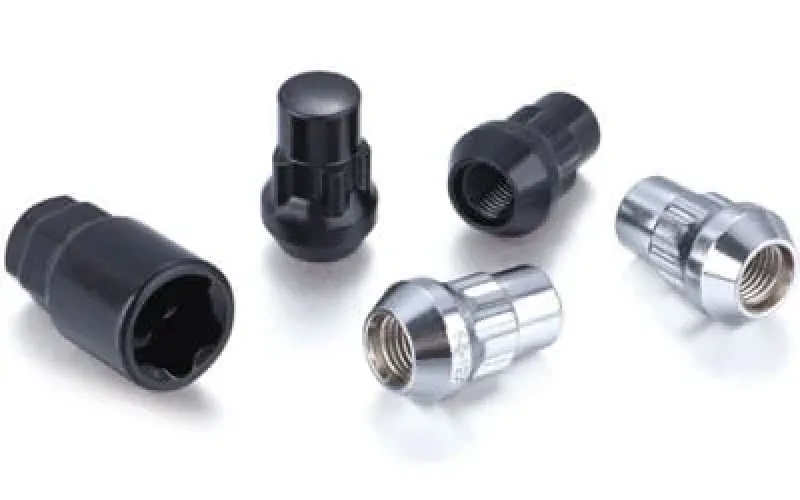
You might find that standard lug nuts are too wide for your new wheels. This is common with aftermarket “tuner” wheels that have very small lug nut holes. In these cases, you need spline drive lug nuts. These nuts are narrower and require a special key or socket for installation and removal.
You may need spline drive nuts in these situations:
The spline design offers a sleek, low-profile look and provides an added layer of security.
If your main concern is preventing wheel theft, locking lug nuts are an excellent choice. In a set, one nut for each wheel is a “lock” that can only be removed with a unique key. This simple system makes it very difficult for a thief with standard tools to steal your wheels. While effective, be aware of the potential downsides of using locking lug nuts.
💡 Pro Tip: Don’t Lose Your Key!
Losing the special key for your locking lug nuts can create a major headache. You will not be able to change a flat tire on your own. Roadside assistance may not have the right tool, and a mechanic might have to use special equipment that could damage your wheel to remove the lock. Always store your key in a secure, memorable place, like your glove box.
You will also choose between open-ended and closed-ended nuts. Closed-ended nuts are the most common type. They cover the wheel stud completely, protecting the threads from rust, dirt, and debris. This design offers a clean, finished appearance.
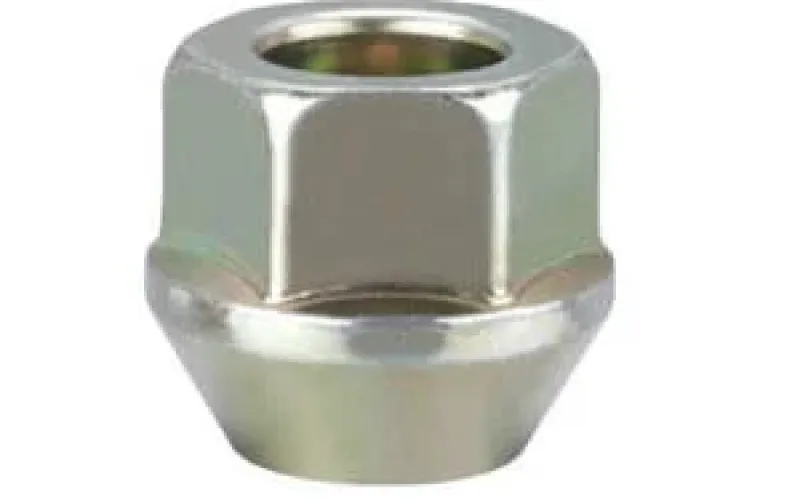
Open-ended nuts are necessary in specific situations. If you install longer wheel studs for racing or use certain wheel spacers, the studs may stick out past the nut. A closed-ended nut would bottom out before tightening the wheel properly. Open-ended rim lug nuts solve this problem by allowing the stud to pass all the way through. Always choose the style that fits your stud length correctly.
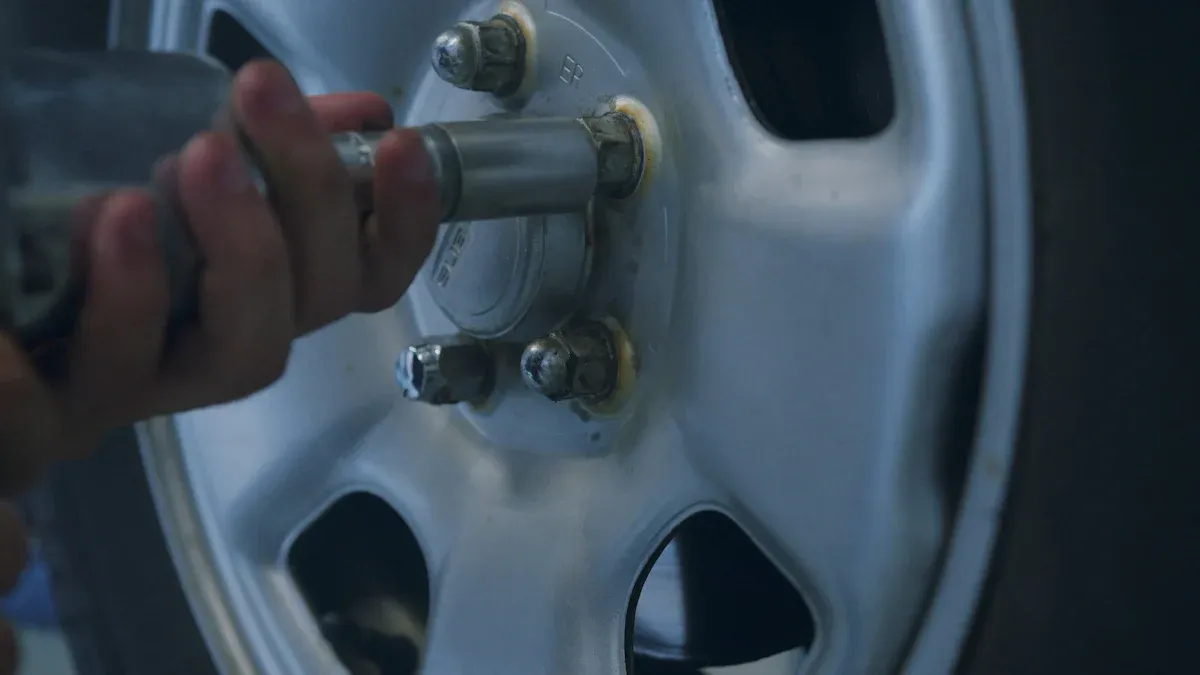
You have the right parts. Now you must install them correctly. Proper installation is just as important as choosing the right lug nuts. Following these steps ensures your wheels are secure and your ride is safe.
You should always start by hand-threading your lug nuts. Never use a power tool to start them. This simple step prevents cross-threading, which happens when the nut’s threads do not align with the stud’s threads. Hand-tightening ensures the nut is seated correctly before you apply any force.
⚠️ Warning: The Dangers of Cross-Threading
Forcing a lug nut on incorrectly can cause serious damage. You might notice:
- The lug nut is difficult to tighten or remove.
- The nut looks crooked or misaligned on the stud.
- Unusual rattling or grinding noises from the wheels while driving.
- Weakened wheel studs that could break, risking a wheel falling off.
After hand-tightening, you must use a calibrated torque wrench. An impact wrench is too powerful and can easily over-tighten or damage your nuts, studs, and wheels. A torque wrench allows you to apply the exact amount of force required. For most passenger cars and SUVs, this is around 100 pound-feet (lb-ft). However, you must always check your owner’s manual for your vehicle’s specific torque specifications.
Different vehicles require different torque values.
When you are installing lug nuts, you must tighten them in a specific order. This is called the star or crisscross pattern. Tightening nuts in a circle can cause the wheel to sit unevenly on the hub. The star pattern distributes pressure evenly, creating a secure fit.
Follow these steps for a 5-lug wheel:
After snugging them down in this pattern, set your torque wrench and repeat the sequence until each nut clicks. This ensures every lug nut is perfectly tightened.
Your job is not quite finished after the initial installation. Your final safety check is one of the most important. You must re-torque your lug nuts after a short period of driving. This step is critical. It ensures your wheels remain securely fastened to your vehicle for the long term.
When you first drive on new wheels, the hardware settles. The forces of driving, including heat, vibration, and the vehicle’s weight, cause the lug nuts and wheels to seat themselves more firmly. This settling process can create tiny gaps. These gaps may slightly reduce the clamping force of the lug nuts, making them less tight than when you first installed them. Re-torquing eliminates these gaps and restores the proper clamping force.
When to Re-Torque Your Lug Nuts ⏱️
You should plan to re-torque your lug nuts after driving a short distance. The general recommendation is to perform this check after driving between 50 and 100 miles. If you do not drive that far right away, you should re-torque them within 3 to 7 days of the installation, whichever comes first.
The process is simple.
You may find that some nuts require a slight turn to reach the correct torque again. This is normal. This final check gives you peace of mind. It confirms your new wheels are properly secured for a safe and smooth ride. Do not skip this essential final step.
You now understand the importance of lug nuts for a safe wheel upgrade. Choosing the correct rim lug nuts is a critical step you should not overlook. Taking a few extra minutes to verify the details ensures your wheels are securely mounted for the road ahead.
Your Safety Checklist ✅
Always confirm these three key factors before installation:
- Seat Type: Match it to your new wheels.
- Thread Size: Match it to your vehicle’s studs.
- Torque: Use the correct specification.
Investing in quality rim lug nuts from a trusted manufacturer is a small price to pay for your safety and peace of mind.
You should not reuse factory lug nuts on most aftermarket wheels. Factory nuts usually have a ball seat. Most aftermarket wheels require a conical seat. Using the wrong seat type is unsafe and can cause your wheel to loosen or detach while you drive.
A lug nut threads onto a stud that is fixed to your car’s hub. A lug bolt is a single piece that passes through the wheel and threads directly into the hub. You will find lug bolts on many European vehicles like BMW, Audi, and Volkswagen.
Yes, you absolutely need a torque wrench. It ensures you apply the correct amount of force. Using an impact gun or guessing can lead to over-tightening or under-tightening. Both situations are dangerous and can damage your wheels, studs, or cause a wheel to come loose.
Remember: Your vehicle’s manufacturer provides specific torque values in your owner’s manual. Always follow these specifications for a safe installation.
 Request a quote