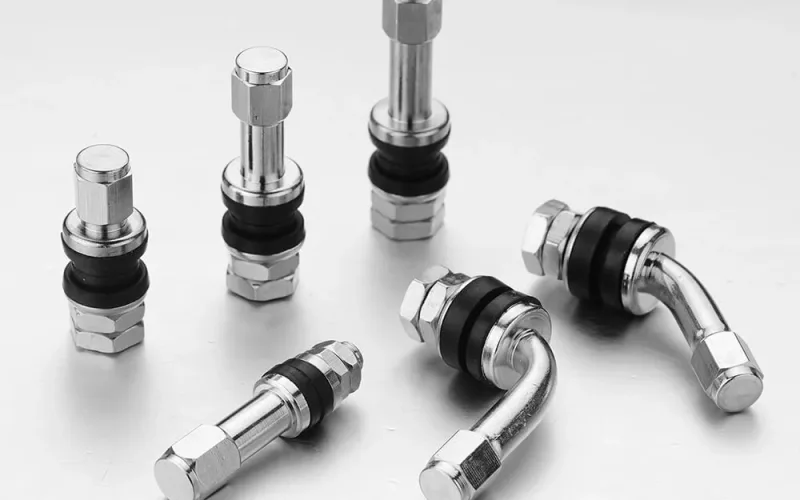
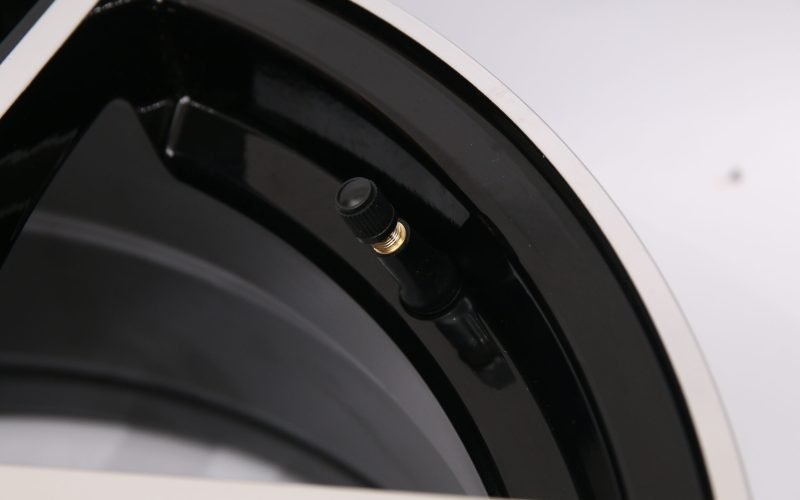
What is the difference between rubber and metal tire valves?
 20Mar
20Mar 

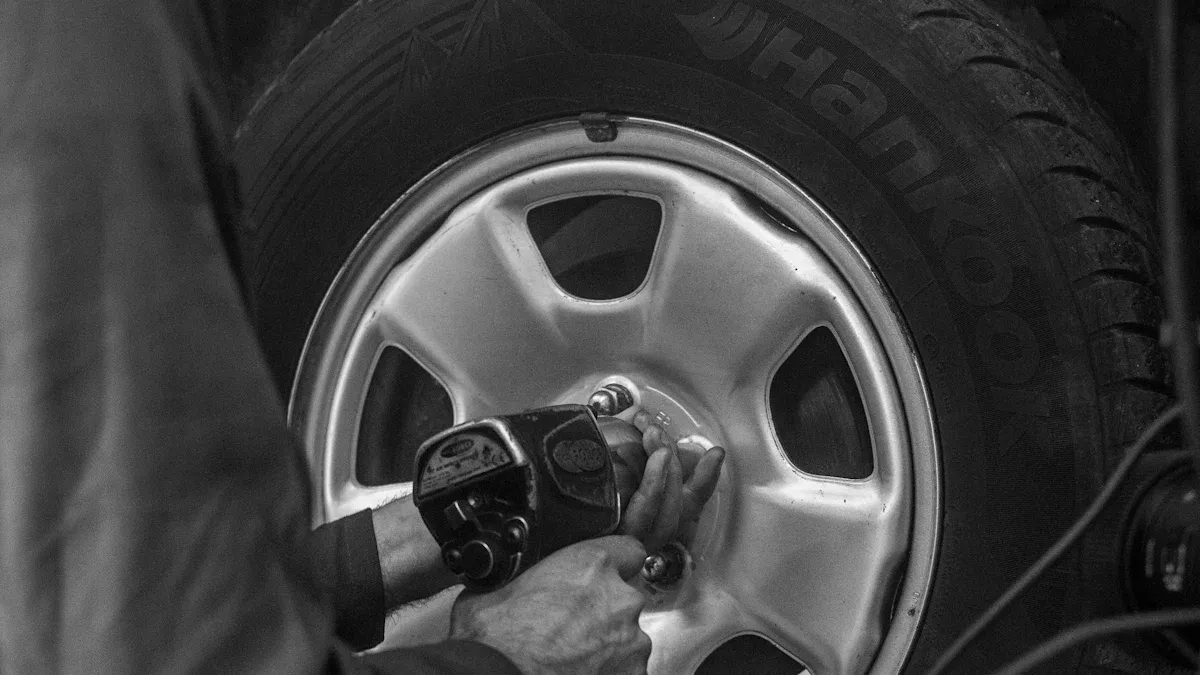
You need the right tool to protect your vehicle’s wheels. A top-tier wheel lug nut socket set delivers safety and precision. While many tools use Chrome Vanadium for its affordability, professionals prefer Chrome Molybdenum (Cr-Mo) steel. Cr-Mo offers superior hardness for heavy-duty use.
Key Features for Your Next Socket Set:
- Cr-Mo Steel Construction: Provides unmatched durability.
- Protective Sleeves: Prevent scratches on expensive alloy wheels.
- Thin-Wall, 6-Point Design: Ensures a snug fit and prevents rounding lug nuts.
- Correct Sizing: Guarantees compatibility with your vehicle.
The material of your socket determines its strength and lifespan. You want a tool that withstands intense force without breaking. This is why professionals look beyond basic materials and choose tools built for performance.
You will find that the best sockets use Chrome Molybdenum (Cr-Mo) steel. This material is the top choice for impact tools for several important reasons. Cr-Mo steel possesses excellent tensile strength and fatigue resistance, meaning it can handle repeated, high-torque applications from an impact wrench without cracking.
Cr-Mo steel is significantly stronger than standard carbon steel. This superior strength allows manufacturers to create a wheel lug nut socket with thinner walls. The tool remains incredibly durable while fitting into the tight spaces around modern alloy wheels.
Choosing a socket made from Cr-Mo steel gives you confidence. You know your tool is built to last and perform safely under pressure, protecting both you and your vehicle.
A great socket needs more than just a strong core. It also requires a durable outer layer. A high-quality protective finish shields the steel from damage and corrosion. Many premium sockets feature a black phosphate or manganese phosphate coating.
This type of finish creates a tough, crystalline layer on the tool’s surface. This layer provides several key benefits:
A finish like black oxide also offers enhanced rust protection and a professional look. This protective coating ensures your investment remains in top condition for years, ready for any job you throw at it.
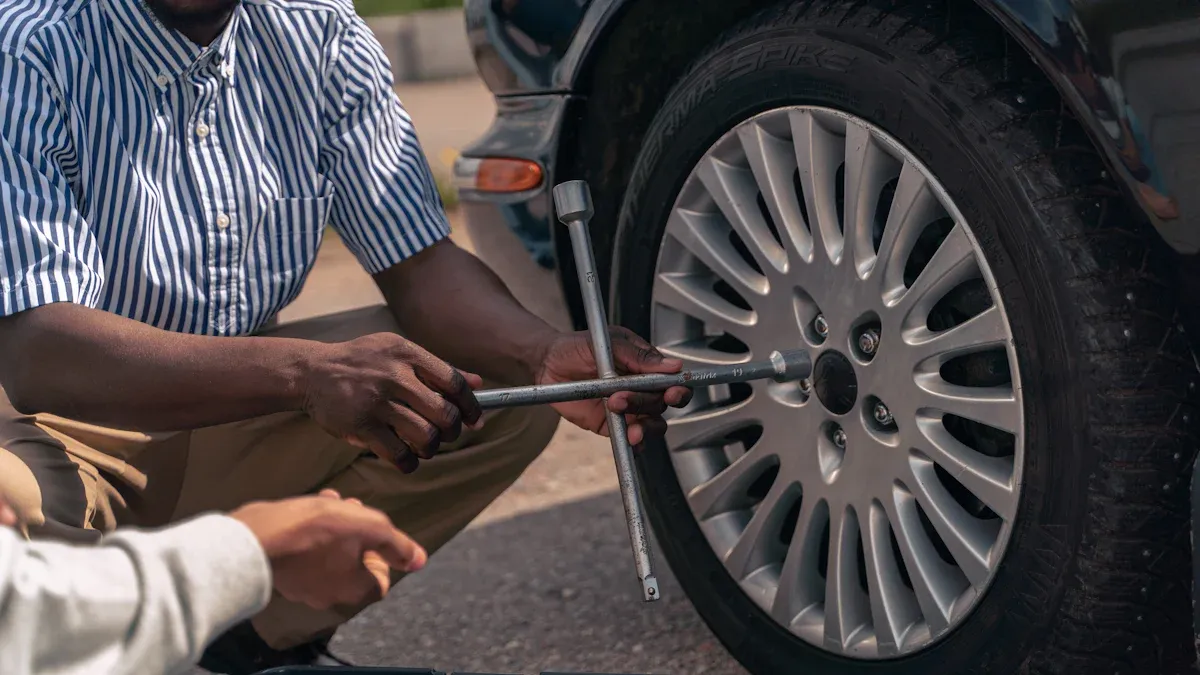
Choosing the right size and fit is just as important as the material. A poor fit can damage your lug nuts or wheels, turning a simple task into a costly repair. You need a socket that connects perfectly with the lug nut every time.
Lug nuts on most modern cars from Japan, Europe, and the USA use standard metric sizes. However, the most common sizes can vary by region. You must verify the exact size your vehicle requires before buying a set. A comprehensive kit should cover the most prevalent sizes.
| Common Size | Primary Vehicle Type |
|---|---|
| 17mm | Most European Cars (e.g., VW, Audi) |
| 19mm | Many European & some Japanese Cars |
| 21mm | Most Japanese Cars (e.g., Toyota, Honda) |
Knowing these common sizes helps you select a set that will be useful for multiple vehicles you may own now or in the future.
You will see both 6-point and 12-point sockets on the market, but for lug nuts, the 6-point design is the superior choice. A 6-point wheel lug nut socket offers a significant advantage in preventing damage.
The 6-point design grips the flat sides of the lug nut, not the corners. This distributes force evenly and dramatically reduces the risk of slipping and rounding the nut’s edges.
This secure grip allows you to apply more torque safely, which is essential when using an impact wrench. While a 12-point socket might work in an emergency, you should use it with extreme caution, as it is much more likely to strip the lug nut.
Lug nuts are often situated on long wheel studs and recessed deep within the wheel. A standard, shallow socket simply cannot reach them. A deep socket design is essential for this job. It provides the necessary length to slide over the wheel stud and make full, secure contact with the lug nut. This ensures you can properly tighten or loosen the nut without the tool slipping off.
Beyond material and size, specific design features separate a good socket from a great one. Modern vehicles, especially those with expensive alloy wheels, demand tools with advanced features. These elements protect your investment and make your work easier.
Modern alloy wheels often feature stylish, deep-set lug nut holes. The space around each lug nut is very tight. A standard, thick-walled socket will not fit into these narrow openings. Trying to force one in can scratch or gouge the wheel’s finish.
This is why a thin-wall design is essential. Manufacturers use strong Cr-Mo steel to create a wheel lug nut socket that is both slim and durable. This design allows the tool to slide easily into tight recesses, ensuring a secure grip on the lug nut without touching the surrounding wheel.
Even with a thin-wall design, metal-on-metal contact can cause damage. The best sockets include a non-marring protective sleeve. This is typically a plastic or nylon cover that fits over the outside of the socket. It acts as a soft buffer between the steel tool and your delicate wheel finish. This simple feature prevents costly scratches and chips.
Repairing a damaged wheel is expensive and time-consuming. A protective sleeve is cheap insurance against:
Some premium sockets also have an internal plastic insert to protect the top surface of the lug nut.
Searching for the right size socket in a cluttered toolbox wastes time. High-quality socket sets solve this problem with color coding. Each socket size is assigned a unique, bright color. This allows you to spot the exact size you need instantly. 🎨
This visual system makes your work faster and more organized. While individual manufacturers create their own color schemes for specific sizes, you may also see colors used to distinguish entire systems. For example, some tool organizers use blue for Metric socket holders and red for SAE (English) ones, helping you quickly grab the right type of tool for the job.
Top-tier sockets include features that go beyond just fitting the nut. They also protect the lug nut itself and make your job easier. Many modern vehicles use decorative lug nuts with chrome caps or painted finishes. A standard metal socket can easily scratch or dent these surfaces. To solve this, premium sockets include an internal plastic insert.
These sockets feature protective plastic sleeves and internal plastic inserts to prevent damage to alloy wheels and decorative lug nuts. This design creates a non-abrasive barrier between the tool and the lug nut, preserving its finish.
This small detail ensures the face of your lug nut remains pristine, maintaining your vehicle’s clean look.
Another common frustration is dropping a lug nut after you remove it. It can roll under the car or get lost in the grass. Some advanced sockets solve this with a magnetic core. A powerful magnet inside the socket grabs and holds the lug nut securely. This feature offers several key advantages:
These thoughtful design elements—internal inserts and magnetic cores—show the difference between a basic tool and a professional-grade one. They protect your vehicle’s components and streamline your workflow, saving you time and preventing headaches. 🧲
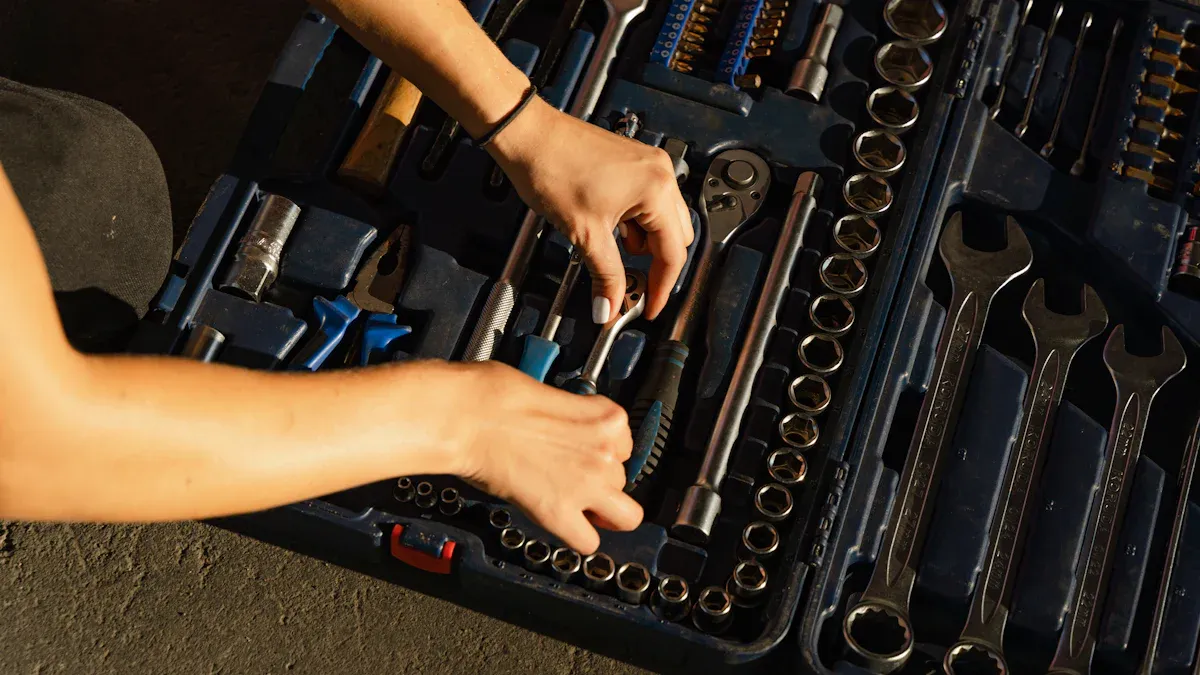
A great set of sockets is more than just the individual tools. You need a complete kit that is practical and ready for any situation. The right package includes essential accessories and a storage solution that protects your investment.
You should look for a kit that provides a total solution. A comprehensive set saves you from buying extra parts later. It ensures you have everything you need for the job in one place.
A top-tier kit typically includes:
An extension bar is a critical component. It gives you the length required to reach lug nuts set deep inside modern wheels. While you might be tempted to connect multiple small extensions, this is a dangerous practice.
Safety Tip: Never connect multiple extension cords or bars together. This can cause several problems:
- It creates a weak point that can break under torque.
- For power tools, it can cause a voltage drop, damaging the tool’s motor.
- It increases the risk of electrical overload and fire hazards.
A single, properly sized extension bar included in your kit is the safest and most reliable option. It provides a solid, stable connection from your wrench to the socket.
A good carrying case does more than just hold your tools. It protects them and keeps you organized. The best sets come in a blow-molded case made from robust materials like high-density polyethylene. This creates a tough, impact-resistant shell. 🛡️
These cases feature molded inserts where each socket and accessory snaps securely into place. This offers several key advantages:
A durable case ensures your tools last longer and are always ready when you need them.
You can now choose the perfect wheel lug nut socket with confidence. Use this final checklist to guide your purchase decision and ensure you get the right tool for the job.
Using the wrong socket, like a multipoint one, can cause a lug nut’s outer cover to spin, making it impossible to remove. Investing in a high-quality set from a proven manufacturer like Fortune protects your vehicle and ensures safety.
Yes, you can safely use an impact socket with a hand wrench. Impact sockets are made from tougher Cr-Mo steel to handle high-torque forces. You should never use a regular chrome socket on an impact wrench, as it can shatter. 🔧
Cr-Mo (Chrome Molybdenum) steel is for impact use. It flexes under force to prevent cracking. Cr-V (Chrome Vanadium) is harder but more brittle. It works well for hand tools but can shatter when used with a powerful impact wrench.
You can find the correct size in your vehicle’s owner’s manual. You can also measure the lug nut from one flat side to the opposite flat side. Many auto parts stores can look up the size for you based on your car’s model.
Yes, if you have alloy or custom-finished wheels. The non-marring sleeve prevents the steel socket from scratching your wheel’s finish. This simple feature can save you from expensive cosmetic repairs that can cost over $150 per wheel.
 Request a quote