 04Feb
04Feb 

Your drag wheels lug nut key is a vital tool for safety and peak performance.
It must handle high torque from an impact wrench without breaking. This requires superior performance and strength, often found in materials like heat-treated Chromoly steel. The right key also features a thin-wall design to access tight lug pockets. A non-marring sleeve protects your wheels from scratches, while precise splines prevent stripping a wheel lug nut during high-torque applications. This ensures your wheels stay secure and undamaged.
Thin-Wall Design: Accessing Tight Lug Nut Wells
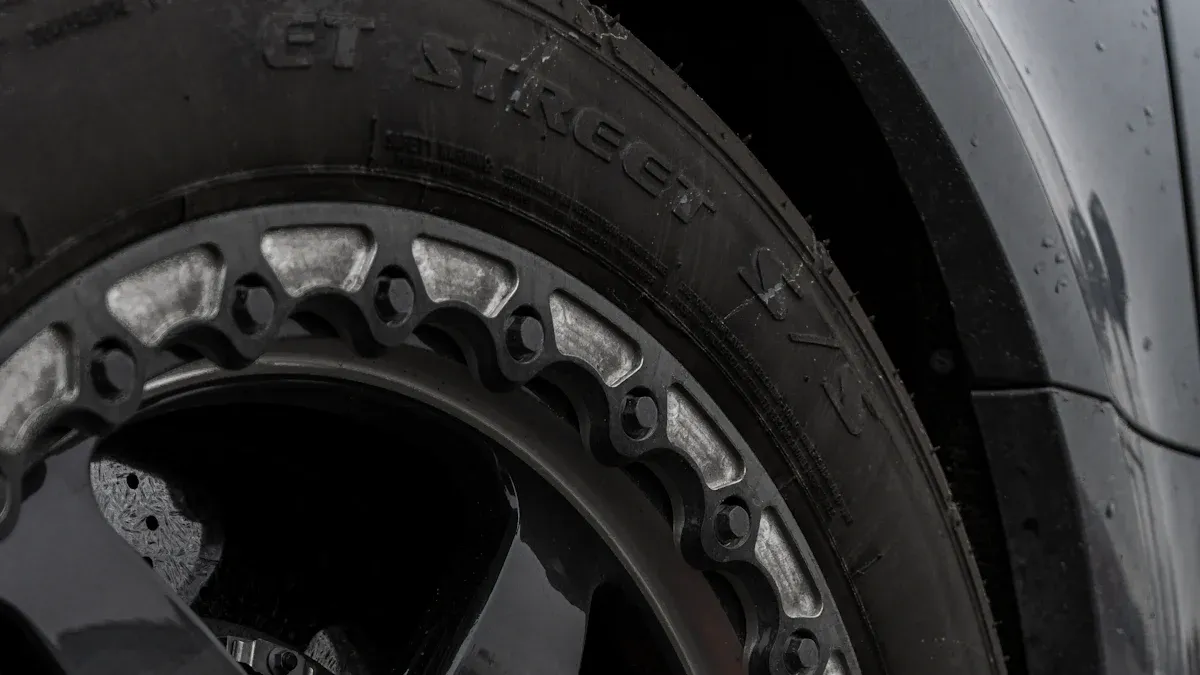
Modern drag wheels are engineered for one thing: speed. Manufacturers reduce weight wherever possible. This often results in wheels with very narrow openings, or wells, for the lug nuts. These tight clearances create a problem for standard tools.
Why Standard Sockets Don’t Work
You cannot use a standard socket from your toolbox on most aftermarket drag wheels. Standard sockets have thick walls. This thickness provides general-purpose strength, but it makes the socket too wide to fit into the tight lug nut wells of a performance wheel.
If you try to force a standard socket into the space, you risk:
- Scratching the Finish: The socket’s thick wall will scrape against the inside of the lug well, damaging your wheel’s paint or powder coat.
- Incomplete Engagement: The socket may not slide all the way onto the lug nut, leading to a poor grip that can strip the nut or the tool.
- Getting Stuck: The socket can become wedged inside the wheel, making it difficult to remove.
Pro Tip: Never use a standard impact socket on high-end drag wheels. The risk of cosmetic damage and improper torque is too high.
Identifying a True Thin-Wall Key
A proper drag wheels lug nut key is specifically designed to solve this problem. You can easily identify one by its unique features. The most obvious feature is its slim profile.
Here is how you can spot a true thin-wall key:
| Feature | Standard Socket | True Thin-Wall Key |
|---|---|---|
| Wall Thickness | Thick and bulky | Very thin and sleek |
| Outer Diameter | Large | Significantly smaller |
| Material | Often Chrome Vanadium | Usually high-strength Chromoly Steel |
| Purpose | General automotive use | Specialty wheels with tight clearances |
The best thin-wall tools are made from superior materials like heat-treated Chromoly steel. This advanced alloy provides the necessary strength to handle high torque from an impact wrench, even with a much thinner wall. This ensures the key won’t crack or break when you need it most.
Material Matters: Choosing Steel for Strength and Durability
The material of your lug nut key directly impacts its strength and your safety. A thin-wall design is useless if the tool shatters under pressure. You need a key made from high-grade steel that can withstand the repeated, intense force of an impact wrench. Choosing the right material ensures your key performs reliably every time you need it.
The Risk of Inferior Materials
Using a key made from cheap, untested metal is a serious gamble. Inferior materials cannot handle the high levels of torque required to secure drag racing wheels. When you apply force, especially with an impact gun, a low-quality key can fail catastrophically.
This failure can happen in several ways:
- Cracking: The key develops stress fractures and eventually breaks apart.
- Shattering: The tool explodes, sending metal fragments flying.
- Rounding: The splines or hex shape deform, stripping your lug nuts and the key itself.
Safety Alert: A key that fails under torque can cause serious injury and leave you stranded with a wheel you cannot remove. Never compromise on material quality.
Chromoly vs. Chrome Vanadium Steel
You will commonly see two types of steel used for automotive tools: Chrome Vanadium and Chromoly. While both are alloys, they offer very different levels of performance. Understanding the difference is crucial for selecting a key that can handle the extreme torque of drag racing.
Chromoly steel is the superior choice for high-stress applications. Its composition allows it to handle significantly more torque before bending or breaking. Manufacturers who adhere to strict quality standards, like ISO 9001, often use heat-treated Chromoly to guarantee maximum strength and durability. This process ensures the tool can withstand the repeated impact and high torque from professional-grade tools without failing.
| Feature | Chrome Vanadium (Cr-V) | Chromoly (Cr-Mo) |
|---|---|---|
| Primary Use | General hand tools (wrenches, standard sockets) | High-stress parts (roll cages, axles, high-performance keys) |
| Strength | Good | Excellent |
| Ductility | Brittle; can crack under sudden high force | More ductile; can flex slightly under load |
| Torque Capacity | Lower; not ideal for repeated impact gun use | Very high; designed for extreme torque applications |
Choosing a key made from heat-treated Chromoly steel gives you the confidence that it will not fail when you apply the necessary torque to keep your wheels secure.
The Non-Marring Sleeve: Your Wheel’s Best Friend
A high-strength steel key is essential for torque, but that hard metal can easily damage your expensive wheels. This is where a non-marring protective sleeve becomes a critical feature. It acts as a soft barrier between the tool and your wheel’s delicate finish. You get the strength you need without the risk of cosmetic damage.
Protecting Your Investment
You invested a lot of money in your drag wheels. Their finish, whether it’s paint, powder coat, or polished aluminum, is a big part of their appeal. A single slip with a bare metal tool can cause an ugly scratch or chip in the lug nut well. These small damages can ruin the look of your wheel and are often difficult to repair.
A lug nut key with a protective sleeve prevents this disaster. The sleeve covers the outside of the key, ensuring only a soft material touches your wheel. This simple feature protects your investment and keeps your wheels looking pristine.
Pro Tip: Always check that the protective sleeve is in good condition before use. A worn or cracked sleeve won’t provide the protection you need.
What to Look for in a Protective Sleeve
Not all protective sleeves are created equal. A high-quality sleeve offers durable and reliable protection. The most effective sleeves are made from a strong yet malleable material like nylon. A nylon outer sleeve is designed to prevent chipping and damaging your wheels, especially in the tight lug pockets of modern rims. It stops direct metal-to-metal contact, allowing you to torque your lug nuts safely.
When you inspect a lug nut key, look for these features in its sleeve:
- Durable Material: It should be made from a tough polymer like nylon that resists tearing and abrasion.
- Secure Fit: The sleeve must fit snugly around the key and not spin or slide off during use.
- Sufficient Thickness: It needs to be thick enough to absorb contact without letting the steel key touch the wheel.
A well-designed protective sleeve is a small detail that makes a huge difference. It gives you peace of mind, knowing you can change your wheels without causing expensive damage.
Precision Fit: The Key to Preventing Stripped Lugs
A strong material is only half the battle. The fit between your drag wheels lug nut key and the lug nut is just as important. A precise, snug engagement ensures that every bit of force you apply goes directly into turning the nut. This prevents damage and guarantees your wheels are secured correctly.
Dangers of a Loose-Fitting Key
Using a key that fits loosely on your lug nuts is a recipe for disaster. Even a tiny gap between the tool and the nut allows for movement when you apply torque. This wiggle room causes the key to slip and slam against the corners of the lug nut. The result is “rounding,” where the sharp edges of the nut and the tool are worn away.
A loose fit creates several problems:
- You cannot apply the correct amount of torque.
- The tool can slip, potentially causing injury.
- You will strip the lug nut, making it impossible to tighten or remove.
- The key itself can become damaged and unusable.
Critical Warning: A rounded lug nut cannot be properly secured. This means you cannot achieve the necessary clamping force, creating a massive safety risk on the track. Never use a tool that feels loose. Proper torque is impossible without a perfect fit.
Matching the Key to Your Lug Nuts
You must match your tool to your specific lug nuts to ensure a perfect fit. Lug nuts come in two primary styles: spline drive and hex. Each requires a different type of engagement.
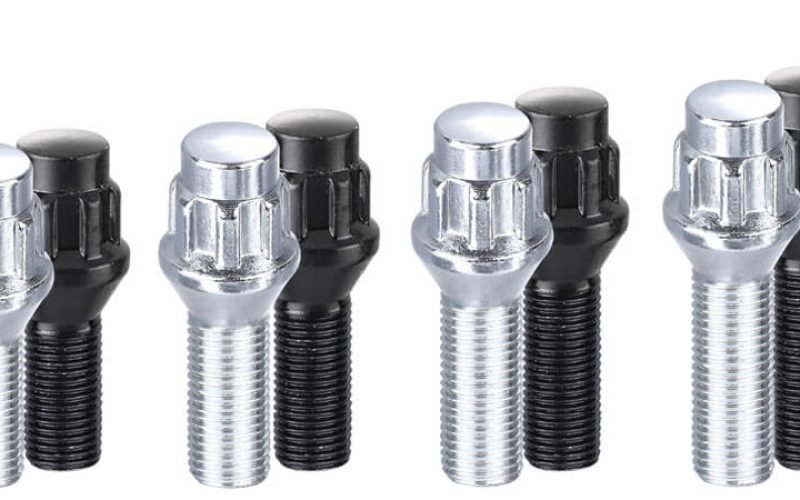
Spline lug nuts have a security-focused design and need a special key for removal. These patterns can vary. For example, many spline nuts use a 6-spline pattern, but some specific sizes, like 14×1.5mm, may require a 7-spline key.
Hex lug nuts are more traditional. You need to know the exact size to get the right tool. A common size for drag racing is a 13/16 inch hex. Other wheels might use a 19mm hex, which is roughly 3/4 inch. Using the wrong size, even if it’s close, will lead to stripping when you apply high torque. Always check your wheel and lug nut specifications to find the right tool for the job. This ensures you can apply torque safely and effectively.
Extended Length: A Must-Have for Deep-Dish Wheels
Deep-dish and concave wheels give your drag car an aggressive stance. These designs also place the lug nuts deep inside the wheel barrel. This creates a challenge for standard tools. You need an extended-length lug nut key to safely reach and torque these recessed nuts. A longer tool provides the necessary clearance to work without damaging your equipment or your wheels.
The Need for Better Reach
A standard-length socket or key is simply too short for most deep-dish drag wheels. When you try to use a short tool, the body of your impact wrench or torque wrench will hit the face of the wheel. You cannot properly seat the tool on the lug nut. This lack of reach creates significant problems.
Using a tool that is too short can lead to:
- Damaged Wheels: Your wrench can scratch, chip, or dent the outer lip of your expensive wheel.
- Incorrect Torque: You cannot get a straight angle on the lug nut, which prevents you from applying torque accurately.
- Tool Damage: The awkward angle puts stress on your wrench and the key, which can cause them to break.
Important Note: Never use a short extension with a standard key. The extra connection point creates a weak link that can wobble or break under high torque.
Finding the Right Key Length
You must choose a key that is long enough to clear the face of your wheel completely. Extended-length keys are typically available in various sizes, such as 3-inch, 5-inch, or even longer. The right length depends entirely on your specific wheel design.
To find the correct size, you can measure the depth from the face of your wheel to the top of the lug nut. Choose a key that extends well beyond this measurement. This gives your wrench plenty of room to operate without any risk of contact. For example, a 3-inch or 75mm length is a popular choice that works for many aftermarket wheels. A longer tool ensures you can work efficiently and safely, giving you the leverage and clearance needed for proper installation.
Your Ultimate Drag Wheels Lug Nut Key Checklist
You need to trust your tools completely when you are at the track. A quality drag wheels lug nut key is not just a purchase; it is an investment in safety and reliability. This checklist helps you identify a tool that will not let you down.
Verifying Material Certifications
You should always look for proof of quality. Reputable manufacturers test their products and adhere to international standards. A key piece of evidence is an ISO 9001 certification. This certificate shows that the company follows strict quality control procedures.
What does ISO 9001 mean for you? It means the manufacturer monitors every step of production. They use premium materials, not inferior metals. They perform strict inspections on each product to ensure it meets high standards for strength and durability. This gives you confidence that the tool will perform as advertised.
Checking for Precision Machining
The way a tool is made directly impacts its strength and fit. High-quality keys are not just cut from a block of metal. They are created through a precise manufacturing process that combines strength with accuracy. Two common methods are cold forging and machining.
| Feature | Cold Forging | Machining |
|---|---|---|
| Process | Shapes metal with high pressure, keeping the grain structure strong. | Cuts metal away to create the shape, which can weaken it. |
| Strength | Very high due to aligned grain flow and work hardening. | Can be weaker unless it undergoes extra heat treatment. |
| Best For | High-stress tools that need maximum durability. | Custom parts or prototypes where strength is less critical. |
The best tools often use a combination of processes to get the best results. A top-tier manufacturing process includes several key steps:
- Material Selection: It starts with premium alloy steel like 42CrMo.
- Forging: The steel is forged to create a dense, strong internal structure.
- CNC Machining: The tool is then precision-machined for an exact fit on your lug nuts.
- Heat Treatment: The key is heat-treated to balance hardness and durability.
- Final Inspection: Each tool is inspected for dimensional accuracy and hardness.
This multi-step process ensures your key has both the raw strength from forging and the perfect fit from machining.
How the Right Key Impacts Performance in Drag-and-Drive Racing
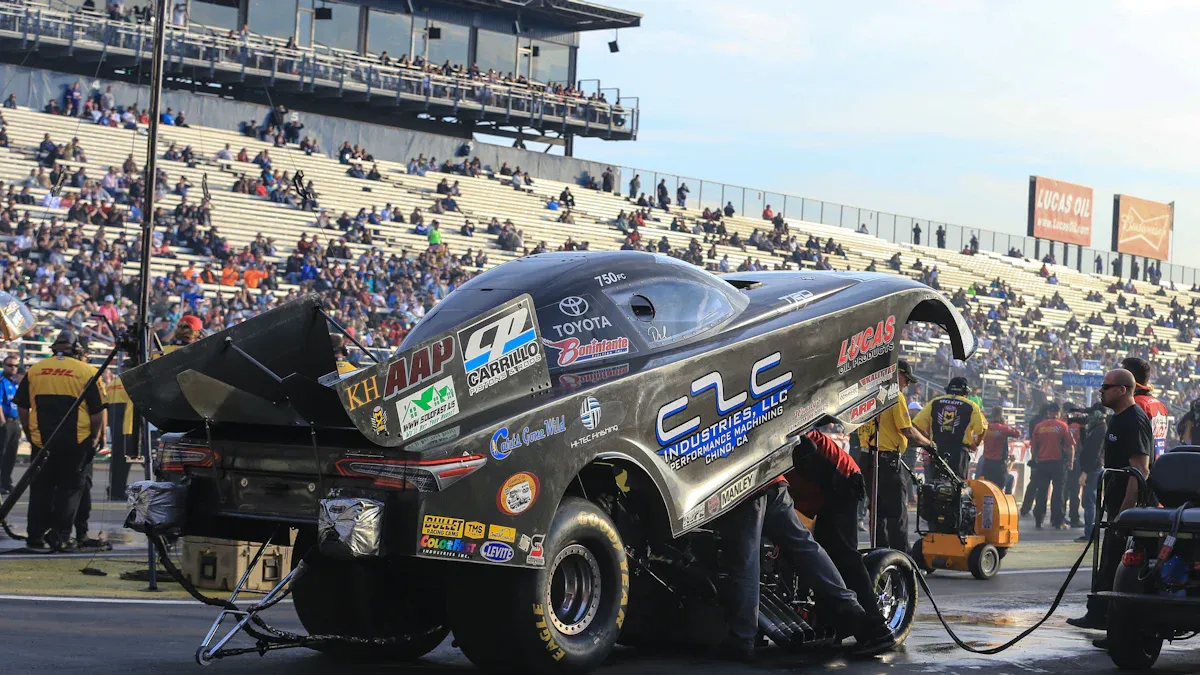
Your lug nut key is more than just a tool; it is a critical component for success in drag-and-drive racing. The right key directly affects your consistency, reliability, and safety throughout grueling drag-and-drive events. A quality tool ensures you can perform maintenance quickly and correctly, which is vital when you are managing both racing and road travel.
Consistency and Reliability
In drag racing, consistency wins. Professionals know that every tool must be accurate for repeatable performance. Experts emphasize that precise tire pressure gauges and chassis scales are essential because they provide reliable data for consistent runs. Your lug nut key is no different. A high-quality key for your drag-and-drive application ensures you apply the correct torque every time. This prevents stripped nuts and guarantees your wheels are secure for every pass. This reliability is crucial during fast-paced drag-and-drive events.
A cheap key can fail, causing delays and ruining your rhythm. Imagine stripping a lug nut between rounds or on the side of the road during one of the drag-and-drive events. This is a setback you cannot afford. A dependable key for your drag-and-drive application is fundamental to a smooth competition. This makes it a vital part of your toolkit for any drag-and-drive application, especially during multi-day drag-and-drive events. The demands of drag-and-drive events require tools that will not fail. A solid drag-and-drive application demands a perfect key. This is why your choice matters for all drag-and-drive events.
Safety on and off the Track
Safety is the top priority in any motorsport, and drag-and-drive events are no exception. Race officials enforce strict rules to keep you safe. A precision-fit lug nut key helps you meet these critical safety standards.
Track Safety Requirements Tech inspectors will check that:
- All wheels have every lug nut in place and securely fastened.
- Wheel studs have thread engagement equal to or greater than the stud’s diameter.
- Vehicles using slicks have the required open-ended lug nuts.
A quality key allows you to confidently tighten each lug nut to the correct specification, ensuring you pass tech inspection. This is not just about the track. The unique challenge of drag-and-drive events is the long-distance driving on public roads between venues. A secure wheel is just as important on the highway as it is on the drag strip. Using the right tool for your drag-and-drive application gives you peace of mind, knowing your wheels are safe for the entire journey. This is the ultimate goal for any drag-and-drive application during these demanding drag-and-drive events.
A Quick Lug Nut Size Guide for Your Key
Choosing the right key starts with knowing your lug nuts. This quick lug nut size guide helps you identify the correct specifications for your vehicle. Using the wrong size or style can lead to stripped threads or a loose wheel. This guide will ensure you get it right.
Understanding Thread Pitch and Seat
You must understand two key details about your lug nuts: thread pitch and seat type. Thread pitch is the distance between threads. Metric nuts measure this in millimeters (e.g., 1.5mm), while standard nuts use threads per inch. The seat is where the wheel lug nut contacts the wheel. A mismatch here is dangerous. This guide explains the three main types.
Using the wrong seat creates a tiny contact patch. This prevents you from achieving the correct clamping force found on a torque spec chart. It can cause vibrations or even wheel failure. This guide shows you what to look for.
| Lug Nut Type | Description | Common Use |
|---|---|---|
| Conical Seat | Has a 60-degree tapered end. | Most aftermarket wheels. |
| Ball Seat | Features a rounded, bowl-shaped seat. | Many European factory wheels. |
| Mag Seat | Uses a flat surface with a separate washer. | Some older factory wheels. |
Measuring Your Lug Nuts Correctly
You can easily measure your lug nuts with the right tools and this simple guide. This guide will walk you through the process.
Pro Tip: If you are unsure, take an old lug nut to a hardware store. You can test it on their thread-sizing board to find a perfect match. This is a great hands-on guide.
Follow these steps to find your lug nut specs. This guide makes it easy.
- Measure Thread Diameter: Use a thread gauge to measure the stud’s diameter. Common sizes are 12mm, 14mm, 7/16″, and 1/2″.
- Find Thread Pitch: Use the same gauge to find the thread pitch. This will confirm the exact lug nut torque spec you need from a torque spec chart.
- Identify the Seat: Look at the part of the nut that touches the wheel. You can visually identify if it is conical, ball, or mag style.
This final guide ensures you buy the right key and hardware every time.
Choosing the right drag wheels lug nut key is a critical decision for your safety and performance. You should prioritize keys made from high-strength, tested materials like heat-treated Chromoly steel.
Your Final Checklist:
- Thin-wall design
- Protective non-marring sleeve
- Precise spline or hex engagement
- Extended length for deep wheels
Investing in a quality tool with these features protects your wheels. It prevents stripped lugs and provides you with complete peace of mind on and off the track.
FAQ
Why is Chromoly steel the best material for a lug nut key?
Chromoly (Cr-Mo) steel is the superior choice for its high torque capacity. It handles the extreme force from an impact wrench without cracking. This strength is essential for a thin-wall tool, ensuring your key provides both safety and long-term durability under racing conditions.
Can I use a key without its protective sleeve?
You should avoid using a key without its sleeve. The hard steel tool will scratch and chip the finish inside your wheel’s lug pockets. The non-marring sleeve acts as a crucial barrier, protecting your investment and keeping your expensive wheels looking their best.
What happens if my key fits loosely on the lug nut?
A loose-fitting key is dangerous. It will slip under torque, rounding the corners of both the lug nut and the tool itself. This damage prevents you from applying the correct torque, creating a major safety risk and making the nut difficult to remove later.
How do I find the right size key for my wheels?
You must match the key to your lug nuts. First, identify if you have spline-drive or hex nuts. Then, find the exact size, such as a 13/16″ hex or a 6-spline pattern. You can find this information in your wheel or lug nut manufacturer’s specifications.
 Request a quote