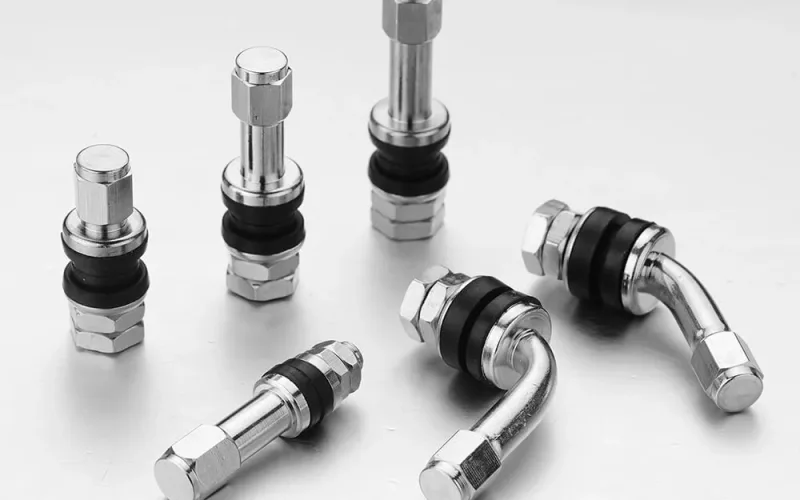
What is the difference between rubber and metal tire valves?
 20Mar
20Mar 


You want your vehicle to stay safe and perform well every time you drive. Picking the right tire bolts and lug nuts makes a big difference.
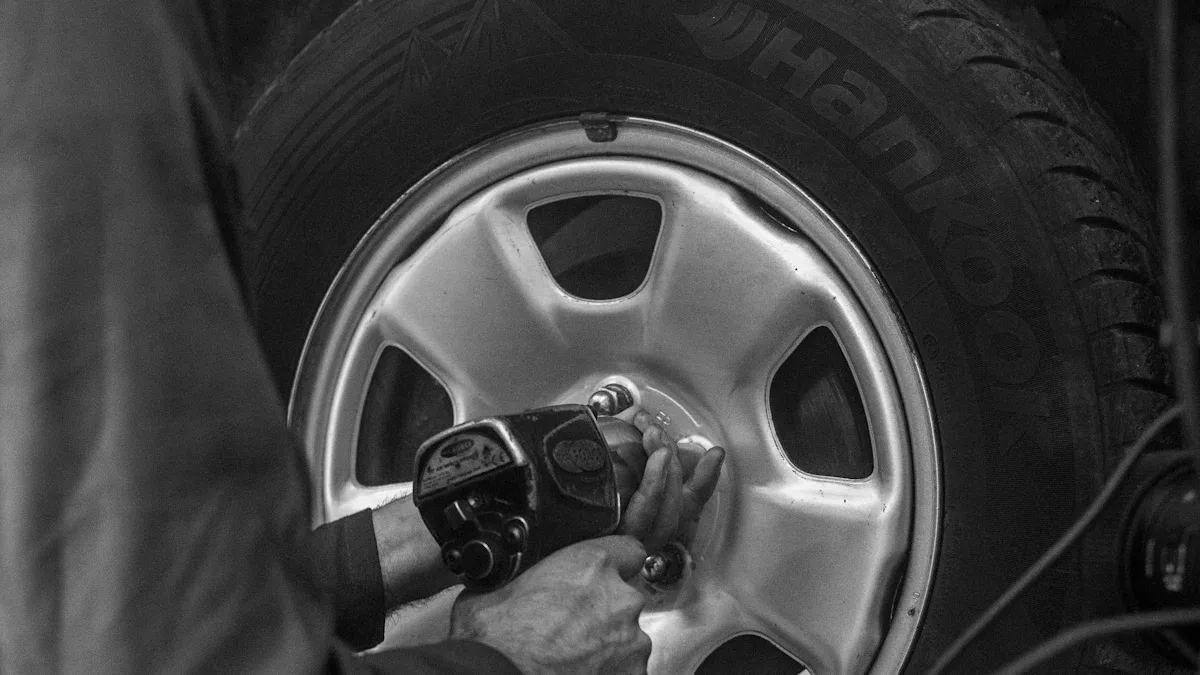
When you look at your wheels, you might notice the small parts that hold everything together. These are tire bolts and lug nuts. You need to know the difference because each part works in its own way to keep your wheels safe.
Here’s a simple table to help you see how tire bolts and lug nuts compare:
| Feature | Lug Bolts | Lug Nuts |
|---|---|---|
| Design | Threaded stem and tapered head, attaches to wheel hub | Threaded fastener screws onto a wheel stud on the hub |
| Function | Secures wheel to hub without wheel studs | Fixes wheel to vehicle using wheel studs |
| Common Usage | Found in European vehicles | Used in American and Asian vehicles like Toyota and Honda |
You will find lug bolts mostly in European cars. American and Asian vehicles often use lug nuts. The size of these parts matters a lot. If you use the wrong size, your wheels might not fit right. You should always check your vehicle’s manual to find the right lug nut size. This helps you avoid problems and keeps your ride smooth.
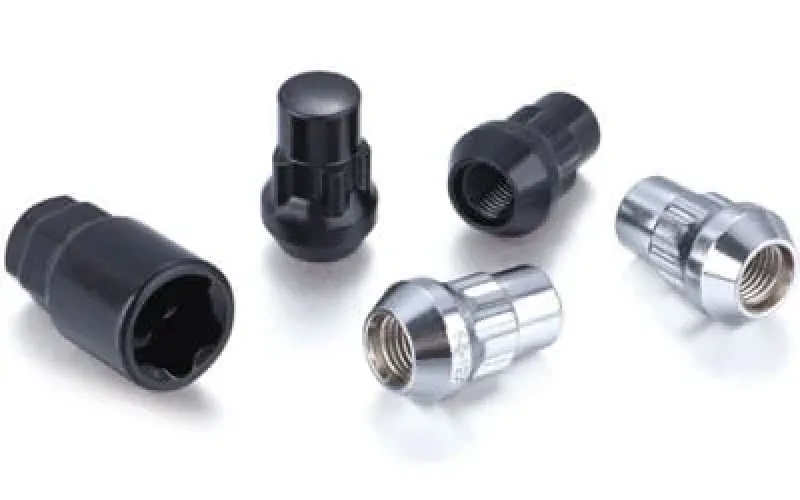
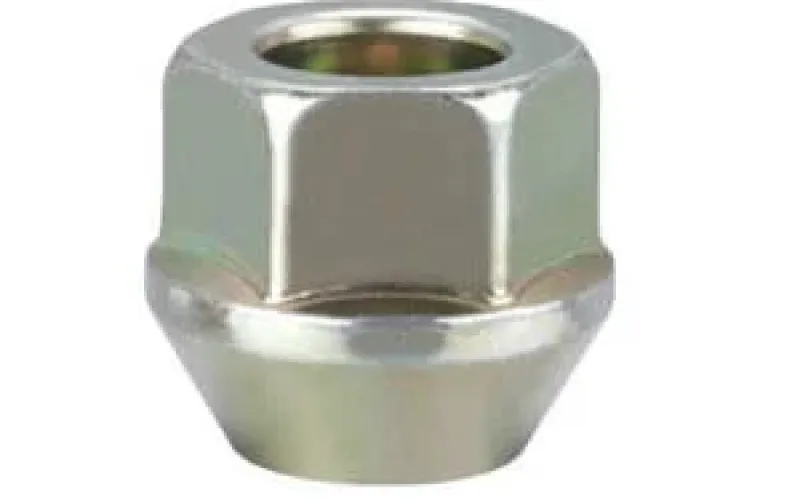
Lug nuts come in different shapes and materials. You might see hexagonal ends or tapered threads. These designs help grip the wheel better. Some lug nuts are made from steel, aluminum, or stainless steel. The material affects how strong and safe the nut is.
Tire bolts play a big part in keeping you safe on the road. When you use the correct size and type, your wheels stay secure. If you pick the wrong bolt or nut, your wheel could come loose. That’s dangerous and can lead to accidents.
Let’s look at how these parts work together:
You should check your tire bolts and lug nuts often. Regular inspections help you spot problems before they get serious. Using high-quality parts, like those made from alloy steel or chromium-vanadium steel, gives you extra safety. These materials can handle heavy loads and tough weather. Titanium and aluminum alloys are lighter but still strong, which helps in high-performance vehicles.
If you ignore the size or use poor-quality bolts, you risk wheel detachment. The National Highway Traffic Safety Administration says thousands of tire-related accidents happen every year. Many of these come from problems with bolts, nuts, or under-inflated tires. You can avoid these risks by choosing the right parts and checking them often.
When you look at your wheels, you might notice holes where the bolts go. That’s your bolt pattern. You need to know this pattern before you buy new rims or wheels. If the bolt pattern doesn’t match, the wheel won’t fit your vehicle. Here’s what makes up a bolt pattern:
You can figure out your bolt pattern and tire bolts size with a few simple steps. Grab a ruler or measuring tape. Here’s how you do it:
Tip: Always double-check your measurements. Getting the correct size helps you avoid problems with wheel fitment.
You’ll see different bolt patterns depending on the type of vehicle you drive. Here’s a table showing some of the most common ones in North America:
| Bolt Pattern | Typical Vehicles |
|---|---|
| 4 x 130mm | VW Beetle, sandrails, buggies, UTVs |
| 5 x 135mm | ’97-’04 Ford F-150, Expedition |
| 5 x 205mm | VW Beetle, sandrails, buggies, UTVs |
| 5 x 4.5″ (114.3mm) | Cars, SUVs |
| 5 x 5″ (127mm) | SUVs, smaller trucks |
| 5 x 5.5″ (139.7mm) | Dodge, Ford, Jeep mid-size vehicles |
| 6 x 135mm | ’04+ Ford F-150, Expedition |
| 6 x 4.5″ (114.3mm) | Dodge, Nissan trucks and SUVs |
| 6 x 5.5″ (139.7mm) | Import and domestic trucks, SUVs |
| 8 x 6.5″ | Ford, GM, Dodge full-size trucks, SUVs |
| 8 x 170mm | ’99+ Ford Super Duty trucks |
If you know your bolt pattern and tire bolts size, you can pick wheels that fit your vehicle perfectly. This keeps your ride safe and smooth.
You might think any nut will do, but the right lug nut size makes a huge difference for your vehicle. When you use correctly sized lug nuts, you help your wheels stay tight and balanced. This keeps your ride smooth and safe. If you pick the wrong size, your wheels might not fit right, or they could even come loose.
Eccentric bolts help you adjust your wheel alignment. This means your tires touch the road just right. Good alignment improves how your vehicle handles and helps your tires last longer. You get better steering and less uneven tire wear. When you select the right size, you also make sure your wheels get the right torque. Too much or too little torque can damage your lug bolt or the wheel itself.
Using the wrong lug nut size can lead to improper torque and wheel installation, causing wheels to loosen or detach while driving. Proper lug nut sizing ensures a snug fit on the wheel studs, preventing vibrations and maintaining the structural integrity of your vehicle. Lug nuts that are too tight can damage wheel studs, threads, or wheels, while loose lug nuts can lead to wheel separation.
Mixing different sizes or using the wrong tire bolts can cause big safety concerns. If you use a bolt that does not match your wheel, you risk wheel detachment. This can lead to accidents and injuries. Automotive repair data shows that incorrect tire bolts cause a failure rate of 3% per year. In the UK, thousands of cases of loose wheel nuts happen every year, leading to hundreds of wheel detachments and even fatalities.
The most common causes of tire bolt failure include not tightening lug nuts enough. This means your wheels do not get enough clamping force, so they can move or even fall off. Lateral loads on the bolts can also make them break. Neglecting lug nut condition or using worn or damaged lug nuts increases these risks. Always check your lug nuts and bolts for the right size and condition before you drive.
When you are selecting lug nuts, never ignore the size. Avoid mixing different sizes, and always replace any worn or damaged lug nuts. This simple step protects your safety and keeps your vehicle running smoothly.
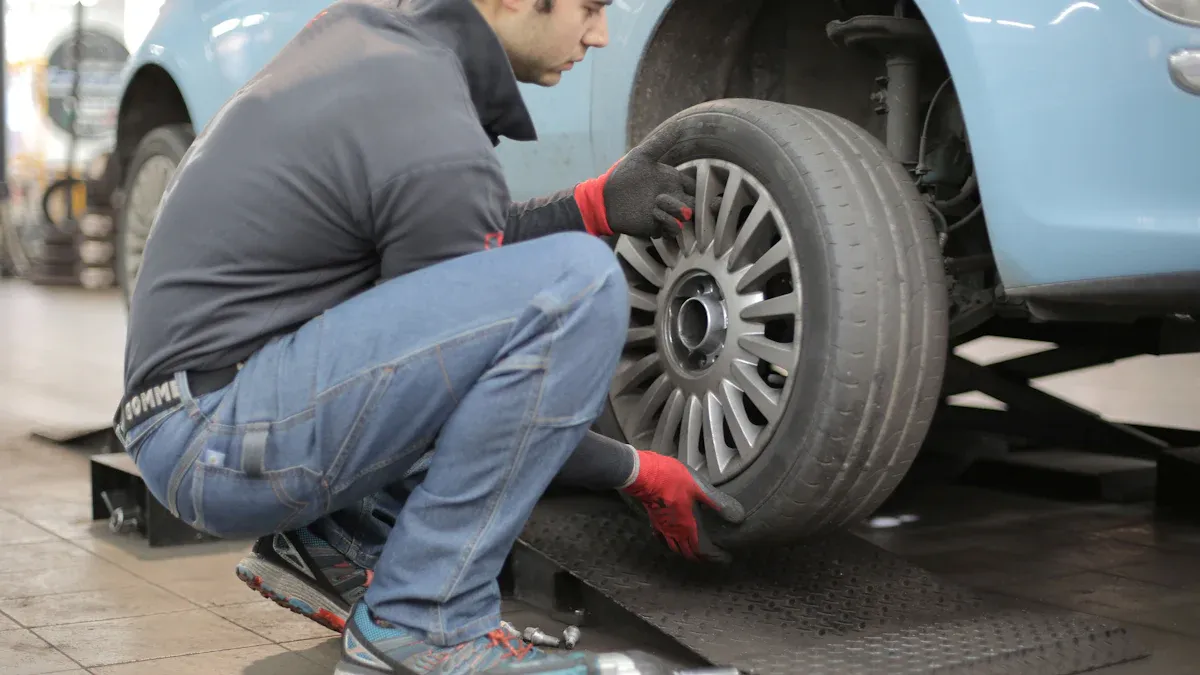
You want your wheels to fit perfectly and stay secure. To do that, you need to know your bolt pattern and the right lug nut size. Here’s how you can figure it out step by step:
Tip: Always double-check your measurements. Even a small mistake can lead to the wrong size and a poor fit.
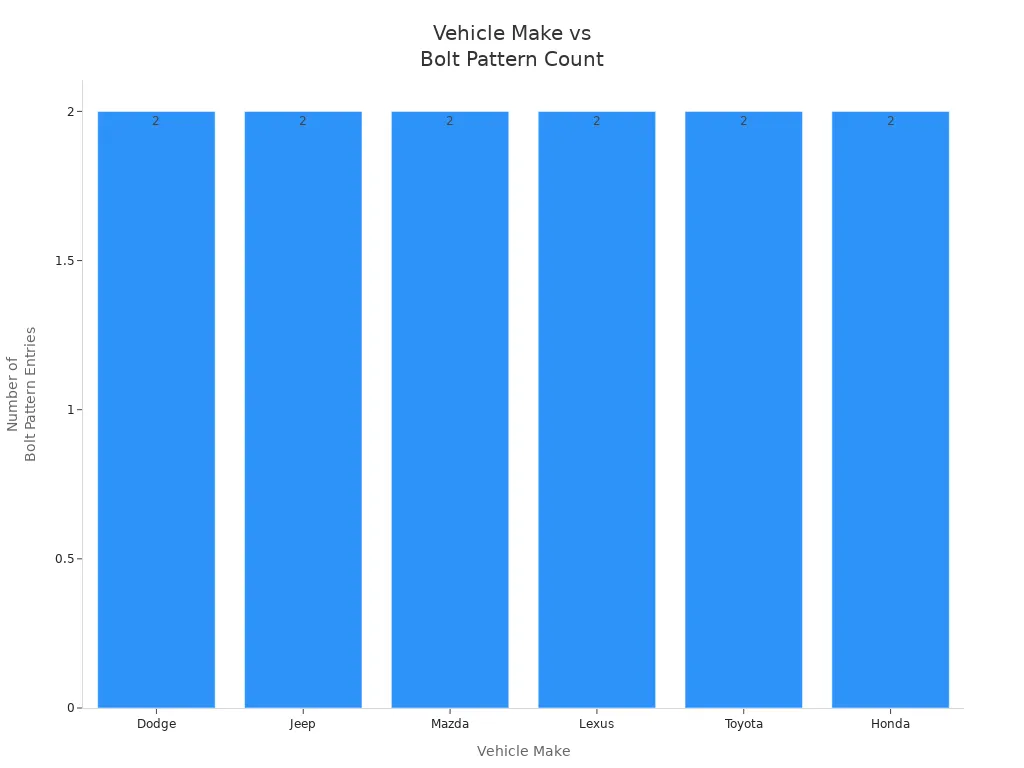
You can also check your vehicle’s manual or look up your make and model in online databases. These resources give you the exact bolt pattern and lug nut size you need. Here’s a quick look at some common vehicles and their bolt patterns:
| Vehicle Make | Model Year | Bolt Pattern |
|---|---|---|
| Dodge | 2019 | 5×115 |
| Dodge | 2020 | 5×115 |
| Jeep | 2018 | 5×127 |
| Jeep | 2019 | 5×127 |
| Mazda | 2018 | 5×114.3 |
| Mazda | 2020 | 5×114.3 |
| Lexus | 2017 | 5×114.3 |
| Lexus | 2019 | 5×114.3 |
| Toyota | 2020 | 5×114.3 |
| Toyota | 2022 | 6×139.7 |
| Honda | 2019 | 5×114.3 |
| Honda | 2020 | 5×114.3 |
You can see that many popular models share similar bolt patterns. This makes it easier to find the right fit if you ever need to replace your wheels or lug nuts.
Once you know your bolt pattern, you need to find the exact size and thread pitch for your tire bolts. This step is important for safety and performance. Here’s what you should look for:
You can use a thread pitch gauge to measure the threads. If you don’t have one, take a lug nut to a hardware store and ask for help. Your vehicle owner’s manual or online guides will also list the factory stud sizes.
Note: Using the wrong thread pitch can cause big problems. If the threads don’t match, the nut won’t hold tight. This can lead to loss of control, wheel assembly failure, or the nut bottoming out before it secures the wheel. Always check for proper thread engagement.
If you use aftermarket wheels or open ended lug nuts, double-check that the size and thread pitch match your vehicle’s requirements. This helps you avoid problems with torque and keeps your wheels safe.
You might hear people talk about wheel offset and center bore when they discuss wheel fitment. These two things play a big role in how your wheels sit on your car and how they perform.
The center bore is the hole in the middle of your wheel. It fits over the hub on your car. If the center bore is too big or too small, your wheels might not sit straight. This can cause vibrations and uneven tire wear. You want the center bore to match your hub for the best fit.
Pro Tip: Always check the center bore size when you buy new wheels or tire bolts. A good fit means a smoother ride and less wear on your tires.
When you follow these steps, you make sure your tire bolts, lug nuts, and wheels all work together. This keeps your vehicle safe and makes your vehicle maintenance easier. You get better performance, longer-lasting parts, and peace of mind every time you drive.
Picking the right tire bolts for your vehicle keeps you safe and helps your wheels last longer. You want to look for bolts that match your vehicle’s size, thread pitch, and seat type. If you’re thinking about aftermarket wheels, always check that the bolts fit both your new wheels and your vehicle’s hub. Here’s what you should know:
Tip: If you’re unsure, ask a professional or check your owner’s manual before buying new tire bolts.
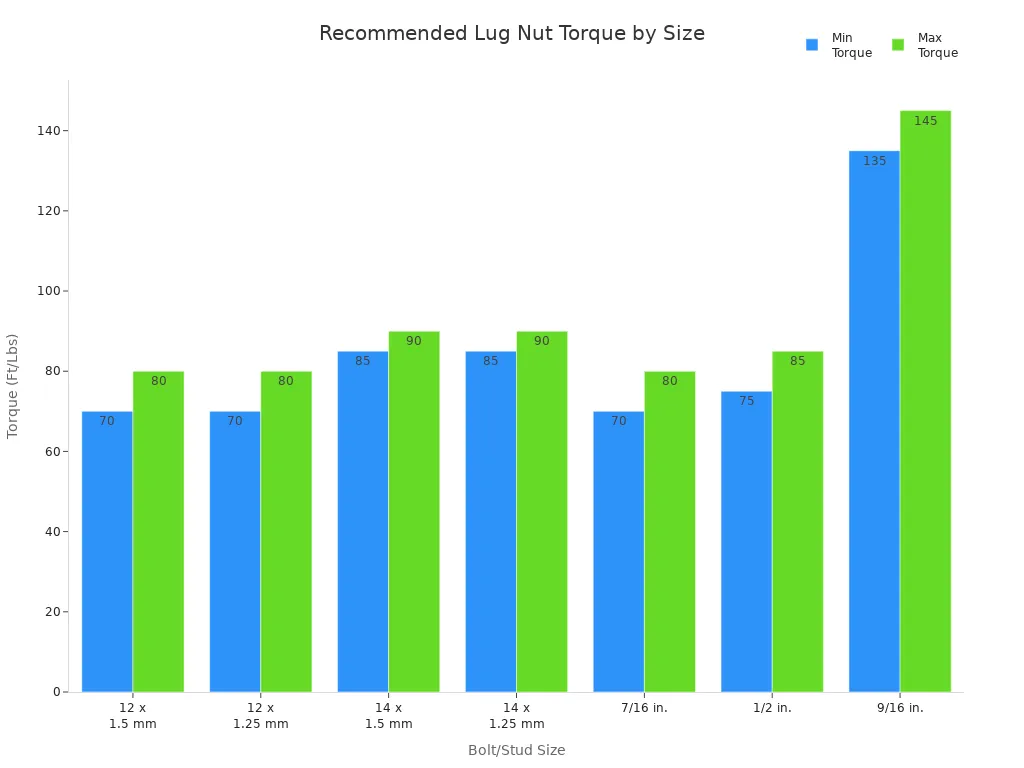
You want your wheels to stay tight and safe. Using the right torque and following the correct steps makes a big difference. Start with a 1/2” drive torque wrench. Tighten your lug nuts in two steps. First, set them at 40 ft/lbs to seat the wheel. Then, finish with the final torque based on your lug bolt size.
| Bolt/Stud Size | Torque Range (Ft/Lbs) |
|---|---|
| 12 x 1.5 mm | 70 – 80 |
| 12 x 1.25 mm | 70 – 80 |
| 14 x 1.5 mm | 85 – 90 |
| 14 x 1.25 mm | 85 – 90 |
| 7/16 in. | 70 – 80 |
| 1/2 in. | 75 – 85 |
| 9/16 in. | 135 – 145 |
Here are some common mistakes you should avoid:
You need to know when it’s time to swap out your tire bolts and lug nuts. Watch for these signs:
Experts recommend checking your tire bolts and lug nuts often:
Staying on top of inspections helps you catch problems early and keeps your vehicle safe.
You want your vehicle to stay safe and reliable, so picking the right tire bolts matters. Always check your owner’s manual before you buy or install new bolts. Trusted manufacturers like Fortune use strict quality control, strong materials, and advanced research to make sure every bolt fits and lasts.
| Aspect | Description |
|---|---|
| Quality Control | Every bolt goes through careful inspection for premium quality. |
| Material Durability | Bolts are made to handle tough weather and heavy use. |
| R&D Team | Experts design bolts for better performance and safety. |
| Corrosion Resistance | Bolts resist rust, keeping your wheels secure in any environment. |
| Fit and Function | Tight tolerances mean a perfect fit every time. |
Using the wrong size can make your wheels loose or even fall off while you drive. Always check your owner’s manual or ask a professional before you buy new bolts or nuts.
You should check them every month. Also, look after long trips or if you hit a big bump. If you just changed a tire, check again after driving about 50 miles.
You can reuse them if they look clean and undamaged. If you see rust, cracks, or worn threads, replace them right away. Old or damaged bolts can break and cause wheel problems.
You need a torque wrench for the best results. This tool helps you tighten each bolt to the right level. Using the right tool keeps your wheels safe and stops damage.
Look for bolts made from strong materials like alloy steel. Trusted brands, like Fortune, test their bolts for strength and safety. You can also check for certifications such as ISO9001.
 Request a quote