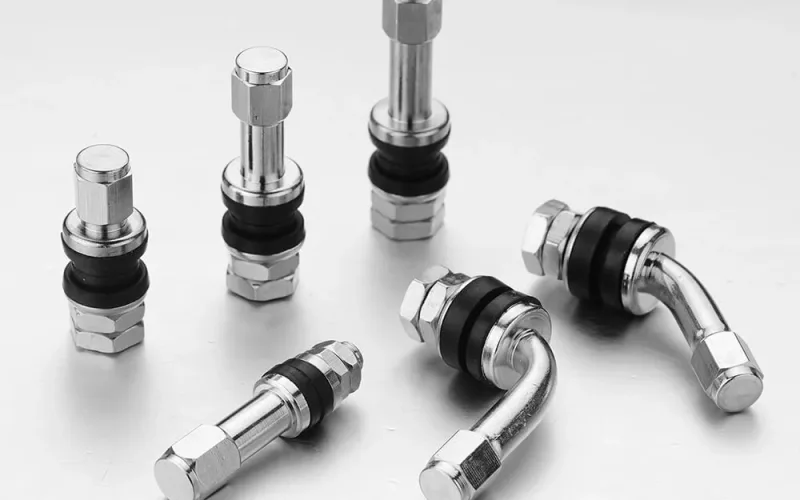
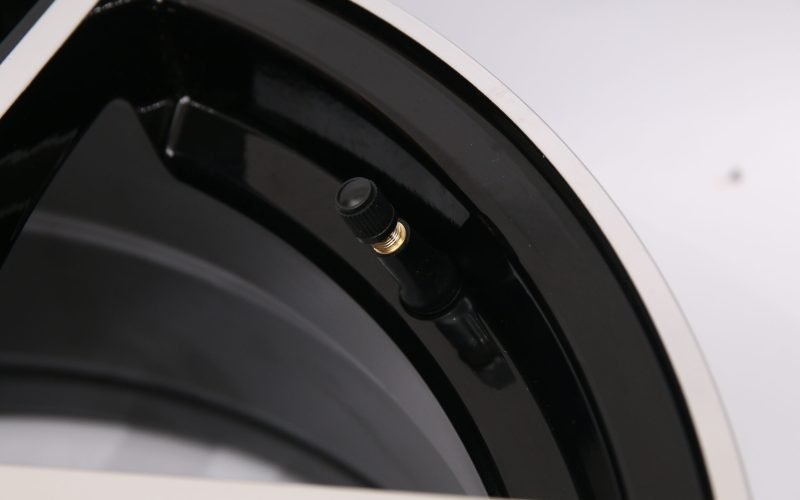
What is the difference between rubber and metal tire valves?
 20Mar
20Mar 


The lug bolts and lug nuts on wheels are essential fasteners responsible for securing a vehicle’s wheel to its hub. They form the structural connection between the rotating assembly like wheel locks and the suspension system. Proper bolt installation is a fundamental safety requirement. If bolts are tightened incorrectly—either insufficiently or excessively—the result can be wheel loosening or, in severe cases, complete wheel detachment during operation.
Research conducted in the United Kingdom indicates that improper maintenance is responsible for approximately 72% of wheel loss incidents. These preventable failures contribute to hundreds of accidents each year.
This guide provides vehicle owners with comprehensive technical knowledge to ensure every wheel is mounted securely and safely.
Understanding the hardware that retains the wheel is the first step toward maintaining vehicle safety. Two primary fastening systems are used globally: wheel bolts and the wheel nuts and bolts (stud-and-nut) system. Each system has a distinct mechanical design and is widely adopted in different automotive markets.
Vehicle manufacturers rely on two main systems to attach wheels.
European manufacturers frequently use wheel bolts, while American manufacturers more commonly use a wheel nuts and bolts system.
The primary difference lies in structural configuration and installation method.
In a wheel nuts and bolts system, threaded studs are permanently fixed into the hub. The wheel is placed over these studs and secured with separate lug nuts.
In contrast, a wheel bolt system uses individual bolts that pass through the wheel and thread directly into the hub’s internal threads.
The design difference influences installation, alignment, and service procedures.
| Feature | Wheel Nuts and Bolts System | Wheel Bolt System |
|---|---|---|
| Design | Studs fixed in hub; separate nut clamps wheel | Single bolt threads through wheel into hub |
| Installation | Wheel rests on studs, simplifying alignment | Wheel and hub holes must be aligned manually |
| Common Usage | Widely used by American and Japanese manufacturers | Common on European vehicles such as Audi, BMW, Mercedes |
| Maintenance | Individual stud replacement possible | Stripped hub threads may require hub replacement |
Knowing which system your vehicle uses is essential before performing any wheel-related service. The stud-based system can simplify tire changes, while the bolt-based system reduces component count but demands careful alignment during installation.
Proper bolts on wheels generate a powerful clamping force when torqued to specification. This clamping force presses the wheel firmly against the hub surface. The friction created between these mating surfaces resists shear forces generated during acceleration, braking, and cornering.
Bolts function by creating preload—internal tensile stress within the fastener. External forces must first overcome this preload before joint separation can occur. If incorrect hardware is used, or if torque specifications are not followed, the required clamping force is compromised.
Insufficient clamping may allow:
Using incorrect bolts directly reduces structural integrity of the wheel assembly.
Wheel bolts are manufactured from high-strength alloy steels designed to withstand cyclic loads, tensile forces, and vibration.
Industry standards such as ISO 898-1 and SAE J429 define mechanical properties, dimensions, and strength classifications.
Common steel property classes include:
Higher property classes indicate greater tensile strength and yield capacity.
Higher-class bolts can withstand greater stress before deformation or fracture.
Certified materials ensure wheel nuts and bolts maintain structural performance under continuous vibration and mechanical stress. Using non-certified or low-grade fasteners increases the likelihood of bolt fatigue, thread stripping, and eventual failure.

Selecting the correct hardware is not simply about achieving fitment. It is about ensuring mechanical integrity and road safety. Incorrect bolt selection can lead to vibration, uneven clamping, component damage, and wheel detachment.
This section explains three critical selection factors: seat type, thread dimensions, and bolt length.
The bolt seat is the contact surface between the bolt head and the wheel. Wheel bolt holes are machined with specific seat geometries. Proper matching ensures uniform clamping and centering.
Three primary seat types exist:
| Seat Type | Description | Common Use |
|---|---|---|
| Cone (Tapered) | 60-degree tapered seat surface | Widely used on factory and aftermarket wheels |
| Ball (Radius) | Rounded spherical seating surface | Common on certain European vehicles |
| Flat (Mag) | Flat seat requiring washer for pressure distribution | Found on some older and specialty wheels |
Using a mismatched seat type significantly reduces contact area and concentrates stress.
⚠ Safety Alert: Never use a cone seat bolt on a ball seat wheel, or vice versa. Incorrect seat geometry prevents proper clamping.
Consequences of mismatched seating include:
Each bolt is manufactured with a specific thread diameter and pitch. These must exactly match the hub’s internal threads.
Metric example: M12x1.5
In US standard systems, pitch is measured in threads per inch (TPI). For example, 20 TPI indicates 20 threads per inch.
Thread mismatch results in cross-threading, hub damage, and compromised clamping.
Correct identification methods include:
Accurate thread engagement is critical for structural integrity.
Bolt length (shank length) is measured from the base of the seat to the tip of the bolt.
Proper thread engagement is essential. A general rule requires engagement depth equal to at least one bolt diameter. For an M12 bolt, this means a minimum of 12 mm of thread engagement inside the hub.
Insufficient length risks:
Excessive length can cause the bolt to bottom out against hub components or brake hardware before proper clamping occurs. This creates false torque readings while leaving the wheel unsecured.
Verification of bolt length is especially important when installing aftermarket wheels or spacers.

Wheel bolt material and grade determine mechanical strength and fatigue resistance.
Property classes are stamped on bolt heads (e.g., 10.9, 12.9). These markings represent standardized strength ratings.
Higher grades provide greater tensile capacity.
Material comparison:
| Feature | High-Grade Steel | Grade 5 Titanium |
|---|---|---|
| Weight | Heavier | Approximately 50% lighter |
| Strength | Very strong | Extremely strong |
| Corrosion Resistance | Requires protective coating | Naturally corrosion-resistant |
| Heat Resistance | Moderate under extreme cycles | Maintains strength at high temperature |
| Cost | Lower | Significantly higher |
Steel remains the industry standard due to strength and cost balance. Titanium is primarily used in high-performance applications where weight reduction is critical.
Wheel installation requires controlled procedures and accurate torque application.
Required tools include:
Torque wrench selection criteria:
Digital torque wrenches may offer memory storage and multiple unit settings.
Even torque distribution prevents rotor distortion and uneven clamping.
Torque controls clamping force.
⚠ Warning: Over-torquing or under-torquing can lead to catastrophic wheel detachment.
Manufacturer torque values must always be followed precisely.
Re-torque is required after initial installation because joints settle under load.
Re-check torque:
Thermal cycling causes expansion and contraction of materials.
Differential thermal expansion between bolt and joint materials can gradually reduce preload.
A re-torque check confirms that clamping force remains within specification.
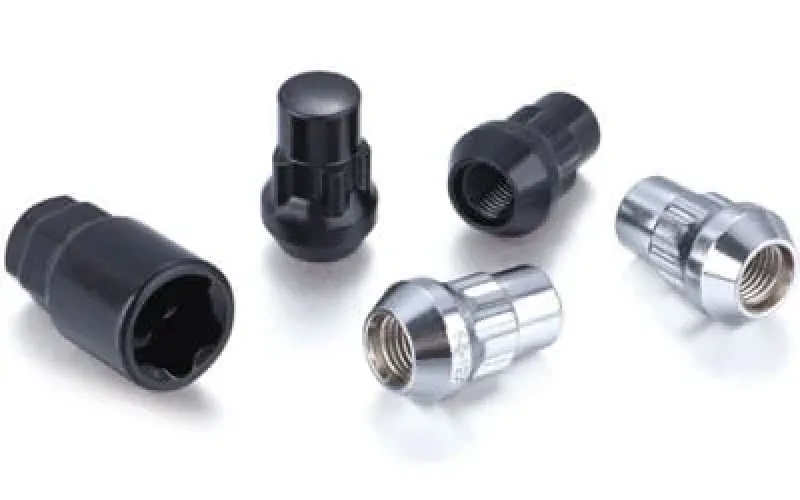
Locking bolts replace one standard bolt per wheel and feature a unique head pattern requiring a matching key. This deters wheel theft.
Loss of the key prevents wheel removal and requires manufacturer assistance or professional extraction tools.
Switching to aftermarket wheels is a common upgrade. However, factory and aftermarket wheels are not automatically interchangeable.
Aftermarket wheels may require different bolts for safe fitment.
Key factors to verify:
Using original bolts without confirming these specifications introduces significant safety risk.
Applying anti-seize compound to wheel bolt threads is unsafe unless explicitly specified by the manufacturer.
Approximately 90% of applied torque overcomes friction. Only about 10% generates clamping force.
Lubrication reduces friction, causing actual preload to exceed intended design limits. This results in overstretching and possible failure.
Wheel bolts should be installed on clean, dry threads unless otherwise specified.
Torque-to-yield bolts should not be reused. Reuse compromises clamping force and structural reliability.
Contact the manufacturer with the key code or seek professional removal services.
Re-check 50–100 miles after installation and during routine service intervals.
💡 Tip: Seasonal temperature changes can affect bolt tension. Torque verification during seasonal tire swaps is recommended.
Titanium reduces unsprung mass, which can slightly improve handling and acceleration response. Benefits are more noticeable in performance applications than daily driving.
 Request a quote