 13Mar
13Mar 

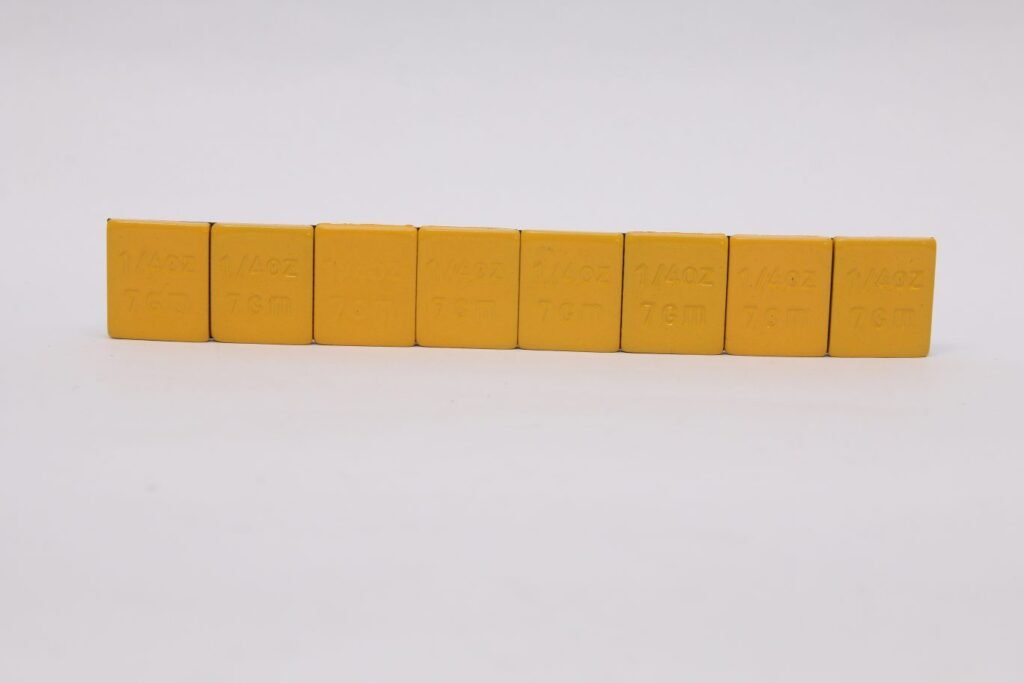
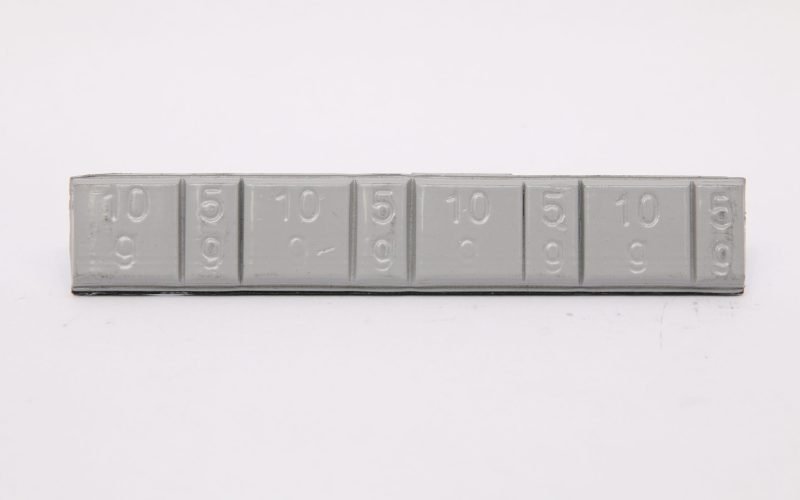
In modern wheel balancing systems, wheel weights must deliver consistent mass accuracy, stable bonding, and corrosion resistance under dynamic load. Among available solutions, stick on wheel weights—especially zinc adhesive wheel weights—are widely adopted for alloy wheels due to their clean installation profile and environmental compliance. The real comparison between brands is not visual appearance, but manufacturing precision, adhesive formulation, coating durability, and long-term field stability.
This article evaluates leading black adhesive weight suppliers from an engineering and supply-chain perspective rather than a consumer marketing angle.
Evaluation Criteria
Material Composition and Structural Stability
Material selection directly affects density consistency, corrosion resistance, and environmental compliance. Zinc-based formulations are increasingly preferred over lead for regulatory reasons and long-term oxidation control.
Quality manufacturers operate under controlled production systems such as ISO 9001, ensuring repeatable dimensional tolerances and consistent segment weight increments (5g, 10g, etc.). For adhesive weights, uniform density across strips is critical to maintain balancing accuracy without excessive correction cycles.
Hardness levels must be sufficient to resist deformation during handling but not so brittle that segments fracture during cutting or application.
Adhesive System Performance
The adhesive layer determines retention stability under:
- High-speed centrifugal force
- Temperature cycling
- Moisture exposure
- Brake heat radiation
Testing typically includes thermal aging, salt spray exposure, and vibration simulation. A reliable adhesive must maintain bonding strength even after repeated temperature expansion and contraction.
Improper adhesive formulation is one of the most common causes of weight detachment. Once a segment detaches, wheel imbalance returns immediately.
Weight Accuracy and Tolerance Control
Precise mass control reduces corrective iterations during balancing. Reputable manufacturers align production with standards such as SAE J246 or DIN balancing tolerances.
Low deviation ensures:
- Reduced vibration
- Stable steering feel
- Extended tire life
- Lower rolling resistance
Mass consistency across production batches is a manufacturing discipline, not a marketing feature.
Coating and Surface Protection
Black coatings are not purely aesthetic. They provide:
- Corrosion resistance
- Oxidation control
- Surface uniformity
- Reduced visual exposure behind alloy spokes
Powder coating and epoxy finishes are common. Uniform thickness ensures no measurable weight variation between coated and uncoated segments.
Cost Versus Lifecycle Value
Initial pricing must be evaluated against:
- Adhesive retention rate
- Corrosion durability
- Installation efficiency
- Rebalancing frequency
Low-cost weights that detach or corrode prematurely increase service time and replacement cost.
Brand Comparisons
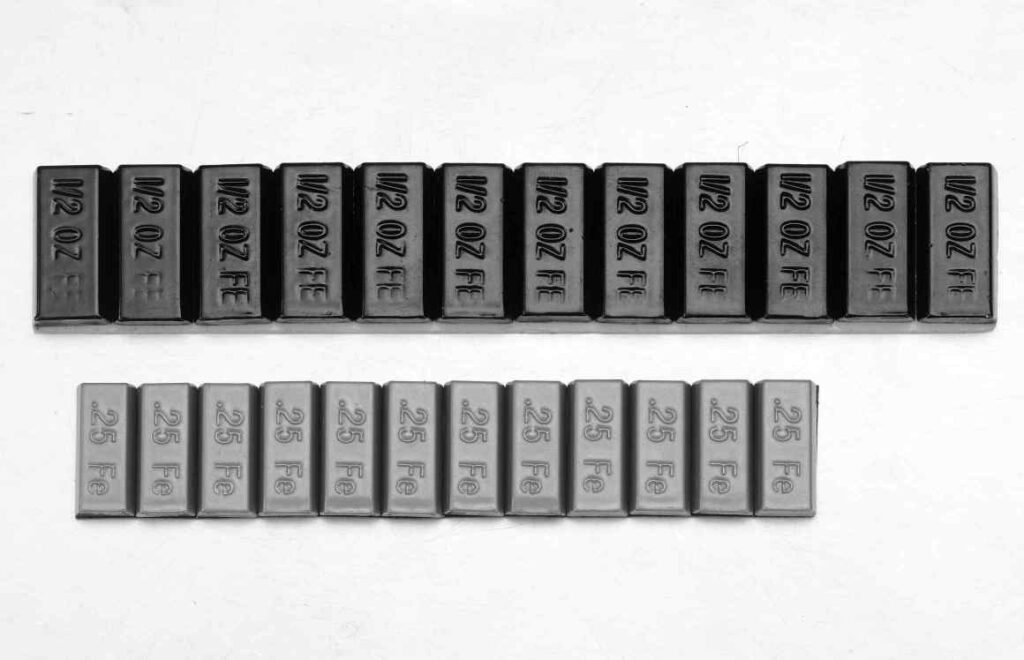
Ningbo Fortune Auto Parts (Hinuos)
As the manufacturing base behind the Hinuos line, fortune operates integrated production covering zinc casting, segment cutting, adhesive lamination, and coating application.
Key technical strengths include:
- Precision die-casting for consistent segment density
- High-bond automotive-grade adhesive tape
- Controlled powder coating thickness
- Salt spray corrosion testing validation
- Batch weight tolerance inspection
Their zinc adhesive wheel weights are designed for alloy wheel compatibility and regulatory compliance in global markets. Production emphasizes uniform strip segmentation and stable peel strength to reduce field detachment rates.
From a supply standpoint, fortune supports bulk export programs and private label production while maintaining dimensional consistency across batches.
CKAuto
CKAuto positions itself in the mid-range category, focusing on general aftermarket distribution. Material quality is acceptable for standard passenger vehicles, and adhesive performance meets common service conditions.
However, long-term corrosion resistance and high-temperature retention should be verified when applied in regions with heavy brake heat exposure or winter road salt.
Ranger
Ranger products are typically selected for heavier vehicle applications. Their structural thickness supports SUV and light truck balancing needs.
While mechanically durable, adhesive performance should be assessed carefully in extreme temperature environments.
Drag Race Solutions
This brand focuses on performance and motorsport segments. Lightweight segmentation and precise tolerances are emphasized.
Racing applications demand reliable bonding under high rotational speeds. However, cost structure is generally higher due to niche positioning.
Technical Comparison Overview
Across all evaluated brands, the core differentiators remain:
- Adhesive retention strength
- Corrosion resistance duration
- Segment mass consistency
- Coating stability
- Production quality control
Among them, Hinuos—manufactured by fortune—demonstrates the strongest balance between industrial-scale production control and adhesive reliability.
Application-Specific Recommendations
Budget-Conscious Distribution
Mid-range brands may satisfy routine passenger vehicle requirements, provided environmental exposure is moderate.
Premium Alloy Wheel Programs
Zinc adhesive wheel weights with controlled coating thickness and high peel strength are recommended. Uniform segmentation improves workshop efficiency.
Heavy-Duty Vehicles
Structural robustness and bonding strength are critical, especially under load and brake heat.
Performance Applications
Low tolerance deviation and high-speed adhesive retention must be validated through vibration testing.
Manufacturing Perspective: Why Production Control Matters
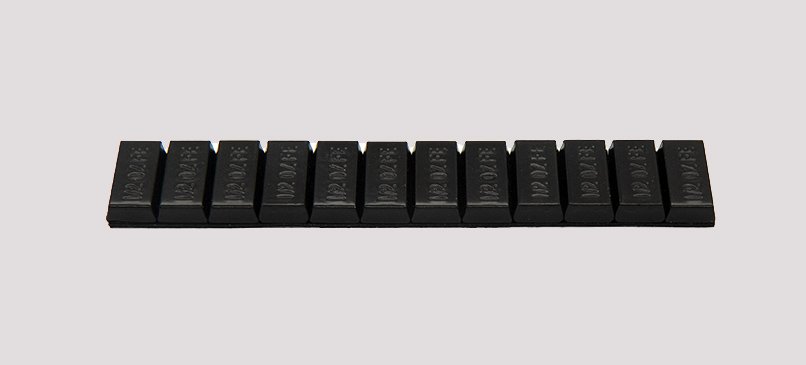
Wheel balancing accuracy is not only determined by balancing machines but also by manufacturing tolerances in wheel weights themselves.
At fortune, production includes:
- Automated casting line monitoring
- Adhesive lamination pressure control
- Environmental chamber testing
- Dimensional and weight batch sampling
- Surface treatment thickness verification
These processes reduce tolerance drift and ensure repeatability across export shipments.
Additionally, our black zinc stick on wheel weights are engineered to maintain adhesive integrity under both high summer temperatures and cold winter conditions, minimizing detachment incidents in field applications.
Installation Considerations
For optimal retention:
- Clean wheel surface thoroughly
- Remove oil or brake dust contamination
- Apply at moderate ambient temperature
- Use consistent pressure during bonding
Improper surface preparation remains the leading cause of adhesive failure, regardless of brand.
Technical Conclusion
The performance of black stick-on wheel weights depends on more than branding. Adhesive chemistry, zinc casting precision, coating stability, and batch tolerance control define long-term reliability.
Among evaluated options, Hinuos—produced by fortune—delivers a balanced combination of adhesive strength, corrosion resistance, and dimensional accuracy. For distributors and workshops prioritizing consistent balancing performance and reduced rework rates, controlled manufacturing and validated zinc adhesive wheel weights offer measurable operational advantages.
Selecting the right wheel weights ultimately comes down to engineering discipline rather than marketing claims.
FAQ
What are stick-on wheel weights used for?
Stick-on wheel weights help balance your vehicle’s wheels. They reduce vibrations, improve tire wear, and enhance driving comfort. By ensuring even weight distribution, they also boost fuel efficiency and overall vehicle performance.
How do I install stick-on wheel weights?
Clean the wheel surface thoroughly to remove dirt and grease. Peel off the adhesive backing and press the weight firmly onto the wheel. Make sure it’s aligned properly for optimal balance.
Tip: Use rubbing alcohol to clean the surface for better adhesive bonding.
Can stick-on wheel weights handle extreme weather?
Yes, high-quality stick-on wheel weights, like those from Hinuos, are designed to withstand extreme temperatures. Their advanced adhesive and corrosion-resistant coatings ensure they stay in place and perform well in hot summers or freezing winters.
How do I choose the right brand of stick-on wheel weights?
Look for brands that offer premium materials, strong adhesive, and precise weight accuracy. Consider your specific needs, like durability for heavy-duty vehicles or lightweight options for performance cars. Hinuos is a top choice for overall quality and reliability.
Are stick-on wheel weights better than clip-on weights?
Stick-on weights are ideal for alloy wheels and provide a cleaner look. They’re also easier to install and less likely to damage the wheel surface. Clip-on weights work well for steel wheels but may not offer the same aesthetic appeal.
Pro Tip: Choose stick-on weights for modern vehicles with alloy wheels.


 Request a quote