 13Mar
13Mar 

In modern wheel balancing operations, wheel weights are no longer limited to traditional clip-on designs. The market has shifted toward adhesive wheel weights, particularly roll adhesive wheel weights, due to their flexibility in placement, improved corrosion resistance, and compatibility with alloy wheel designs. As balancing tolerances become stricter—especially for high-speed passenger vehicles and EV platforms—the adhesive system behind the weight is as critical as the metal segment itself.
For manufacturers and workshops, selecting the right adhesive-backed weight is not about brand popularity, but about adhesion stability, temperature resistance, coating integrity, and production consistency.
Why Adhesive Weights Are Structurally Essential
The Engineering Role of Wheel Balancing Weights
Wheel imbalance generates centrifugal force variation at speed. Even minor deviation leads to:
- Steering vibration
- Uneven tread wear
- Suspension component fatigue
- Reduced high-speed stability
Adhesive wheel weights allow more precise correction because they can be positioned continuously along the inner rim barrel. Unlike clip-on systems that depend on rim flanges, adhesive designs enable finer incremental adjustment.
In controlled balancing environments, segmented roll adhesive wheel weights improve correction efficiency, especially when dynamic balancing requires multi-point placement.
Why Adhesive Systems Are Replacing Clip-On Designs
Clip-on weights remain effective for steel wheels, but alloy and painted rims present limitations. Adhesive systems provide:
- No flange deformation
- No coating damage
- Reduced galvanic corrosion risk
- Improved aerodynamic aesthetics
From a production perspective, adhesive weights also simplify packaging, storage, and automated dispensing in large-scale tire shops.
At fortune, we manufacture lead-free adhesive wheel weights using controlled coating thickness and high-performance adhesive tape systems to ensure long-term bond stability under rotational stress.
Top Adhesive Wheel Weight Brands for 2025
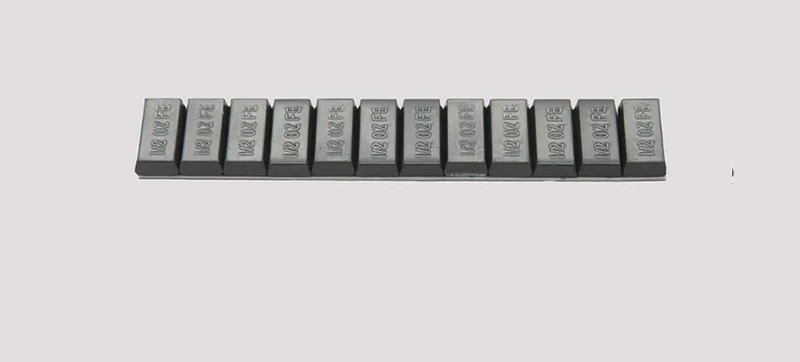
Below are widely recognized adhesive solutions used in balancing applications. Evaluation focuses on adhesive performance rather than marketing claims.
1. 3M – Automotive Acrylic Plus Tape
3M’s Automotive Acrylic Plus Tape is commonly used as the bonding layer behind premium adhesive wheel weights.
Key characteristics:
- Viscoelastic acrylic foam core
- High shear strength under temperature cycling
- Strong resistance to moisture and chemicals
- Proven vibration damping properties
Its stress relaxation capability helps maintain bond integrity during thermal expansion and contraction of aluminum wheels.
For high-speed and temperature-variable environments, this adhesive platform is widely adopted by OEM-tier suppliers.
2. Permatex – Black Super Weatherstrip Adhesive
Permatex adhesive is frequently applied in repair scenarios where re-bonding or reinforcement is required.
Performance highlights:
- Flexible bond structure
- Good environmental resistance
- Fast curing characteristics
- Multi-surface compatibility
While not purpose-built exclusively for wheel weights, it is used in service environments to secure balancing components under demanding conditions.
3. Gorilla Glue – Heavy Duty Mounting Tape
Gorilla’s double-sided mounting tape is known for high load-bearing capacity.
Features include:
- Thick adhesive layer
- Moisture and UV resistance
- Strong initial tack
It is more commonly applied in general mounting applications, but some balancing operations adopt it where additional bond strength is required.
4. Auto Adhesive Wheel Weights (Generic OEM Supply)
Many OEM suppliers produce zinc or steel adhesive weights with integrated industrial-grade tape backing.
Key evaluation criteria:
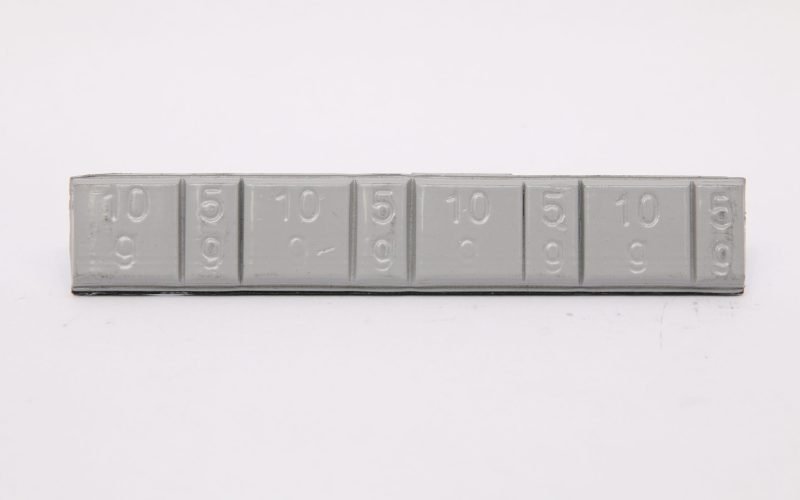
- Segment accuracy (5g / 10g increments)
- Uniform coating thickness
- Clean cut edges
- Consistent adhesive strip alignment
Environmental compliance is increasingly important, with lead-free steel and zinc dominating current production.
fortune supplies both steel and zinc adhesive wheel weights in strip and roll formats, with automated adhesive lamination and peel-strength verification during batch inspection.
5. Hinuos by Ningbo Fortune Auto Parts
Hinuos represents the premium balancing line developed by Ningbo Fortune Auto Parts for global distribution.
Manufacturing controls include:
- Precision stamping for uniform segment weight
- Epoxy or powder coating for corrosion resistance
- High-bond acrylic adhesive systems
- Salt spray testing for durability validation
Roll adhesive wheel weights under the Hinuos line are designed for high-volume workshops requiring continuous strip dispensing. Uniform peel strength and consistent metal density are prioritized to reduce balancing recalibration.
Technical Comparison Criteria
Durability and Environmental Resistance
Adhesive wheel weights must withstand:
- High rotational force
- Brake heat transfer
- Water and salt exposure
- Sudden temperature changes
Common validation tests include:
- Salt spray corrosion testing
- Thermal cycling
- Peel strength measurement
- Shear resistance under load
In production, hardness values and coating adhesion are verified to prevent premature corrosion or detachment.
fortune implements batch-based peel testing and thermal verification to ensure adhesive stability remains consistent across shipments.
Adhesion Strength and Application Efficiency
Strong initial tack reduces installation error. However, long-term shear resistance is more critical than initial stickiness.
Proper installation requires:
- Clean rim surface
- Oil-free contact area
- Adequate pressure during bonding
- Installation above minimum temperature threshold
Roll adhesive wheel weights improve workflow efficiency by allowing technicians to cut precise segments directly from a continuous strip.
Compatibility with Wheel Materials
Adhesive weights are suitable for:
- Alloy wheels
- Painted steel wheels
- Powder-coated rims
- Chrome-finished surfaces
Material pairing between coating and adhesive backing must prevent chemical reaction or corrosion acceleration.
Lead-free steel with epoxy coating remains a common industry standard due to cost balance and durability.
Cost Versus Performance Consideration
Price evaluation should include:
- Bond longevity
- Corrosion resistance lifespan
- Rebalancing frequency
- Installation efficiency
Lower-cost products may exhibit inconsistent adhesive thickness or poor coating adhesion, leading to premature detachment and repeated service.
From a supplier standpoint, stable process control and adhesive quality selection determine long-term performance more than surface branding.
How to Select the Right Adhesive Wheel Weight
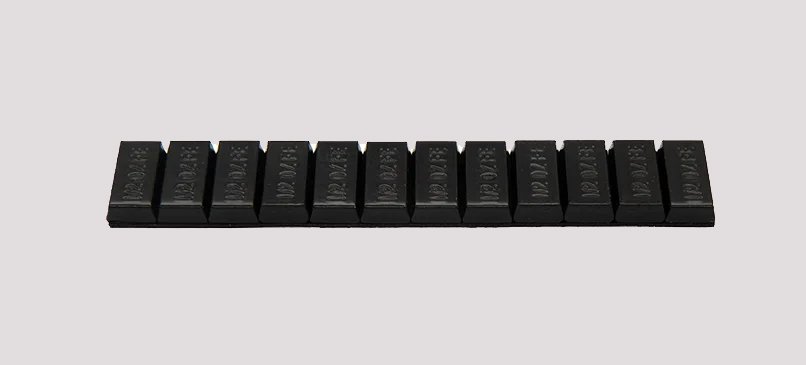
Selection should be based on:
- Vehicle type and rotational speed profile
- Wheel material and surface finish
- Climate exposure (humidity, salt, temperature extremes)
- Workshop volume and application efficiency requirements
Roll adhesive wheel weights are recommended for high-throughput environments, while pre-cut segmented strips suit smaller workshops.
fortune offers customizable segment sizes, coating options, and branded packaging for distributors requiring OEM or private-label supply.
Technical Conclusion
Adhesive wheel weights have become the dominant solution in modern wheel balancing due to their placement flexibility, compatibility with alloy rims, and improved corrosion resistance. Performance depends on metal density accuracy, adhesive shear strength, coating durability, and consistent manufacturing control.
Brands such as 3M, Permatex, and Gorilla provide recognized adhesive technologies, while specialized manufacturers like Ningbo Fortune Auto Parts focus on fully integrated weight production systems.
For distributors and workshops, reliable balancing performance is achieved through controlled production, validated adhesion strength, and environmental durability—not branding alone. By maintaining strict process standards and adhesive verification protocols, fortune delivers adhesive wheel weights engineered for stable retention and long-term rotational reliability across global markets.
FAQ
1. What are adhesive wheel weights used for?
Adhesive wheel weights help balance your car’s wheels. They stick directly to the wheel, reducing vibrations and improving tire performance. This makes your ride smoother and extends the life of your tires.
2. How do I apply adhesive wheel weights?
Clean the wheel surface thoroughly to remove dirt and grease. Peel off the backing from the adhesive weight and press it firmly onto the wheel. Make sure it’s placed precisely for proper balance.
Tip: Use rubbing alcohol to clean the wheel for better adhesion.
3. Are adhesive weights better than clip-on weights?
Yes, adhesive weights offer better precision and work on all wheel types, including alloy wheels. They also look cleaner and don’t damage the wheel’s surface like clip-on weights might.
4. Can adhesive wheel weights handle extreme weather?
High-quality adhesive weights are designed to withstand extreme temperatures, rain, and snow. Brands like 3M and Hinuos ensure their products stay secure in tough conditions.
5. How do I know which brand to choose?
Look for trusted brands like 3M, Gorilla, or Hinuos. Check customer reviews and consider factors like durability, ease of application, and compatibility with your wheels. Always prioritize quality over price for long-term performance.
Note: Choosing the right brand ensures a safer and smoother driving experience.


 Request a quote