What is the difference between rubber and metal tire valves?
 20Mar
20Mar 

When you head out on an off-roading adventure, adjustable tire deflators help keep you safe. They let you set tire pressure with precision, which means you stay in control even when the ground gets rough. Airing down your tire makes a big difference. The table below shows how lower pressure improves traction, comfort, and reduces your risk of getting stuck or damaging your tires.
| Benefit | Description |
|---|---|
| Improved Traction | Airing down increases the tire’s surface area in contact with the ground, enhancing control. |
| Enhanced Ride Comfort | Lower tire pressure provides a smoother ride over rough terrain. |
| Reduced Risk of Punctures | Deflated tires can conform to sharp objects, decreasing the likelihood of tire damage. |
| Decreased Risk of Getting Stuck | A study indicated that reducing tire pressure could lower the risk of getting stuck in sand by up to 50%. |
When you go off-roading, you need to adjust your tire pressure for better traction and safety. Adjustable tire deflators help you do this quickly and accurately. These tire deflator tools attach to your tire’s valve stem and let you set the exact pressure you want. Once you set the target PSI, the deflator releases air until your tire reaches that level. This process gives you consistent pressure every time, which is important for handling rough terrain.
You will find several types of adjustable tire deflators on the market. Many off-roaders use over-sand tire deflator kits. These kits let you set the PSI for all four tires at once and stop automatically when they reach the right pressure. Some brands, like the TeraFlex tire-deflator set, offer affordable options for beginners and experienced drivers alike.
Tip: Look for features like automatic shut-off, tool-free adjustability, and a durable storage pouch. These features make your deflator easier to use and more reliable on the trail.
Here is a table of key features to consider:
| Feature | Description |
|---|---|
| Automatic Shut-Off at Preset PSI | Stops when the target PSI is reached for hands-free convenience. |
| Calibrated for Precision | Reliable accuracy within ±2 PSI. |
| Tool-Free Adjustability | Adjust PSI between 10–30 PSI without extra tools. |
| Fast, Even Deflation | Air down all four tires at once to save time. |
| Durable Storage Pouch Included | Keeps your tools organized and protected. |
You use adjustable tire deflators by connecting them to your tire’s valve stem. The deflator senses the tire’s internal pressure. If the pressure is higher than your preset level, it opens a valve to let air out. When the tire reaches the desired pressure, the deflator shuts off automatically. This process saves you time and effort compared to manual methods.
Here are the main components and how they work together:
Most adjustable tire deflators allow you to monitor the pressure with a gauge. You can set the PSI you want, and the tool will do the rest. This level of control is what sets adjustable tire deflators apart from other tools that only let air out without stopping at a specific pressure. You get more accuracy and safety for every off-road trip.
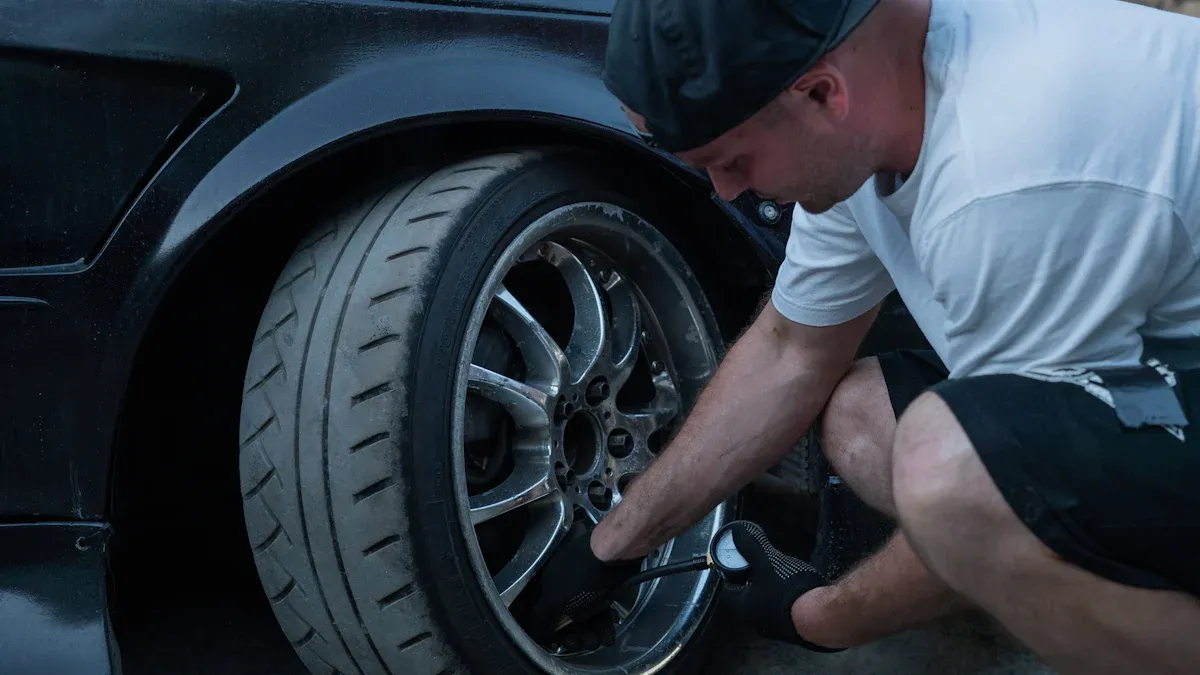
When you air down your tires before heading out for off-roading, you give your vehicle a big advantage. Lowering tire pressure stretches the tire’s footprint, which means more rubber touches the ground. This leads to increased traction and greater stability. You can handle loose dirt, sand, and rocky paths with more confidence.
Airing down (i.e., lowering your tire pressure) to suit trail conditions is the easiest thing you can do to enhance your time off-road. A drop of just 10 pounds per square inch (PSI) from your typical street pressure elongates your tire’s footprint giving you better traction. That’s because more tire is in contact with the trail. More tire on the trail causes less slippage – and less trail destruction and erosion as a result.
You will notice several benefits when you air down tires:
Airing down tires helps you glide over rocks, roots, and bumps. The tire softens and absorbs shocks, so you feel fewer jolts inside your vehicle. You get a smoother ride, even when the trail gets rough. The tire molds itself to obstacles, which means less bouncing and more control.
Proper tire pressure adjustment protects your tires and your vehicle. Lowering tire pressure increases the contact area of the tire with the ground, which helps distribute the vehicle’s weight over a larger surface. This results in better grip and reduces the likelihood of tire damage, thereby minimizing wear on both the tires and the vehicle during off-road driving. You avoid sharp impacts that can harm your suspension or wheels. When you finish your adventure, airing up your tires prepares your vehicle for safe highway driving.
Adjustable tire deflators make airing down and airing up quick and easy. You keep your tires in top shape and maintain off-road performance every time you hit the trail.

You protect your tires when you use adjustable tire deflators. Off-road driving often puts your tires under stress. Rocks, sharp sticks, and uneven ground can cause damage. If your tire pressure is too high, your tires become stiff. Stiff tires cannot flex over obstacles. This increases the risk of punctures and blowouts. When you air down with a deflator, your tires become more flexible. Flexible tires can wrap around rocks and absorb impacts. This reduces the chance of sudden tire failure.
Airing down tires with a deflator also helps you avoid hidden dangers. For example, a tire with too much pressure can burst if it hits a sharp edge. Properly inflated tires, set with adjustable tire deflators, handle these impacts better. You keep your tires safe and extend their lifespan.
Note: Studies show that lowering tire pressure by 25% can reduce the risk of blowouts on rocky trails by up to 40%. This simple step can save you from costly repairs and dangerous situations.
You need control when you drive on challenging terrains. Mud, sand, and loose gravel can make your vehicle slide or get stuck. Adjustable tire deflators help you set the right tire pressure for each surface. Lower tire pressure increases the contact area between your tire and the ground. This gives you more grip and stability.
When you use a deflator, you can adjust each tire to the same pressure. This balance helps your vehicle stay steady. You avoid spinning out or losing traction. Many off-roading experts recommend using adjustable tire deflators before entering difficult trails. You will notice better steering and safer handling.
Here is a quick comparison:
| Condition | High Tire Pressure | Lower Tire Pressure (with Deflator) |
|---|---|---|
| Mud | Less grip | More grip, less sinking |
| Sand | Easy to get stuck | Tires float, easier movement |
| Rocks | Bumpy, unstable | Smooth, controlled ride |
You save time and effort with adjustable tire deflators. Manual methods can be slow and inaccurate. A deflator lets you set the exact tire pressure you need. You do not have to guess or check the pressure over and over. The deflator stops releasing air when your tire reaches the target pressure.
This quick adjustment is important for safety. If you need to change tire pressure fast, a deflator helps you react to changing trail conditions. For example, you might start on rocks and then move to sand. You can use your deflator to adjust tire pressure in minutes. This keeps your tires ready for any challenge.
Tip: Always check your tire pressure before and after airing down. Adjustable tire deflators make this process easy and reliable, so you can focus on enjoying your off-roading adventure.
You want your tire pressure to be just right when you go off-roading. Adjustable tire deflators help you set the exact pressure every time you air down. Manual methods, like using a stick or guessing by feel, often lead to uneven results. You might end up with one tire softer than the others. This can make your vehicle harder to control.
Adjustable tire deflators use precise gauges and automatic shut-off features. You set your target PSI, attach the deflator, and let it do the work. Each tire reaches the same pressure, so your vehicle stays balanced. Studies show that consistent tire pressure improves traction by up to 30% on loose surfaces. You avoid problems like spinning out or getting stuck.
Tip: Always check your tire pressure after airing down. Adjustable deflators make this step easy and accurate.
Here is a quick comparison:
| Method | Consistency | Accuracy | Risk of Mistake |
|---|---|---|---|
| Manual Airing Down | Low | Low | High |
| Adjustable Deflators | High | High | Low |
You save valuable time with adjustable tire deflators. Manual airing down can take a long time, especially if you need to check each tire with a separate gauge. Adjustable deflators let you air down all four tires at once. You set the pressure, attach the tools, and wait a few minutes. The deflators stop automatically when each tire reaches the right PSI.
When you finish your adventure, airing up your tires is just as easy. You use a portable compressor and check the pressure with the same accuracy. This process keeps your tires safe for highway driving. You spend less time preparing and more time enjoying off-roading.
Note: Many off-roaders say adjustable tire deflators cut their prep time in half. You get more time on the trail and less time waiting.
You can use adjustable tire deflators to prepare your vehicle for any off-road adventure. These tools help you set the right tire pressure for different terrains. Follow these steps to air down your tires safely and efficiently:
Park on a Flat Surface
Make sure your vehicle is on level ground. This helps you get an accurate reading of your tire pressure.
Check Your Current Tire Pressure
Use a reliable gauge to see your starting tire pressure. Most street tires have higher pressure than you need for off-roading.
Set the Deflator to Your Desired Pressure
Adjust your tire deflator to the pressure that matches your terrain. For example, you might want lower pressure for sand and higher pressure for rocky trails.
Here is a helpful table with recommended tire pressure ranges for different terrains:
| Terrain Type | Recommended Tire Pressure (psi) |
|---|---|
| Light Off-Roading | 20-25 |
| Deep Sand or Mud | 15-20 |
| Rugged Terrains (Rocks) | 25-30 |
Attach the Deflator to the Tire Valve
Screw the deflator onto the valve stem of your tire. Make sure it fits tightly so no air leaks out.
Let the Deflator Work
The deflator will release air until you reach your chosen tire pressure. Many adjustable deflators stop automatically when you deflate to target pressure.
Double-Check the Pressure
After the deflator stops, use your gauge to confirm the tire pressure. Repeat the process for each tire.
Store Your Tools Safely
Put your deflators and gauge back in their pouch. You will want them ready for your next trip.
Tip: Always adjust your tire pressure before you hit the trail. The right pressure gives you better traction and keeps your tires safe.
You can avoid many problems by using your adjustable tire deflators correctly. Here are some common mistakes off-roaders make and how you can prevent them:
Ignoring Tire Pressure
Some drivers forget to adjust tire pressure for different terrains. This mistake increases your chance of getting stuck. Always use your deflator to set the right pressure for sand, mud, or rocks.
Not Checking Pressure After Deflating
If you do not check your tire pressure after using the deflator, you might end up with uneven tires. Always use a gauge to confirm each tire matches your target pressure.
Setting the Wrong Pressure for the Terrain
Using the wrong tire pressure can make your ride rough or cause you to lose traction. Refer to the recommended ranges for each type of terrain.
Rushing the Process
If you rush, you might not attach the deflator properly. This can lead to air leaks or inaccurate readings. Take your time and make sure each step is correct.
Forgetting to Reinflate After Off-Roading
Driving on pavement with low tire pressure can damage your tires. Always reinflate your tires to the recommended street pressure before heading home.
Note: Using adjustable tire deflators helps you avoid these mistakes. You get the right tire pressure every time, which keeps you safe and improves your off-road experience.
You need adjustable tire deflators for every off-roading adventure. These tools let you quickly and accurately lower tire pressure for any terrain.
| Feature | Adjustable Tire Deflators | Manual Tire Pressure Adjustment |
|---|---|---|
| Precision Accuracy | Maintains tight control | Often inconsistent |
| Consistency | Always reliable | Depends on user skill |
| Time Efficiency | Fast and easy | Slow and tiring |
Choosing a high-quality deflator, like those from Fortune, means you enjoy hands-free convenience, reliable accuracy, and positive reviews from most users.
You should set your tire pressure based on terrain. For sand, use 15–20 psi. For rocks, use 25–30 psi. Lower pressure increases traction and stability. Always check your tire manufacturer’s recommendations.
Adjustable tire deflators let you set exact pressure for each tire. You avoid blowouts and keep control on rough terrain. Consistent pressure helps your vehicle grip the ground better.
You can use adjustable tire deflators on most vehicles with standard valve stems. Trucks, SUVs, and off-road vehicles benefit most. Always check your valve type before buying.
You usually need 2–5 minutes per tire. Adjustable deflators work faster than manual methods. You save time and get accurate results.
 Request a quote